
The negotiations with the IMF are based on the preliminary agreements approved in August.
The government is not considering increasing or creating new taxes, as the agency suggests.
After having announced the amount of the approved budget for 2025, which according to President Nayib Bukele’s statements will be completely self-financed, negotiations with the National Monetary Fund (IMF) are still underway.
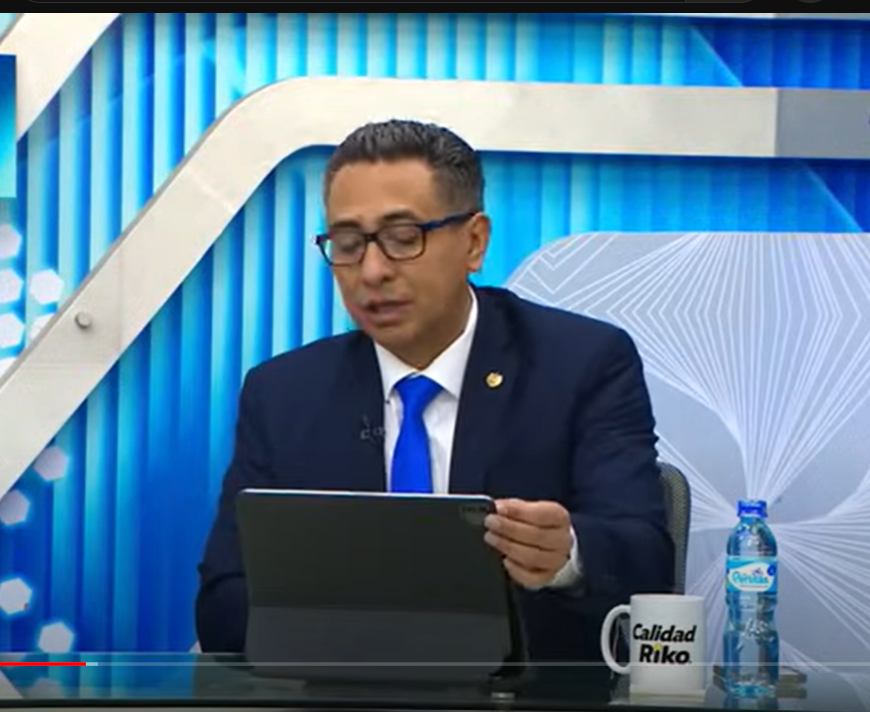
According to the most recent statements of the Ministry of Finance, Jerson Posada, the possibilities of closing an agreement and implementing a joint program with the IMF, during the next three years, is “very close” to being realized.
Although he did not give a date, the official said that there is much progress. The talks are based on preliminary agreements established last August, and focus in a series of mechanisms to strengthen bank reserves.
Added to the above is a preliminary understanding on governance, transparency and investment climate, along with the recognition of joint efforts against the possible “risks” of the adoption of bitcoin (BTC) as legal tender. Making adjustments to the annual budget is also part of the issues discussed in the agreement. And although they are not part of the negotiations, it is an issue that The IMF takes into account when granting the loan.
Following these parameters, Posada recalled that the budget presented this September 30 amounts to USD 9,663 millionwhich represents a decrease of USD 970 million compared to the budget calculated at the end of 2024.
«This budget includes all expenses for the next fiscal year without the need for additional financing. “That means that the budget will not have a gap, it is a self-financed budget, it will be covered with our own income,” explained the official, recalling the promise made by the president a few weeks ago when he stated that El Salvador will no longer spend more than what it produces.
He added that the estimated current income will finance expenses such as salaries, goods and services, current transfers and debt interest payments. However, this is a “balanced budget”, so it is still resources are necessary to finance investment projects and capital expenditures. Resources totaling more than USD 1.7 billion that will be allocated to public investment and that “is prioritized with loans from multilateral banks.”
Hence the importance to resort to an organization like the IMF. As reported by CriptoNoticias, one of the main goals of the Salvadoran government is to attract foreign investment and overcome the deficit that exists in the trade balance. To this end, it is expected to sign an expanded service agreement (SAF) with the organization, which would allow access to USD 1,300 million to balance finances.
El Salvador takes measures to favor the agreement
In that sense, although the minister did not explicitly admit that the self-financing of the budget announced by Bukele is linked to recommendations from international organizations, he said that the measure is part of the actions that the IMF takes into consideration to sign agreements.
However, he insisted that the adjustments made to the nation’s general budget for 2025 They are part of the economic approach that Bukele announced at the inauguration for his second term, held last June.
At this point the Minister of Finance clarified that to comply with self-financing, the government does not contemplate applying increases in taxes or creating new taxesas suggested by the IMF, because tax revenues have experienced strong growth. This, as “a product of the fight against the issue of evasion and smuggling, the facilitation of tax services and the implementation of electronic invoicing.”
These statements by Posada are made in a context in which figures opposed to Bukele, still They doubt that the agreement will be finalized. In this regard, economists such as Otto Rodríguez, former vice president of the Central Reserve Bank, believe that due to the depth of the intervention proposed by the IMF, the signing of the agreement is still shaky.
“We have to think, taking into account everything that needs to be repaired, how feasible the negotiation with the Fund is, because the adjustment is going to be strong,” commented Rodríguez during his participation in an event.
Despite these observations, Bukele is optimistic. Above all, because the preliminary agreement announced by the IMF at the beginning of August represents progress in negotiations that had been stalled for more than three years. The organization’s stance against the adoption of bitcoin – which was one of the main obstacles – seems to have softened in recent months, considering that the digital currency “does not represent a danger to financial stability.”