Arctic is one of the coldest and minimal populated areas on Earth, most of it is covered with snow. But in recent years it has become one of the most important sites of geopolitical stresses – and an important focus of American policy.
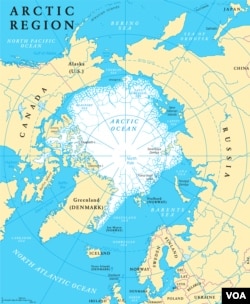
Despite its disqualification, the land in the north of the Arctic Circle has long been settled by indigenous people such as Inute, Sami and Yukaghir and today it includes areas of eight countries: Canada, Russia, Iceland, Norway, Sweden, Denmark and Joint State America.
In 1996, Thesis countries formed the Arctic Council – a platform consisting of all eight countries trains, which are as member states with representatives of indigenous groups. But the Arctic was once imagined as a neutral region, where research and conservation could promote deep international cooperation, many developments have changed it into a site of the competition.
The number one issue facing Arctic is climate change. Since the 1990s, the Arctic sea ice has declined by 7.6 trillion metric tons, with the rate of loss 57%. In addition to contributing to the rising level of the sea, the loss of ice reduces global solar reflection. This forms a feedback loop as the dark water absorbs excess heat, causing more ice to melt, which adversely affects the global weather patterns.
Melting of Arctic snow directly affects local wildlife, with a population of polar bears two-thirds of fall in the next quarter as they lose their prey.
But where some environmental disaster see, others see opportunities. The melting ice is making the Arctic trade routes more navigable, providing a shorter distance for transoconic shipping compared to the current lane using Suez and Panama Canals. In addition, incate navigability is expanding the ability to discover and extraction of natural resources.
The Arctic region is estimated to have more than 20% of the world’s remaining fossil fuel reserve, with more than 400 oil and gas areas already discovered. Both semade and offshore areas, therefore rare earth metals such as iron, gold, nickel and zinc, are large amounts of minerals ranging from staple commodities to nodimiums and dysproosium, which are used in electronics and battery technology. Even traditional subsistence activity can be changed and extended because global warming has motivated fish shares to migrate to north and more coastal land is available for the AGR culture .
Nevertheless, economic opportunities in the Arctic are emerging during increased geopolitical tensions, as countries scramble to secure resources, develop regional claims and facilities.
With 53% of the Arctic coast under its control, Russia has the greatest appearance in the region, such as civil ports such as Murmansk and Arkhangelsk, along with its northern border with several aerial areas and military locations along its northern border. Recently, Russia has taken steps to expand its claims of the Arctic Seam at the same time, which in 2022 has inspired other members of the Ukraine to suspend other members of the Arctic Council to suspend cooperation with Moscow.
While the land jurisdiction in the Arctic is largely different from some small controversies, marine claims are much more complex. Control over Arctic Waters is generally government by the United Nations Convention on the Law of the C, which gives a variety of regional water where the right to restrict the activity of a national foreign ships. Thesis is from internal water, which is considered part of the deadly region of a nation, which is exclusive economic areas, where foreign ships can travel independently but cannot remove resources.
Although the United States played a formal role in interacting on the treaty and followed most of its provisions, it is one of the charges that were not formally charged due to concerns about the limit on seam mining.
Even among the unclosure signators, however, the boundary definitions may be different. While the Canada considers some parts of the Northwest route to lie under its regional water, for example, most other nations including the United States consider it an international strait where foreign ship can transit.
Similarly, Russia has claimed parts of the northeast route along its northern coast as internal water, proceeding to restrict the right to pass into the ares where it was previously allowed.
Given the thesis controversies, the translar sea route through the Center of the Arctic Ocean, which is completely located in international water, will become more attractive as the polar ice continues to melt.
The increasing importance of the Arctic has attracted the attention of other powers without the Arctic region. Many of these states have been added as supervisors in the Arctic Council, including Germany, the United Kingdom, Japan and South Korea. China, who is an observer, has unilaterally declared itself as a “near-Arctic State” and has partnered with Russia in the region and expanded both research and commercial activity in the region as well as Norway , Invested in infrastructure in Iceland and Greenland.
Among the reasons existing in China’s presence in the Arctic with Russia’s aggressive currency, US President Donald Trump’s NATO’s NATO’s associate Denmark is bee in the reasons quoted to buy or buy Greenland. While Greenland already has an American military base on its north -western coast, the discussion is also likely to result in another militaryization of the region under Denmark as a result of the discussion.
Therefore satellites are expected to play a major role in increasing control within the Arctic, which is given the importance of observation and monitoring in remote AEAS with poor communication infrastructure.
Whatever was once given with a frontier, which has quickly become one of the most selected fields on Earth. And as soon as the planet is hot, there will also be competition in the Arctic.