
The ETF of Dogecoin (Doge) legitimizes memecoins as a regulated financial product.
There are requests to launch ETF from other memecoins, pending approval by the SEC.
The debut of the Bag in Stock Exchange (ETF) based on the meme Dogecoin (Doge) cryptocurrency, in the CBOE United States Stock Exchange, marked a milestone at the intersection between the regulated structures of Wall Street and the universe of cryptocurrencies, as an asset born of a viral meme.
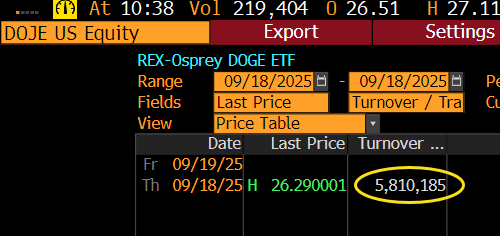
This fund, whose name is “Rex-Osprey Doge ETF” and operates under the Ticker Doje, reached a trading volume of 17 million dollars At the close of its first negotiation day in the Stock Exchange, on September 18.
The performance was among the five best ETF releases of 2025, of a total of 710. Although the initial expectations were low (because it was not an ETF spot) the interest exceeded the projections of specialists such as Eric Balchunas (Senior Analyst of Bloomberg Intelligence), surpassing the 6 million dollars in negotiation volume in their early hours.
The Fund operates under the 1940 investment companies, with diversification and investor diversification standards similar to a mutual fund, unlike Bitcoin (BTC) and Ether (ETH) ETF Spot, regulated by the 1933 Securities Law.
Doors open to more memecoin
The arrival of Dogecoin to the stock market indicates that memecoins have a place in traditional markets. Until 2024, only BTC and ETH had ETF approved in the United States. Now, Dogecoin breaks that exclusivity and legitimizes memecoins as regulated financial products.
Consequently, the industry awaits verdicts of the United States Stock Exchange and Securities Commission (SEC) on fund authorization requests based on other meme cryptocurrencies such as: Bonk (Bonk), Official Trump (Trump) —The memecoin of the president -, Official Meme Meme (Melania) and Pengu, the Token of the NFT Pudgy Penguins.
Vivien Lin, Bingx product director, stressed that these ETFs offer a structured route to access a speculative segment of the market. Technically, they allow exposure to a historically volatile niche, “he said in conversation with cryptootics. The funds extend options beyond BTC and ETH, driven by Dogecoin liquidity.
In addition, Lin emphasizes that the demand for investors promotes financial innovation. However, it warns that the permanence of this category depends on sustained liquidity, regulatory clarity and the ability of memecoins to maintain relevance beyond the initial enthusiasm. “For now, it reflects how the market experiences with new assets under consolidated technical frameworks,” he adds.
For its part, the Coinex Research team qualifies this movement as a key convergence between traditional and cryptocurrency markets.
“Assets considered passengers have won solid support and Hodlers communities, legitimizing their place in regulated products,” they said. This expands access through formal channels.
In the short term, Coinex perceives ETF as a trend driven by popularity and media attention. In the long term, its relevance will depend on consolidation beyond speculation. “We are likely to see ETF for more stable and adopted cryptoactives,” they project.
A memecoin does not stop presenting risks
Dogecoin, inspired by a viral Internet dog, highlights the speculative nature of memecoins as high -risk assets.
Although its consolidated community, historical adoption and presence in corporate treasures stabilize it in front of other low capitalization memecoins, it remains a meme cryptocurrency subject to strong fluctuations.
The irruption of ETF as Doje expands regulated access to cryptocurrency and diversifies investment options. However, as cryptootics have warned, An excess of funds based on memecoins could erode confidence in these productsaffecting their perception of cautious regulators and investors.
The initial success of the Dogecoin Fund invites you to assess whether this integration endures or fades with the speculative cycle.