

During his presentation at Devconnect Buenos Aires, Vitalik Buterin presented Kohaku, a new set of tools designed to improve data protection on the network, incorporating mechanisms that allow compliance with regulations without sacrificing anonymity.
Kohaku is developed as an open source initiative, which proposes a modular architecture that makes it easy for developers to create wallets with built-in privacy. Their roadmap includes possible extensions, such as mixnets for network layer anonymity and browsers based on zero-knowledge proofs.
These mixnets function as networks that mix and reorder transaction traffic, making it impossible to link a message to its origin, reinforcing anonymity at the network layer. For their part, browsers based on zero-knowledge proofs grant the ability to validate information without revealing sensitive data.
Buterin acknowledged that Ethereum is still far from the desired level of privacy and that this stage requires a coordinated effort to close that gap.
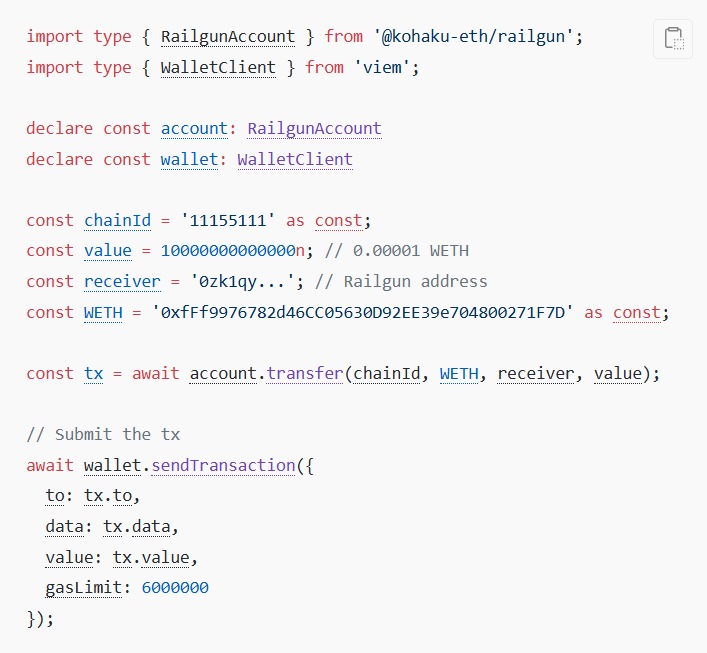
The documentation of the repository on GitHub confirms that the project is in development and that includes components such as Railgun and Privacy Pools. These tools are based on a privacy pooling protocol that allows users to protect and unprotect their ERC-20 tokens, the most common standard for digital assets on Ethereum.
Compliance with the regulations would be achieved through “innocence proofs”, a mechanism that uses zero-knowledge proofs known as zk-SNARKsVale (Zero-Knowledge Succinct Non-Interactive Argument of Knowledge, in English).
This advanced cryptographic technique makes it easier for users to prove the validity of a transaction or the legitimacy of their funds efficiently, without revealing any sensitive data or movement history.
In a demonstration on November 16, showed a wallet built on Kohaku. This used Railgun to hide backgrounds that would otherwise be visible. The long-term intention is that this logic can be integrated directly into any Ethereum-connected wallet—such as MetaMask or Rainbow—so that privacy is enabled by default.
Beyond the news about privacy, Buterin took advantage of his time in Buenos Aires to put the current moment of Ethereum in perspective. As reported by CriptoNoticias, the specialist stated that the network processes 50% more transactions today than at the beginning of the year and highlighted that this growth is the product of constant technical improvements, such as the increase in the gas limit and the advancement of solutions that will make block verification more accessible.