
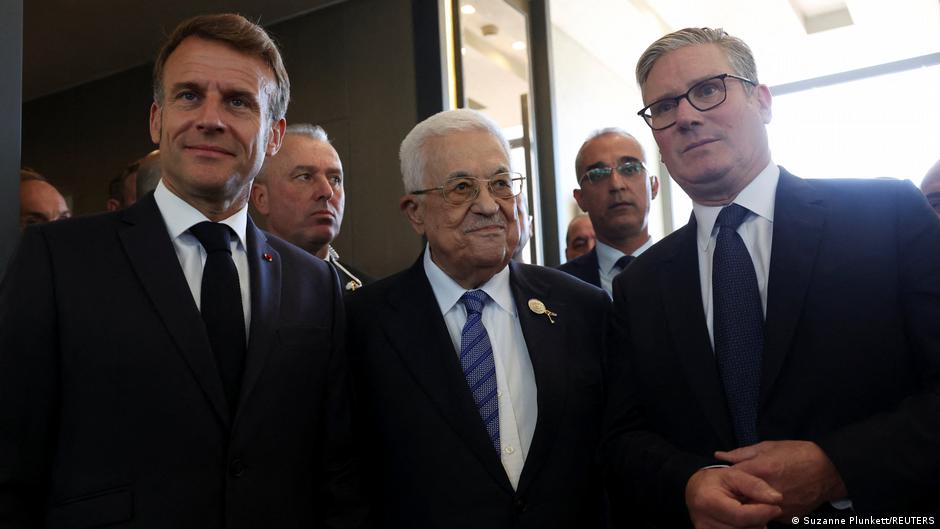
In its efforts to help rebuild Gaza and retain the Palestinian Authority (PA) to allow Palestinians to take charge of affairs in Gaza in time, the European Union (EU) is hosting a Palestinian donor conference on Thursday, November 20, which will be attended by more than 60 delegations, including some from Arab countries.
Palestinian Authority (PA) Prime Minister Mohammed Mustafa is also expected in Brussels, as donors seek an update on reforms that have been implemented, and those still to be implemented, before pledging further financial resources.
The EU is already the largest provider of aid to the Palestinians and the PA, and says delivering a large portion of the €1.6 billion ($1.7 billion) in aid announced for 2025 to 2027 will be tied to structural reforms.
“To get money,” says Guillaume Mercier, EU Commission spokesperson for international partnerships, calls for the PA to “implement reforms”, such as in the education sector, and Restricting scholarships to families of Palestinians imprisoned by Israel’s armed forces.
Concurrent with the donor conference, the EU is holding a meeting of its foreign affairs ministers to discuss Gaza’s future security and stability as well as the contribution of the International Stabilization Force outlined in the US-proposed ceasefire plan.
EU plan to train Palestinian police officers for Gaza
Since 2006, the EU has been assisting the PA in developing effective, accountable policing through EUPOL COPPS, the EU Mission to Support Palestinian Police and the Rule of Law Programme.
Now, it is considering expanding the program, and could train up to 3,000 Palestinian police officers who could then be deployed to Gaza. European foreign affairs ministers will consider the proposal on Thursday, along with what contribution each member state is willing to make. France has already said it is willing to train Palestinian police.
The EU initiative is linked to a US-proposed ceasefire plan, which envisages the International Stabilization Force (ISF) “training and providing support to Palestinian police forces”.
“Possible new contributions are being considered in close coordination with our partners to complement efforts at the regional level in support of the future stabilization of Gaza,” Anouar El Anouni, EU spokesperson for foreign affairs and security policy, told DW during a briefing.
Tahani Mustafa, visiting fellow in the Middle East and North Africa program at the European Council on Foreign Relations (ECFR), told DW that the EU has already begun training some Palestinian battalions in the occupied West Bank and Jordan.
Donors unlikely to fund reconstruction of Hamas-controlled Gaza area
But he also said they would not be deployed hastily, “not until Gaza is handed over to a separate authority,” such as the “Committee of Palestinian Technocrats.”
America proposed a ceasefire plan It calls for transitional rule by an “apolitical Palestinian committee that is responsible for the day-to-day running of public services and municipalities for the people in Gaza”, overseen by a Trump-led “peace board”.
This may still take time. Hamas controls 47% of the Gaza Strip, while Israeli forces hold about 53% of the territory following a fragile ceasefire in October. This division is marked by the so-called “Yellow Line”, which demarcates Israel-controlled military areas in Gaza.
Gaza’s government media office has reported that at least 240 Palestinians have been shot dead while inadvertently crossing the border in an attempt to reach their homes since the October peace accord.
The European Union has expressed its desire to rebuild Gaza. But as long as Hamas controls almost half of Gaza, donors are unlikely to fund reconstruction.
Palestinian Authority Prime Minister Mustafa said it was plausible that EU funds, once allocated, could first be “funneled into areas controlled by Israel”, even though “the majority of Gazans are outside those areas.”
Reforms top agenda of donor conference
Earlier this year, France and Saudi Arabia chaired an international conference for the implementation of a two-state solution.
conference announcement Called on the PA to enact a number of reforms, many of which the Israeli government is pushing for, including the education sector.
At the same time, Israel says that Palestinian textbooks incite hatred and violence against Israelis. The PA has repeatedly denied that its curriculum promotes anti-Semitism or violence, arguing instead that the textbooks reflect Palestinian history and national identity under occupation.
The topic was the subject of a public dispute between the Israeli and French foreign ministers in September. Israeli Foreign Minister Gideon Sa’ar accused France of ignoring Israeli concerns about “large-scale provocations in the Palestinian education system” and failing to object to the PA welfare system giving scholarships to families of Palestinians detained by Israeli armed forces.
French Foreign Minister Jean-Noël Barrot described the allegations as “extremely unfair” and said that French President Emmanuel Macron had secured unprecedented commitments from the PA.
Earlier this year, PA President Mahmoud Abbas announced the cancellation of the scholarship program, which critics have derided as a “pay for murder” program, adjusting it to needs-based eligibility requirements rather than status eligibility requirements such as custody of a family member.
“‘Paying for Murder’ drops August 1st,” Barrot posted on X.
Elections in Gaza within a year?
President Abbas has assured the EU that elections will be held in Gaza within a year of the end of the war. However, elections are not part of the reforms the EU has sought in order to obtain assistance from the PA.
Prime Minister Mustafa said the EU had long had enough leverage to force the PA to hold elections, and could soon make funding conditional on electoral and democratic reforms.
But out of fear that Hamas could win, the EU has backed the PA and offered “mere lip service” on democratic reforms, with EU diplomats close to the matter. told ECFR On condition of anonymity. “The EU is very concerned about the outcome of the election. Privately, the real concern is that it could be like 2006,” when Hamas won a landslide victory, the report said.
Experts told DW that the EU is trying to preserve the PA because it is seen as the only alternative to Hamas to represent the Palestinian people. Through the PA, the EU is trying to keep the two-state solution alive. But the path ahead is full of challenges.
For now, the EU has deployed a senior diplomatic presence to the Civil-Military Coordination Center (CMCC) in Kiryat Gat, southern Israel, set up by the US, to plan the next phase of the peace plan. Representatives from at least ten member states, including Germany, are on the ground to talk to other countries and agencies about the future of Gaza.
No Palestinian officials or civil society groups are involved.
Edited by: Crispin Mavakideau