

Low transaction fees and high network speed are driving the trend.
Ethereum, however, remains the USDT market leader.
In recent months, the supply distribution of the USD Tether (USDT) stablecoin among major networks has shown a significant structural change. Recent data shows that there has been accelerated growth of Tron in the global market for this digital currency.
In detail, the Tron network share rose sharply from around 46% in September, up to more than 60% in November 2025. This is an increase of 14 percentage points in just one quarter.
“This change suggests a notable migration of liquidity that had historically remained on Ethereum,” according to the analysts by CryptoOnChain.
What do the graphs say?
The CryptoQuant charts below allow you to see this transition clearly.
In the historical comparison of the total supply of USDT between Ethereum and Tron, an increasing dominance of the red area (Tron) can be seen since 2020. Although with a especially pronounced rebound towards the end of 2025.
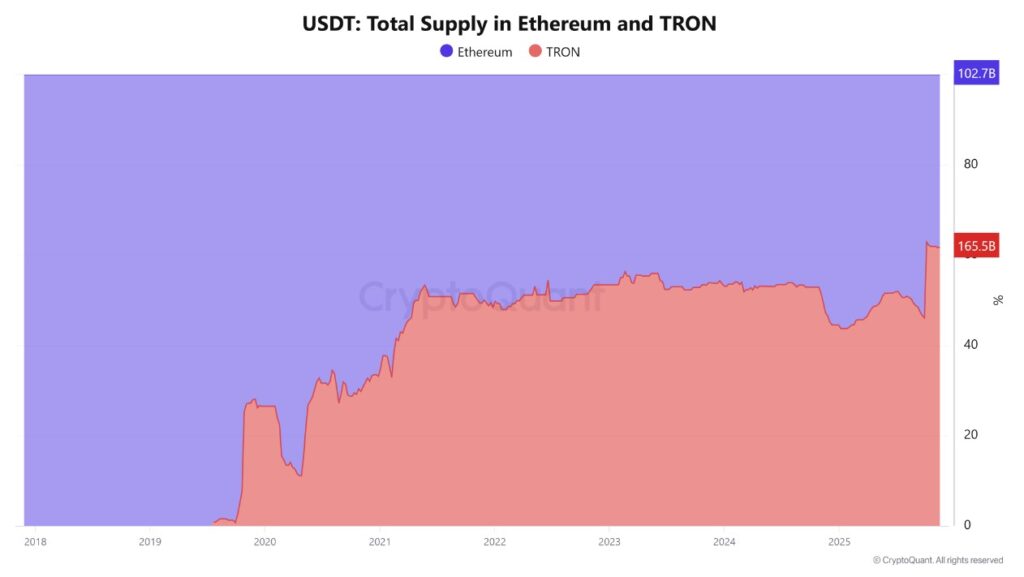
This percentage representation shows how Tron absorbs a growing portion of the circulating USDT supply. At the same time, the relative participation of Ethereum (represented in blue) is progressively reduced.
Another graph, which shows the total supply issued in each network, reinforces the same conclusion. Although Ethereum maintains a relevant absolute amount — around 102.7 billion USDT — Tron has far exceeded that figure. It has reached approximately 165.5 billion USDT.
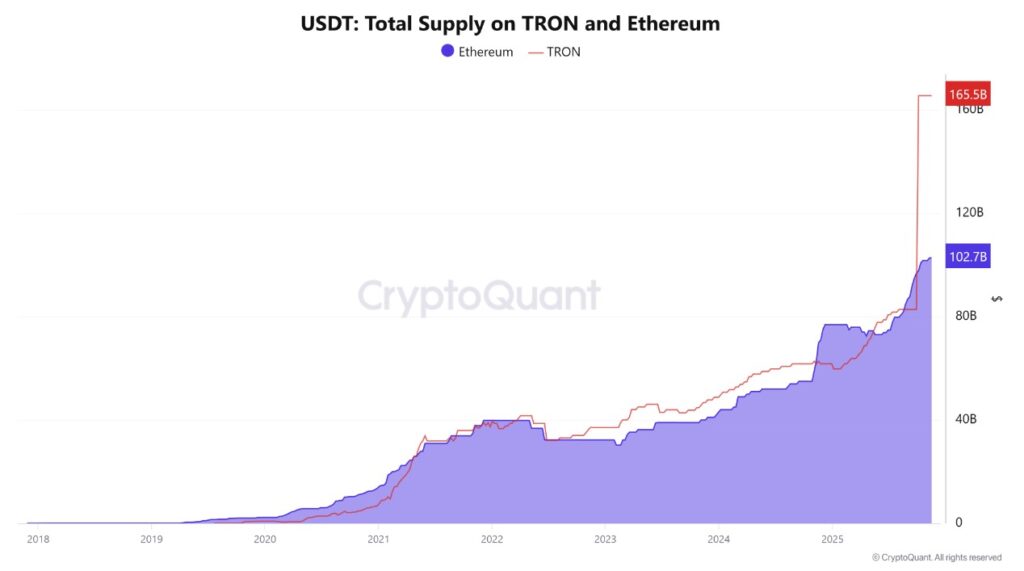
This divergence explains why, despite the fact that Ethereum continues to be the leader in global issuance (as seen in the following distribution graph, where it concentrates 47.61% of the total supply), Tron has become the preferred network for everyday USDT use. This, with a 42.19% market share of that stablecoin, according to data from DeFiLlama.
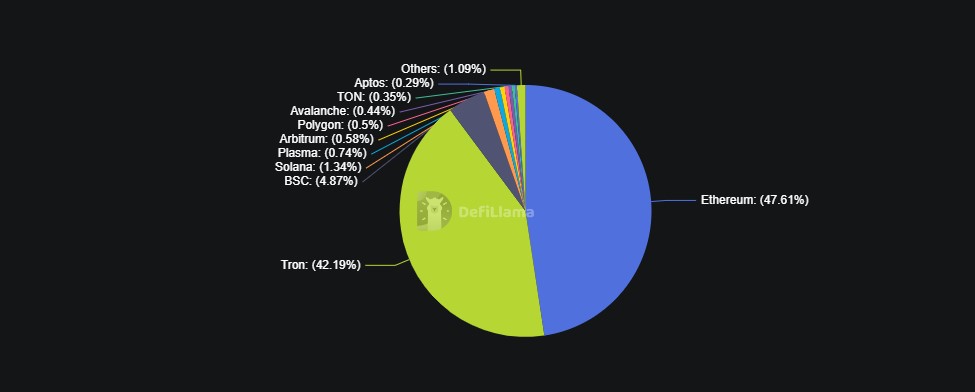
Transaction costs drive USDT migration from Ethereum to Tron
One of the key factors behind this migration is the cost per transaction.
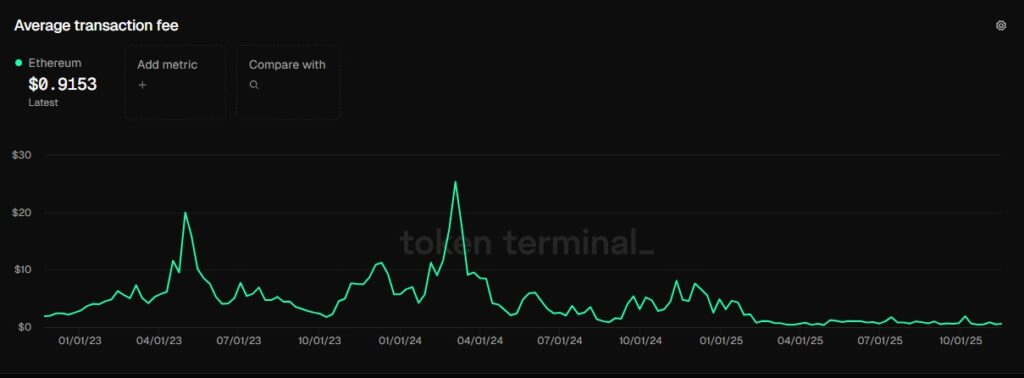
As Token Terminal data highlights, the average commission on Tron remains low and stable. The above, with an average close to 0.66 dollars. That said, the lowering of commissions on Tron is a relatively recent phenomenon. As the graph shows, these commissions experienced an almost continuous increase from January 2023 until well into 2025. The migration of USDT from Ethereum to Tron therefore coincides with the drop in the commission price of the second network.
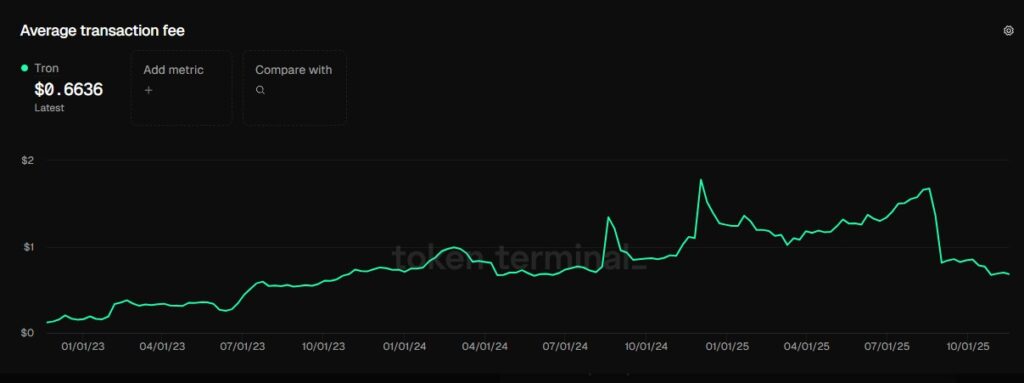
Ethereum, in comparison, records larger fluctuations and recurring spikes. That network reports an average cost close to $0.91 and episodes that have far exceeded that value in times of congestion.
According to CryptoOnChain specialists, the “low transaction fees and high network speed” have made Tron a preferred destination for high-volume trading. Especially those linked to cross-border transfers and liquidity in OTC markets in Asia.
The observed behavior also suggests a functional reorganization between both networks. Ethereum retains its role as the main platform for issuance of USDT and more complex services within the digital financial ecosystem. While Tron consolidates itself as an operational infrastructure for fast and low-cost movements. All of this attracts centralized exchanges and large liquidity providers.
If the trend continues, Tron could exceed USDT’s 70% market share by early 2026, according to these analysts. However, Ethereum’s position remains strategic due to its market depth.