
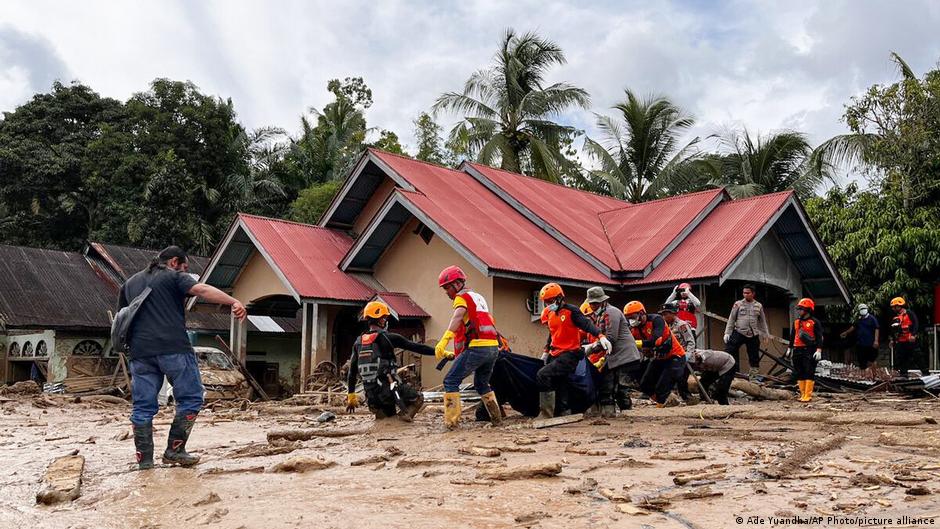
At least 960 people were killed and hundreds missing on Monday due to severe floods and landslides in Indonesia, Thailand, Malaysia and Sri Lanka.
Authorities across the region continued clearing blocked roads, removing debris and searching for missing people after days of heavy rain, flash flooding and landslides.
Which countries have been most affected by floods?
Indonesia has been hardest hit, with at least 442 deaths and 402 people missing, according to the National Disaster Management Agency.
Two cities on Sumatra – the most severely affected island – remain inaccessible. Officials said two naval ships were dispatched from Jakarta to provide assistance.
“Two towns require special attention because of their isolation, namely Tapanuli Central and Sibolga,” said Suhariyanto, head of the National Disaster Management Agency. He said the warships were expected to reach Sibolga on Monday.
“Hopefully the worst is over,” Indonesian President Prabowo Subianto, who arrived in North Sumatra on Monday, said. He said the priority now is on how to send needed aid immediately, with special attention to the many isolated villages.
In Sri Lanka, the Disaster Management Center (DMC) said 340 people have been confirmed dead, while about 400 people are still missing after a week of heavy rains caused by Cyclone Ditvah. As the cyclone moved towards India on Saturday, entire areas north of the capital Colombo were flooded, affecting more than a million people.
President Anura Kumara Dissanayake declared a state of emergency, granting sweeping powers to coordinate relief. Army was also deployed.
Anger over reaction in Thailand
At least 176 deaths have been recorded in Thailand in what authorities have described as one of the worst flooding events in a decade. Authorities continued Monday to deliver aid to thousands of people left homeless and began repairing widespread damage. Criticism of the national response has grown, with two local officials suspended.
Malaysia has reported two deaths from floods that have submerged large parts of Perlis state in the country’s north.
Scientists say climate change is altering hurricane patterns across the region, increasing the intensity of rainfall, increasing the duration of storms and increasing the risk of flash floods and strong windstorms.
Edited by: Elisabeth Schumacher