

Intense practices of agorism are ideal for questioning the current economic system.
Fiat money must be challenged, but a cyberpunk utopia can never be fully achieved.
In certain Bitcoin circles, one idea is often repeated: if someone still measures their savings in fiat currencies, even the best performing ones, then they are not truly embracing Nakamoto’s legacy. It is presented almost as a demand for ideological purity, as if mentally converting satoshis to dollars were a mortal sin.
However, although the argument is understandable, believing in the eventual collapse of the system and, at the same time, participating in it while it exists, does not constitute hypocrisy. The reality, deep down, is simpler: many grocers do not accept BTC for a dozen eggs and many schools do not receive payments in that way. Pretend Living today outside of paper money is not only impractical, but directly impossible in most contexts.
Even so, this type of lawsuit persists in some sectors. It may seem obvious, but it is surprising how easily some people appropriate certain words, positions or ideologies as if they had exclusive authority over them. This phenomenon is observed within the bitcoiner ecosystem, where sometimes it seems that some claim the right to decide who is “pure” and who is not.
The debate leads to the cypherpunk ideals that inspire many bitcoin maximalists: the defense of privacy, resistance to censorship and the creation of open systems that reduce dependence on the State itself.
These principles are, without a doubt, goals worth pursuing, but it is worth remembering that a world without a State is very unlikely, while one without any type of political organization is totally impossible.
Centralization, control and history repeating itself
It is not difficult to understand that, faced with a State that does not offer solutions, some people dream of a future without regulations. Frustration with bureaucracy, inflation, or constant government intervention makes the vision of a world lacking oversight seem like the answer to all problems.
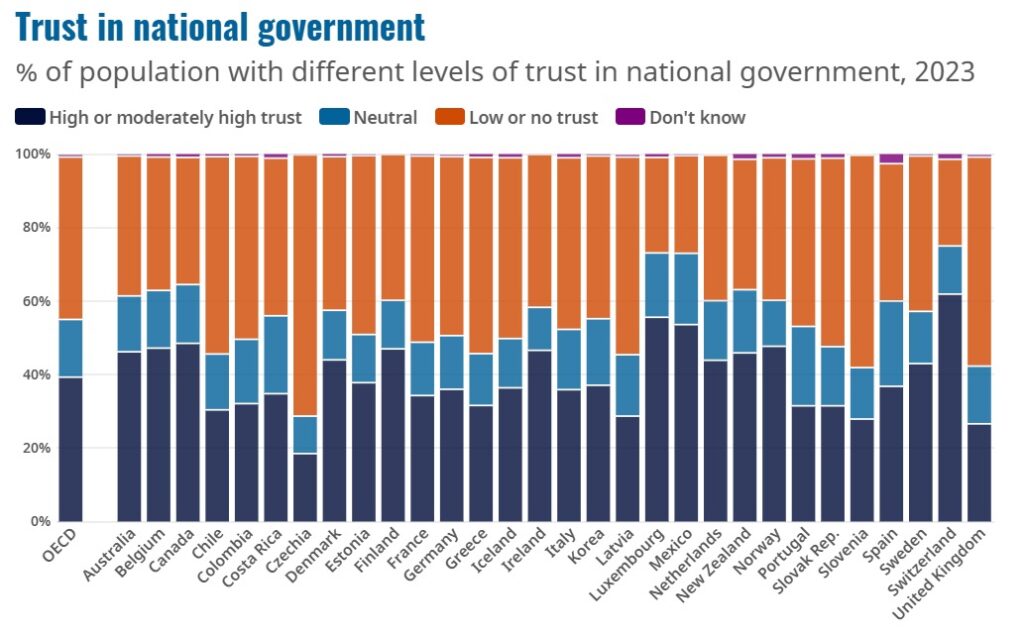
And it has always been sold to us that it is possible to harmonize new and successful regulatory packages in social and economic areas. However, in practice a very high percentage of these norms fail, in part because they are based on quite serious intellectual errors. The result, sadly, is that in the political spheres the perception is generated that the only way to improve is to impose more regulation.
This ends up creating a vicious circle that can trap society in an inefficient and disastrous scenario. A clear example is price controls, which have existed for more than two thousand years. Although they are implemented with the intention of protecting the consumer, they fail time and time again because they ignore the real dynamics of supply and demand.
But fixing prices and wages is not the only symptom, since there are much deeper manifestations of state interventionism. One of the most disastrous is the uncontrolled printing of money by governments, a pattern that ends up eroding the value of the currency. This mechanism is the core of chronic inflation and constant devaluations that hit vulnerable economies the hardest.
However, the truly tragic thing about the matter is that let’s keep repeating the same mistakes over time. This is the human being: the only species that believes that repeating the same thing, changing only the intentions, will produce a different result.
It is because of these types of patterns that, despite the enormous technological and social advances that human beings can achieve, they are condemned to reproduce certain errors over and over again. The tendency to propose centralized political structures will, most likely, be one of those recurring patterns.
Agorism and counter-economics in the face of state practices
As bitcoiners, the last thing we should be doing is judging each other about who is “worthy” and who is not. The most valuable thing we can achieve is to work constantly to lay the foundations for cultural change: educate people so that they understand that they are the ones who should use the State when they need it, and not the other way around.
It all starts by delegitimizing the system in a non-violent wayboth intellectually – with ideas, debate and analysis – and in practice, questioning the status quo and adopting alternatives that show that another way of relating to authority is possible.
One of the currents that best embodies this way of acting is agorism. This political philosophy, founded by Samuel Edward Konkin III in the late 1970s and formalized in his work New Libertarian Manifesto (1980), proposes build a society based on voluntary exchange and peaceful interaction, outside of state control.
Konkin seeks, among other things, for libertarians to stop participating in formal politics—including voting and electoral activism—and focus on systematically expanding peaceful alternative markets: permitless trading, bartering, use of alternative currencies, private safety nets, among other practices. According to the author, an agorist is an individual who acts in a manner consistent with freedom, by freedom and for freedom.

So, His objective was for the second part of agorism, which he called countereconomics, to expand until it became the majority and caused the collapse of the State due to fiscal starvation and loss of legitimacy, giving way to a society based solely on private defense.
Despite this, agorism also has a controversial side that makes it uncomfortable even for many libertarians: its radical commitment to practical coherence. The positive and most powerful thing about the proposal is that it admits an irrefutable economic truth: coercion always destroys value. He who coerces extracts resources without creating anything in return, lives parasitically off the product of others and, in doing so, reduces the total wealth available to society.
That is a devastating and accurate criticism of statism, but here the problem also arises: for Konkin, understanding this is not enough to accept it theoretically, but rather means acting accordingly and not wait for conditions to be ideal.
That is, in practice, this implies the conscious omission of taxes, the possession of weapons that could fall into the wrong hands, the provision of medical services without state authorization, among other actions. This requirement to immediately move from theory to countereconomics makes agorism a highly demanding and, for many, morally uncomfortable philosophy.
Education and Bitcoin as tools of freedom
I am not, by any means, inviting anyone to break the law, since the ethical core of agorism can also be respected within legal limits. Actions such as creating mutual aid associations, forming consumer or production cooperatives, or lending money between friends without resorting to regulated banking, can well be classified as agorists.
In fact, humans have practiced various forms of agorism for centuries without labeling them as such. What’s happening is that bitcoin and cryptocurrencies have turned these practices into something exponentially more powerful and visible than ever.
For the first time in history we have hard money, portable, divisible and resistant to censorship, which amplifies individual autonomy and allows us to build global networks of trust outside the discretionary control of the State. If there is an activity that perfectly embodies everyday and legal agorism is, precisely, to participate in education and dissemination about BTC.

Teaching family, friends or strangers how to safeguard their own private keys, how to carry out peer-to-peer (P2P) transactions without intermediaries, how to use the Lightning Network or self-custody wallets, or simply explaining why hard and decentralized money is a tool of individual sovereignty, constitutes a counter-economic act of the first order.
Each node that is built, each free course that is taught, each meetup or study group that is organized expands the real agora and reduces, even if only in a small fraction, state dependence. You can be an agorist without being a martyr or breaking the laws.
Towards an irrelevant state
This is not easy or quick: communities have particular histories, deep-rooted clientelism and extractive elites, which makes the path longer and more tortuous in some places than in others.
However, there are reasons to be confident that the silent adoption of bitcoin and its unwavering resistance, while not reducing the State to antimatter, will place it in a moral bankruptcy that will be definitive.
And this is something that is already happening. As noted in a previous CriptoNoticias article, the historical disasters associated with governments and fiat money have led to more and more people understanding that they do not need to ask permission to save, exchange or protect their wealth.
When this becomes common sense, The State will continue to exist formally, but it will be as irrelevant like the one Borges talked about after his years in Switzerland: a government so small that most people won’t even know the president’s name.
Disclaimer: The views and opinions expressed in this article belong to its author and do not necessarily reflect those of CriptoNoticias. The author’s opinion is for informational purposes and under no circumstances constitutes an investment recommendation or financial advice.