

The coming to power of Bolivia’s new government has generated optimism among cryptocurrency users and companies, after a decade of strict prohibition. However, analysts such as lawyer Ismael Franco González, specialized in digital asset regulation, warn that the country is very far from converting bitcoin (BTC) into legal tender as El Salvador did in 2021.
In an exclusive interview with CriptoNoticias, Franco classified as positive signsalthough not decisive for a profound governmental change, both the words of Minister José Gabriel Espinoza and the decision of the Financial System Supervision Authority (ASFI) to extend the registration for virtual asset service providers until 2026.
“When the minister spoke of allowing cryptocurrencies in banks, he was not improvising, rather he reflected a public policy negotiated during the campaign that includes digitization of assets and use of blockchain in governance,” said the lawyer.
He added that both the president and the Ministers of Economy and the Minister of the Presidency, José Luis Lupo, agree on replacing the old prohibition with a regulation that is friendly to the cryptocurrency ecosystem.
The signs They suggest a radical break with the current model between 2014 and 2024years in which a heavy-handed policy promoted by the Central Bank and ASFI under the mandate of the Movement towards Socialism (MAS) predominated.
That stage was marked by Resolution No. 044/2014, the massive closure of accounts to exchanges and insurmountable registration barriers, a reality that Franco describes as “interventionist and excessively regulatory.”
The Central Bank has the key
In the opinion of the specialist, it is essential that the Central Bank of Bolivia (BCB) advances towards the validation of stablecoins as means of payment in the national system, a fact that is planned for the first quarter of 2026.
In his analysis, he points out that the measure would not seek to transform banks into exchanges, but rather to enable collaboration with suppliers in the sector and maintain the operation of the peer-to-peer (P2P) and fintech platforms that today lead the trading of the stablecoin tether (USDT) in Bolivia.
Franco is blunt about the comparison with El Salvador. He maintains that making bitcoin official and creating a state application similar to the Chivo Wallet is unfeasible in today’s Bolivian scenario. However, he highlights that, even without the media impact of Nayib Bukele, the change will help alleviate the lack of foreign currency and will favor the flow of remittances and foreign trade.
The exchange crisis is the main driver of the rise of stablecoins in the country. Due to the shortage of physical dollars and the mismatch in the official exchange rate, citizens and companies They chose to migrate massively towards USDT through Binance P2P and similar services. The magnitude of the phenomenon is such that, according to the Central Bank, transactions with bitcoin and cryptocurrencies skyrocketed by 630% between July 2024 and May 2025.

The Central Bank of Bolivia (BCB) recently implemented the daily publication of a “reference price” of the dollar, a measure that, although it makes wholesale operations transparent above the official exchange rate of 6.96 bolivianos (BOL), does not constitute a formal devaluation nor does it alter business accounting.
However, economists warn that this initiative is insufficient to resolve the structural shortage crisis that began in 2023, since “publishing prices does not create dollars” or restore Net International Reserves (RIN), leaving the common citizen without real access to the US currency.
It is precisely given the persistence of these restrictions and the lack of liquidity in the traditional system that it is expected that Cryptocurrency adoption continues to gain momentum in the country as an alternative means of refuge and transaction.
This dynamic, consolidated by the need of users to protect their assets against exchange rate uncertainty, makes the implementation of clear regulations that organize and provide legal security to this expanding sector unavoidable and urgent.
Even so, Franco insists that this phenomenon is temporary. “If the government manages to stabilize the currency market, the use of stablecoins could be reduced,” he highlights. In his opinion, the real qualitative leap will come when public policy promotes financial education and encourages not only stablecoins, but also DeFi, tokenization and the global supply of cryptoassets.
«The comprehensive cryptocurrency law is not essential»
At the legislative level, the panorama remains inactive. The two bills presented in the previous administration expired without debate. Franco does not expect them to recover.
Projects may be subject to replacement under this new political framework, that is, legislative assembly members have the right to request replacement of projects from the previous administration. However, we do not expect it to be done because there is no political will to do so, that is, to revive these projects under old treatment.
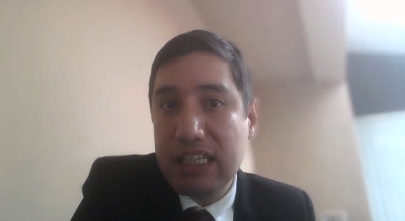
Ismael Franco, lawyer specializing in cryptocurrency regulation.
On the other hand, he anticipates that the Ministry of Economy could promote specific reforms within its package of economic measures. “Under the new framework and the new intentions of the government Bills reforming the financial services law may be submittedreform the issue of accepting cryptocurrencies, especially stablecoins, as means of payment,” he explained.
If it does not happen in the short term, he anticipates that it will materialize next year. Despite this, the debate could be reactivated after the recent delivery, on November 29, 2025, of a project to Senator Erick Morón (CREEMOS) focused on crypto assets and the value of the national currency. With the support of the Santa Cruz Bar Association and various economists, the proposal seeks to reopen the agenda in the Senate.
He emphasizes, however, that progress does not depend exclusively on the Legislature:
Let’s say that political will is needed. The Central Bank could easily issue a board resolution to incorporate cryptocurrencies into the resolution of payment methods, which would be a very popular move, very good to adopt, without really needing a comprehensive cryptoasset adoption law. So perhaps the government will take that path before the legislative one.
Ismael Franco, lawyer specializing in cryptocurrency regulation.
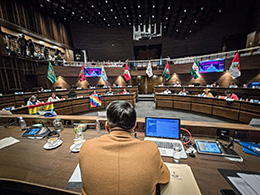
This administrative route would coincide with the vision of figures such as Minister Espinoza y Lupo, nicknamed “Crypto Lupo” for his expertise in public policies for the industry, who could promote operating regulations that free the market from its current restrictions.
For now, Bolivia opts for a pragmatic and gradual opening that, according to Franco, “will not be flagship measures, but structural ones” that could turn the country into a case of silent but effective adoption of stablecoins in Latin America.