
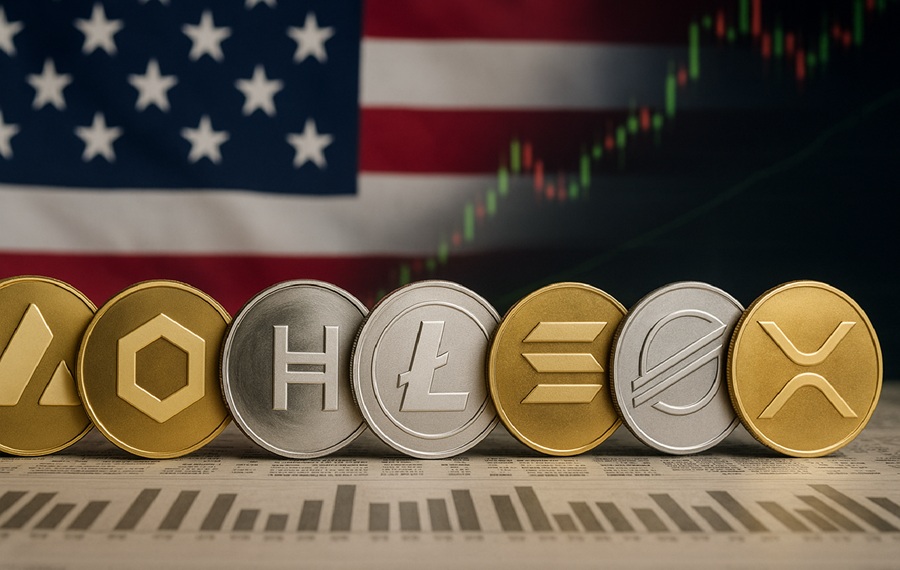
Canary Capital owns XRP, solana and litecoin ETFs.
Among the assets that will be part of the ETFs are avax, cardano and hedera.
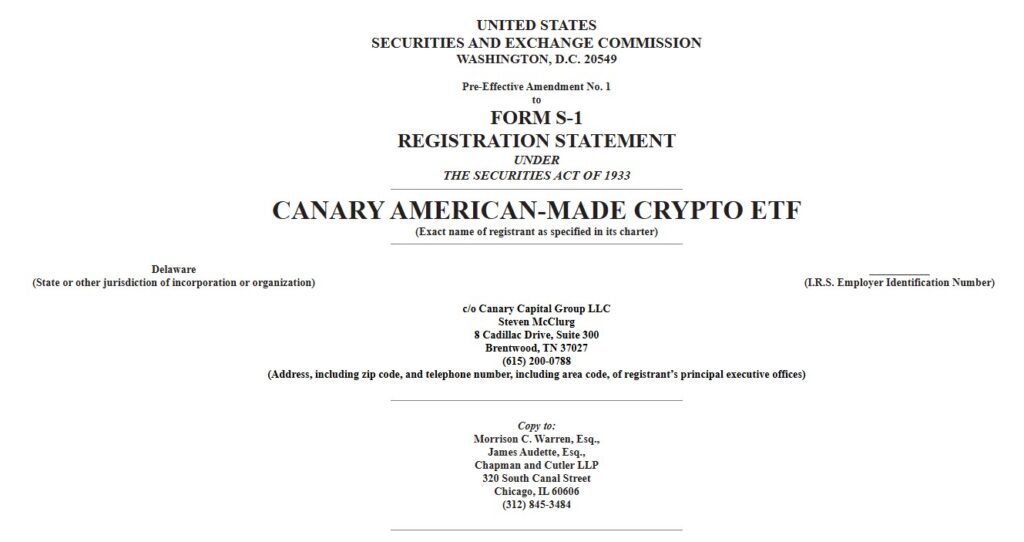
Investment firm Canary Capital has filed with the United States Securities and Exchange Commission (SEC) an amendment to a proposal for an exchange-traded fund (ETF) that seeks to replicate the performance of American-made cryptocurrencies.
The fund, which if approved would trade under the symbol MRCA, Its main objective Invest in a portfolio of assets that mimics the CoinDesk Made-in-America Index. This financial instrument is designed to measure the performance of up to 12 cryptocurrencies that meet rigorous eligibility and regulatory presence criteria defined within the US jurisdiction.
Among the requirements established for a digital asset to be considered by the ETF, the cryptocurrency is required to have an organizational infrastructure such as a foundation, headquarters or operations, or a management team based in the United States.
Additionally, for assets that use proof of work (PoW), US operators are required to have accounted for more than 25% of the blocks mined over the past year.
Importantly, the prospectus explicitly excludes memecoins. Despite its focus on the American presence, Canary Capital’s prospectus reveals that the initial portfolio would include digital currencies that did not originate in the country, as is the case with bitcoin. Other assets such as avalanche (AVAX), chainlink (LINK), hedera (HBAR), litecoin (LTC), solana (SOL), stellar (XLM) and XRP join the list.
The inclusion of bitcoin highlights flexibility in the index’s definition of “Made in USA”, focusing on operational infrastructure more than in the founding origin.
This move underscores the strategy of Canary Capital, a firm that already manages funds focused on specific assets such as XRPsolana, hedera and litecoin, as reported by CriptoNoticias.
The introduction of this amendment signals a further step in the evolution of investment products that seek to offer regulated exposure to the digital asset space, with a focus on compliance and presence in the US market, which could attract institutional investors interested in minimizing regulatory risk.