
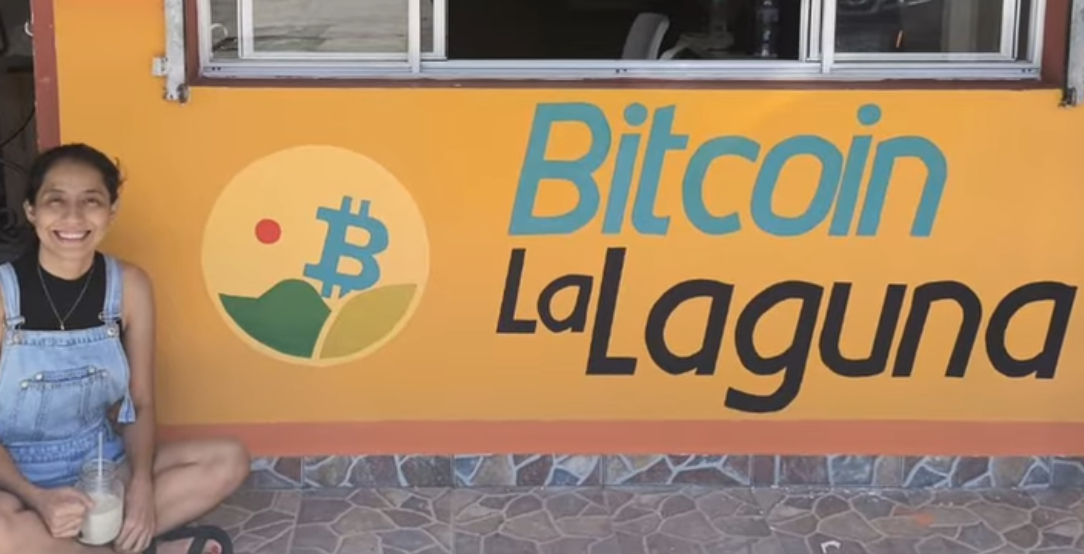
On the beaches of El Zonte and the hills of Chalatenango, two Salvadoran communities have made bitcoin (BTC) an everyday part of life. Bitcoin La Laguna and Punta Mango grow strongly in 2025, as a demonstration that adoption does not depend on decrees but is born from the people, attracts investment and offers young people a different alternative to migration or gangs.
The history of circular bitcoin communities or citadels left in El Zonteknown worldwide as Bitcoin Beach. This Salvadoran territory, which received an anonymous donation in 2019, today has more than 200 businesses that accept BTC voluntarily. There are everything from pupuserías (where the typical Salvadoran dish is sold) to hotels. About this, Mike Peterson, its founder, recently said:
The agreement with the IMF removed bureaucratic pressure, but not the enthusiasm of the people. The government simply got out of the way.
Mike Peterson, leader of Bitcoin Beach.
About 100 kilometers from El Zonte, in La Laguna (Chalatenango), history is replicated at greater speed. In 2024 They opened their education center and there are already dozens of businesses that charge in SATs. Mexican restaurants, hardware stores and clothing stores incorporate Lightning payments in weeks.
All this new force that there is now in La Laguna with bitcoin comes from the Bitcoin Berlin community project, which expanded. Its founders, Evelyn Lemus and Gerardo Linares, inaugurated a new center, now about 4 hours away by car. They created what for them is their own version of a Bitcoin City. They seek to replicate success using the digital currency to capture remittances and activate local commerce.
“We want to focus on this flow of remittances,” pointed out Lemus. The goal is to demonstrate the practical usefulness of BTC. This, they believe, will increase its natural use as a medium of exchange in local shops and services.

The organizers highlight the speed of the new project. They achieved in La Laguna, in one month, progress that took them almost two years in Berlin. They attribute this to prior learning and local interest.
“The people were hungry to try something different and develop the city,” they stated. They detail that they organized meetings with businessmen and the community, which accelerated the process. They also received the keys to a location to open a bitcoin center in a few days.
This center will be a space for education, meetings and operations. “A place where you can learn, discuss, use, exchange, sell and buy bitcoin,” they described. It will be an improved copy of the Berlin modelthey pointed out.
The initiative also looks at the tourism sector. They promote La Laguna as a destination with triple attractiveness. It offers nature, a famous brewing tradition, and now, bitcoin adoption.
“We invite you to come… you have a triple reason,” said a local who makes craft beer and accepts BTC as a form of payment. The arrival of foreign bitcoiners injects capital and knowledge into the local economy. It is part of a vision of national reconstruction, Linares added.
“We want more people to get involved, Salvadorans and foreigners,” said Lemus and Linares. The ultimate goal is collective. They seek to demonstrate that the replacement of bitcoin over the dollar is possible. And they do it through community work, town by town.
A community movement powered by bitcoin
The same way, The community of Punta Mango is gaining momentum, located 170 kilometers from El Salvador, in the department of Usulatán. There are already events that bring together the bitcoin community, such as surf tournaments or classes for young people.
“It’s hard to describe the transformation in a young person when they receive sats and ask themselves, ‘Do I spend it now or do I save it for the future?'” Peterson said. Now many of these young people participate in activities to increase the use of the pioneering digital currency in the communities of La Laguna and Punta de Mango.
This mythical beach now has a hotel proposal that accepts bitcoin, opening new doors to tourism and investment in Surf City 2. It is Punta Mango Villas that invites you to explore “one of the most magical and unknown destinations in El Salvador”, as detailed in your website.
El Salvador shows that communities can circumvent decrees. They are projects that have inspired circular economies in 20 countries, including Costa Rica and Brazil.
Not everything is perfect. The Salvadoran known as Ishikawa pointed out that real adoption remains a minority and that education has not yet reached the majority. “Education is key, but limited,” he acknowledges.
Meanwhile, organizations like My First Bitcoin fill gaps, but the challenge remains: how to scale without forcing? Even so, these citadels connect with the human. In La Laguna, for example, entrepreneurs in the area learn about BTC. “They are interested although the majority are 25 year olds,” said local William.
In El Zonte, a surfer invests sats in his business, dreaming of property. And meanwhile bitcoin transcends volatility because is saved with hope in a country with a sector of the population, going from survival to savings.
As Peterson says: “Life in politics is messy, but here, bitcoin clears the way.” For the planet’s inhabitants, all of this is a reminder that, in times of global crisis, local communities rewrite the future.