
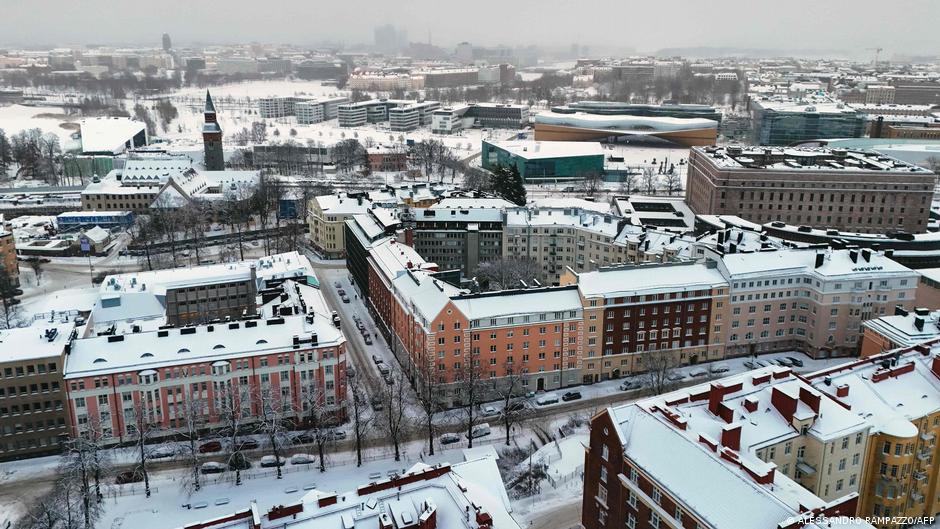
Finland, rated the world’s happiest country for eight years running and traditionally one of the EU’s most fiscally disciplined countries, has just received a warning from Brussels.
The European Commission, the bloc’s executive arm, last week ordered Helsinki to draw up a credible plan to resolve the country’s budget deficit, which has exceeded the EU’s 3% of gross domestic product (GDP) limit.
Finland’s deficit is projected to reach 4.5% of GDP in 2025, while the country’s debt burden is projected to reach 90% of GDP next year, nearly halving since 2019, the commission said.
The Nordic nation, which has an annual economy of €300 billion ($349 billion), has now been formally placed under the EU’s excessive deficit procedure. This could lead to financial sanctions, including large fines, suspension of EU funds and strict fiscal surveillance by Brussels.
Less growth, more spending, then there was Ukraine
Since the global financial crisis of 2008/09, Finland has struggled with fiscal discipline. The collapse of mobile phone maker Nokia, once an engine of growth, left the economy without a clear driver.
This challenge has been exacerbated in recent years by high welfare costs, huge increases in defense spending and the economic shock of severing energy and trade ties with neighboring Russia due to the war in Ukraine.
In 2021, before Russian tanks rolled into Ukraine, bilateral trade between Moscow and Helsinki reached €12.71 billion and made up 4.3% of the Finnish economy. By the first three quarters of this year, business had declined by nearly 93%.
The collapse was further exacerbated by Finland’s decision to close its eastern border at the end of 2023, citing security concerns and Moscow’s weaponized migration strategy. The move halted cross-border shopping and tourism almost overnight, hitting Finnish border areas particularly badly.
More than 2,000 Finnish firms exported to Russia in 2019, according to the Bank of Finland, the country’s central bank. By the end of 2023, this number had dropped to about 100.
Jarkko Kivisto, an adviser to the Bank of Finland’s forecasting division, told DW that it is hard to measure the direct impact on the deficit of the decline in Finnish-Russian trade.
“We have no estimates of this impact,” Kivisto told DW, adding that the impact is “indirectly caused by weaker economic activity and lower value added, as well as a reduction in tax revenues from Russian tourism.”
Defense budget increased in response to Russian aggression
Facing its own threats from the Kremlin, ranging from disinformation campaigns to airspace violations, Finland has increased defense spending from €5.1 billion in 2022 to more than €6.2 billion in 2024, now amounting to more than 2.3% of GDP.
The NATO member has pledged to increase military spending by 3% by 2029, which would make it one of the biggest donors in Europe.
Asked whether the fallout from the Ukraine war would send Finland’s losses skyrocketing, forcing the EU to investigate additional, Lauri Holappa, executive director of the Finnish Center for New Economic Analysis (UTAK), told DW, “Maybe. It’s possible.”
“Without attacking, you could argue that we could have used those inputs [defense spending] On to more productive things,” Holappa said.
The combination of military spending, the collapse of bilateral trade and the almost complete loss of Russian tourism would have forced the Finnish government to take on additional debt – at a time when the debt burden was already growing rapidly.
Before the war, about a third of Finland’s energy supply came from Russia, leaving the country highly vulnerable if supplies were cut.
“The biggest impact came from higher energy prices because Finland was heavily dependent on energy inputs from Russia,” Heil Simola, senior economist at the Bank of Finland’s Institute for Emerging Economies (BOFIT), told DW.
Energy crisis increases Finland’s oil costs
Simola said the Nordic country was able to diversify away from Russian energy sources relatively quickly – albeit at much higher prices. According to the state agency Statistics Finland, this change increased Finland’s oil import costs by 109% to more than €6 billion in 2022 alone. Finnish exporters were able to adjust to the elimination of non-energy trade with Russia without cutting production or jobs, Simola said.
Meanwhile, Moscow has tried to weaponize the deficit debate by spreading disinformation that exaggerates the economic consequences of cutting trade with Moscow while painting Helsinki as unstable, even though the deficit issue had been rising for years.
Domestic pressures have mainly pushed Finland’s deficit above EU-acceptable limits. Pension and health care costs have risen due to an aging population, while the country’s extensive welfare state – employing about a third of the workforce – makes fiscal consolidation politically difficult.
Finland faces years of austerity
Despite the challenges, Finland’s government has passed one of the EU’s toughest budgets for 2025, combining deep spending cuts with tax hikes. A new so-called debt-break mechanism commits all political parties to long-term deficit reduction. However, some policymakers warned that additional austerity measures and tax increases would be needed in the next parliamentary term.
“Economic growth alone will not be enough to restore fiscal balance,” the Bank of Finland’s Kivisto told DW. “Rough estimate suggests adjustment [tax rises and public sector cuts] “About 3% of GDP, or €9-10 billion, is needed over the next 5-10 years.”
But with 80% of Finland’s GDP coming from domestic sectors such as domestic consumption, public services, construction, retail and state-sector employment, economists have warned that tight fiscal rules risk hindering the growth the country needs.
“About a third of our workforce depends on government funding, and continued fiscal consolidation makes them afraid of cuts,” UTAK’s Holappa told DW.
That uncertainty has taken a heavy toll on consumer confidence, he said, preventing domestic consumption from improving despite wage increases and low interest rates.
“If we now impose strict austerity coupled with tight fiscal rules, there is a risk that we may not be able to get back on the growth path,” Holappa said.
These warnings take on added significance for a country that, despite its financial problems, is consistently ranked among the happiest in the world.
Edited by: Uwe Hessler