
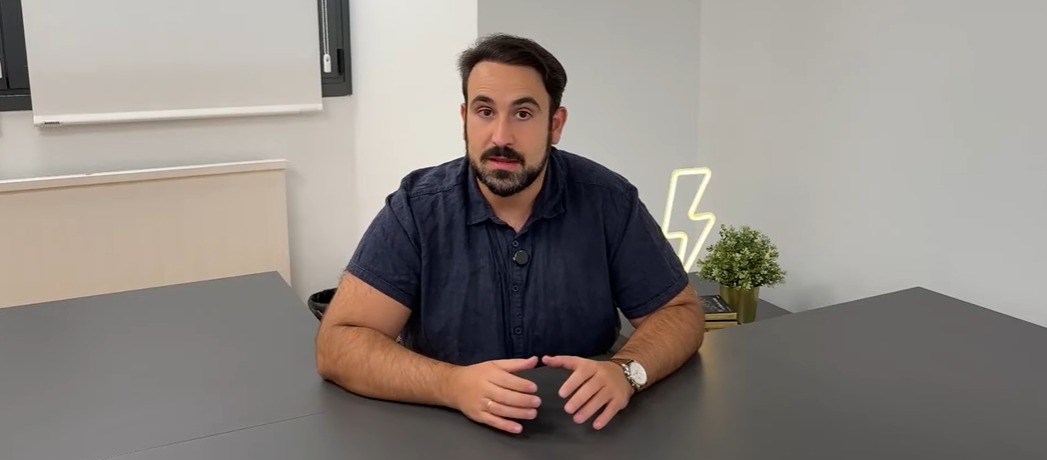
Bitcoin should not be understood as an everyday means of payment, according to D. María.
For the writer, BTC is not just money, but an innovation that solves double spending.
Finance specialists, whether they are academics, banking executives or economists subscribed to any theoretical current, are, according to the Spanish writer Álvaro D. María, those who are least able to understand the phenomenon that bitcoin (BTC) represents.
In a recent publication, Mr. María stated that, after years of interviews, debates and conferences, he can count on one hand the economists who understand what BTC is and what it entails. His diagnosis is that Traditional economic training is based on assumptions that conflict with the nature of this asset.
To explain this paradox, the analytic recurs first to a philosophical starting point. It takes up an idea from José Ortega y Gasset – Spanish philosopher – about how people are bound by their beliefs, interpret reality through them and tend to reject what contradicts them.
D. María, who wrote the book The Philosophy of Bitcoin and Micropolis, believes that this is exactly what happens with economists. He maintains that bitcoin has broken the schemes with which they analyze moneyvalue and monetary systems.
More than money, a redefinition of property
The Spanish popularizer highlights that many analysts discredit BTC with arguments such as “it is a bubble” or “they are digital tulips” – an allusion to a speculative crisis of the 17th century. These are comparisons that overlook its historical trajectory and, above all, the problems it really solves.
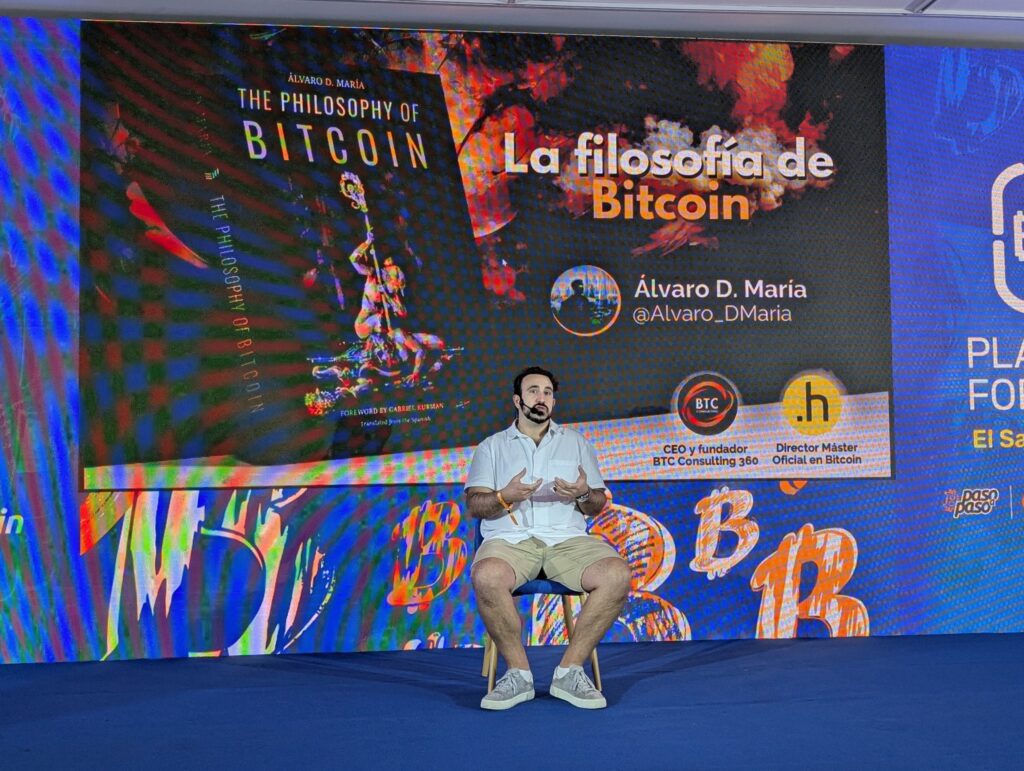
For the author, bitcoin is not simply a new form of money, but an innovation that addresses fundamental challenges such as double spending —the possibility of the same digital asset being copied and used more than once— and dependence on third parties.
Before BTC, it was impossible to own a truly scarce digital asset without resorting to an entity to verify transactions. That is, banks, platforms and providers act as intermediaries that control every detail of money transactions.
With this, privacy is lost, censorship risks are generated and dependency on structures that can fail is createdbe attacked or intervened by the State.
Along these lines, the advisor establishes that the creation of Satoshi Nakamoto (pseudonym by which the anonymous inventor of bitcoin is known) broke with that paradigm. This, as he already highlighted in an interview with CriptoNoticias, makes it a radically new way of conceiving property.
The most important thing that bitcoin does is redefine property rights. Until now, property has always depended on systems backed by coercive power. Bitcoin eliminates the need for a trusted third party and creates a global, autonomous system where people can own and transfer control of a real asset, digitally. In this way, bitcoin functions as a global system of absolute private property rights.
Alvaro D. María, author on bitcoin.
The pending task for economists
The writer expresses that the mistake of many economists is that they try to evaluate bitcoin as a means of payment or stable money, when in reality the main function of the asset is not to be an everyday transaction method. Its fixed offer and volatility, he describes, make it unsuitable for regular payments, but that does not imply a flaw in its design.
For this reason, he asks economists not to understand bitcoin within their theories, but to review them considering what this asset allows to achieve.
Economists have not yet done the necessary work. The task is not to interpret bitcoin through existing theories or beliefs, but to rethink those theories and beliefs in light of bitcoin. That’s where the work begins.
Alvaro D. María, author on bitcoin.
The traditional theory of economists is based on the fact that money arises from the State and depends on the central authorities on duty. On the other hand, bitcoin, although it is money, works in a different way: it is mined in a decentralized way with a programmed emission system.
The issuance of BTC is halved every four years at the halving. The process will end around the year 2140 when the absolute limit of 21 million units is reached. This makes it be seen as a scarce asset, unlike fiat money which is subject to devaluation due to its unlimited printing.
In addition, its network allows value to be transferred without intermediaries. It validates and records each transaction in a public and unalterable history. Its security arises from the consensus among thousands of participants distributed throughout the world, which completes a set of factors that They break with the classic monetary model.