
The Bitcoin mining industry has gone through a profound metamorphosis in the last decade. What started as a DIY activity, accessible to any enthusiast with a computer, has become a highly competitive industry sector, where energy efficiency and financial planning are as crucial as hash power.
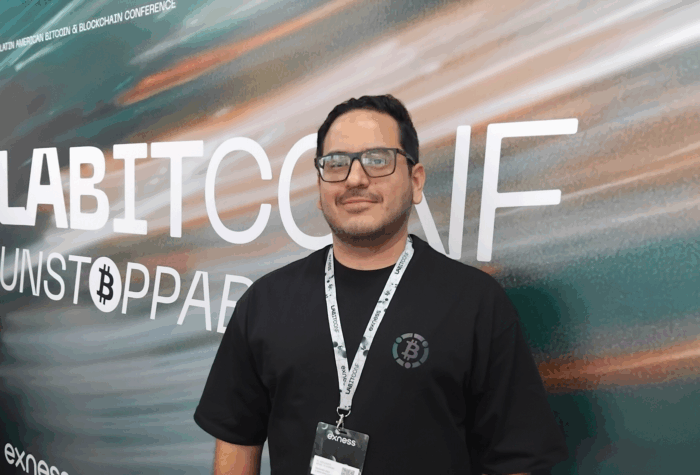
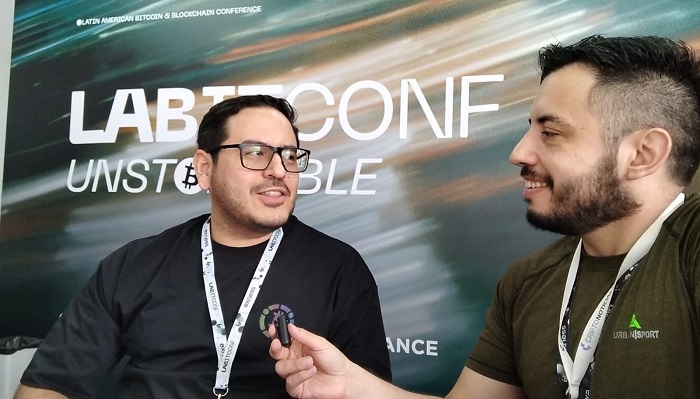
Within the framework of LABITCONF 2025, recently held in Buenos Aires, CriptoNoticias had the opportunity to speak exclusively with the engineer José Rafael Peña, SNS Manager of the ViaBTC mining pool.
With a career that ranges from the personal experience of adoption within the framework of the Venezuelan economy in crisis, to management in one of the pools largest mining company in the world (which also maintains close ties with the CoinEx exchange), Peña offers a precise x-ray of the current state of the network and the challenges faced by miners in Latin America.
For the specialist, the era of profitable amateurism is behind us. The complexity of the network and the programmed reduction of rewards require absolute professionalization.
“If you want to take the activity seriously you have to make a financial strategy looking at all the details, all the aspects of the business,” says the interviewee.
Bitcoin as a lifeline: a personal perspective
Before delving into the technical issues of the pools and hashrate, it is essential to understand Peña’s vision of the digital asset, forged in the economic reality of his native country. His approach to Bitcoin was not initially speculative, but pragmatic and necessary.
“I am from Venezuela,” Peña says at the beginning of the interview. «Bitcoin was a lifesaver at the time there. There was a lot of problem with currency exchange. In that context, Bitcoin was one of the simplest ways to change bolivars into hard currency.
This first-hand experience with the monetary utility of bitcoin defines an approach in which Technology is not just an investment vehicle, but a tool for financial freedom. “This is how Bitcoin came into my life,” he says.
The impact of halving and the need for a strategy
The current market operates under the new rules imposed by the most recent halving, an event that reduced the issuance of new bitcoins by half. More than a year after this milestone, and in a price context that challenges the most optimistic predictions of previous cyclesthe behavior of the miners has had to adapt.
Peña is forceful when describing this new scenario: «With the Halving, it is not like at the beginning of Bitcoin that a person with a laptop could mine and got 50 BTC in a block. That no longer exists. Currently, the reward is at 3,125 BTC per block.
Despite the reduction in reward, competition has not diminished; On the contrary, it has intensified. Network data supports the claims of the ViaBTC representative: “The hashrate, or miners connected to the Bitcoin mainnet, continues to rise. That is, there are more miners connecting, there are no miners disconnecting.
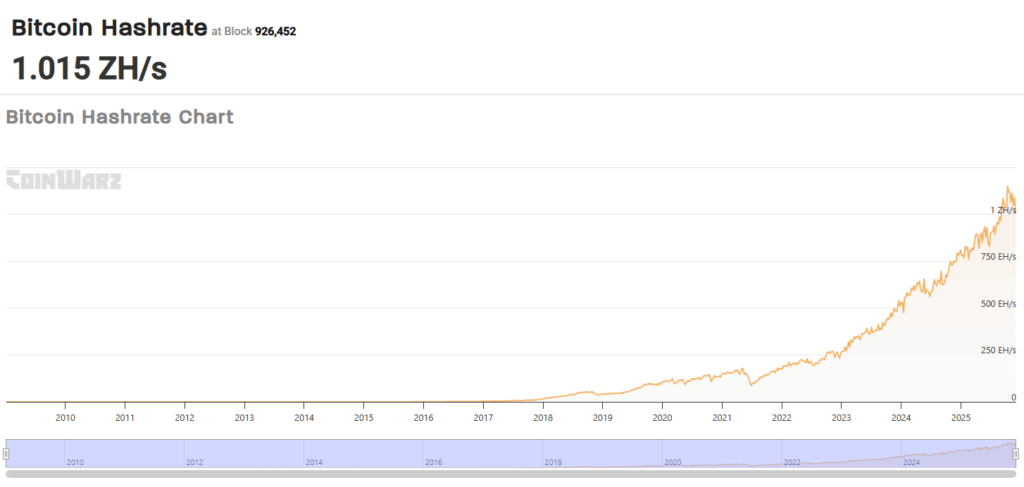
This “more competition for less reward” dynamic forces participants to rethink their business model. According to Peña, this “has made mining Bitcoin and other cryptocurrencies a much more specialized activity.”
This is where the central point of your analysis lies: Mining is no longer just a matter of hardware. “In other words, you no longer only have to think about the team, the place… You also have to think about economic strategies on how to precisely deal with any market volatility,” he explains. The old premise of “plug and mine” has become obsolete for those seeking sustained profitability. “It is no longer something as simple as: you connect the equipment and you are mining,” he warns.
Financial tools for Bitcoin and cryptocurrency miners
Given market volatility and the need to cover operating costs—mainly electricity—without liquidating bitcoin holdings at inopportune times, Financial services associated with mining (specifically collateralized loans) have become relevant.
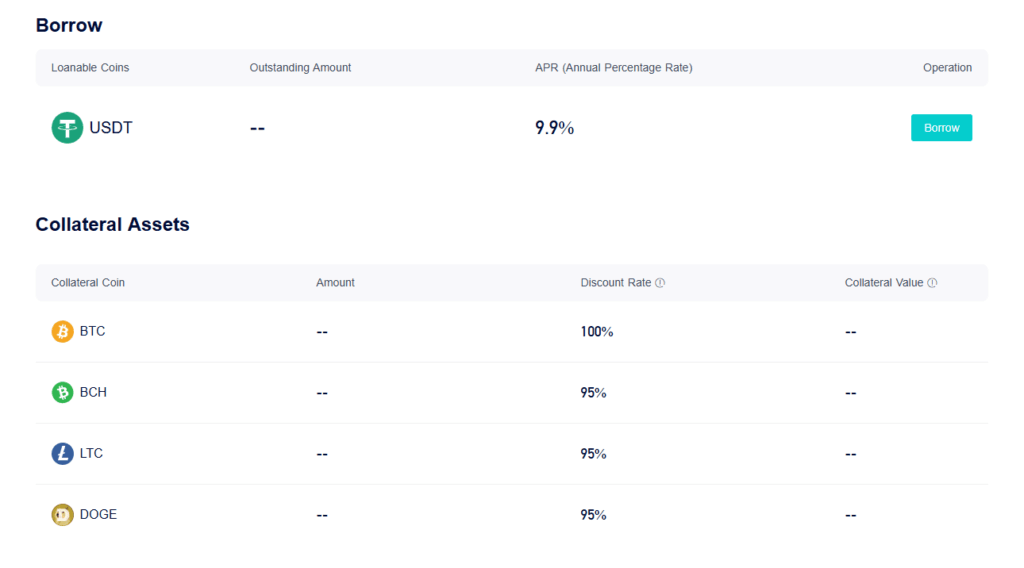
Peña highlights that ViaBTC, the third largest Bitcoin pool globally and leader in assets such as litecoin, has activated services designed to mitigate these liquidity pressures. «We not only provide mining services. We also currently have a new service that we created, collateralized cryptocurrency loans,” he points out.
The mechanics are simple, but vital for a miner’s treasury management: «They don’t sell their bitcoin, they put them in collateral, we give them USDT and when they need to recover it, they pay it and that’s it, that’s it. So that is quite useful for miners who want to pay for electricity, do not want to sell their bitcoin and cases like that.
It should be noted that, as Peña clarifies, This ViaBTC tool is not exclusive to miners, but “anyone can currently participate in collateralized loans.”
Latin America: energy potential and regulatory challenges
The interview in Buenos Aires was no coincidence. Latin America has positioned itself as a hub strategic for digital mining due to its energy resources. However, the region presents a mosaic of regulatory realities that determine where large farms are set up.
“Currently, ViaBTC is one of the only pools that has focused on the Latin American market,” says Peña, highlighting the availability of content and support in Spanish as a key competitive advantage in approaching the Hispanic community.
When asked about the structural challenges in the region, the engineer points directly to legal certainty as the determining factor, even above the energy cost.
«Mining is no longer an activity that you simply connect your equipment and that’s it. “It is an activity that requires too much investment, which is something that requires good legal stability.”
José Rafael Peña, SNS Manager of ViaBTC.
Peña contrasts two regional realities. On the one hand, he mentions the case of Venezuela, which “had its moment of mining boom, but currently due to legal difficulties it has become more problematic.” On the other hand, the rise of Paraguay stands out.
“We have the case at least in Paraguay that has more or less greater legal stability, they have clear rules even on the costs of electricity and that is encouraging several miners to come to the region thanks to the fact that the cost of electricity is also one of the cheapest in the area,” he analyzes.
The equation for profitability in Latin America, according to the manager, is made up of two inseparable variables: “What would be the cost of electricity and legal security.” Countries with expensive energy, like Chile, are practically excluded from the industrial equation because “mining makes it prohibitive.”
Mining as a network stabilizer and the ecological debate
One of the most recurring themes in the general media is the environmental impact of Bitcoin. Peña addresses this issue with a clear position, refuting the energy “waste” narrative.
“Wasting energy uselessly, as Andreas Antonopoulos once said, is like turning on the Christmas lights,” Peña argues, using a powerful analogy. “And yet every year, in many parts of the world, people put up Christmas lights that only last a few months.”
For Peña, the key is in the usefulness of the final product. «In the end they are producing bitcoin. You spend energy to produce bitcoin, which you can then return to fiat currency, national currency, and obtain resources that you can reinvest in electricity.
Looking ahead, and specifically towards Halving 2028, Peña envisions a deeper integration between mining and national electrical systems. Far from being an energy parasite, Bitcoin can act as an efficiency mechanism.
“If several governments, not only in Latin America but around the world, realize that it is an activity that can help stabilize national electrical systems, they would better understand the value that Bitcoin can have beyond just mining BTC.”
José Rafael Peña, SNS Manager of ViaBTC.
The specialist cites specific examples of this symbiosis: the use of mining to reduce the “venting” of methane gas in the oil industry (reducing the greenhouse effect) or the use of electrical surpluses that would otherwise be lost. “They reuse it and turn it into Bitcoin mining, which are BTC that in the end can be exchanged and get more money for the electrical service of that country.”
The future: efficiency, AI and the “lottery” for retailers
On the technological evolution of the industry, Peña observes a trend towards efficiency over brute force. «It seems to me that we are in a kind of stabilization of the teams. “It’s not even that the most powerful mining chips come out, but rather that we are going to look for it to be more efficient with, for example, cooling or renewable energy.”
In addition, it does not rule out convergence with artificial intelligence (AI) to optimize processes, although it clarifies that at the moment ViaBTC does not have public announcements about specific AI products, beyond constant internal evaluation to “not be left behind.”
Finally, although industrialization is unstoppable, Peña sends a message to retail users and enthusiasts who want to learn without risking large capital.
There are options for what he calls “lottery miners”, using low-cost, low-power hardware such as Bitaxe or NerdMiner. “Just by connecting them they can participate – without expecting profit, of course, because it is almost a lottery – and thus at least they can get closer to what Bitcoin mining is.”
For José Rafael Peña, the conclusion is clear: Bitcoin mining is an industry that has matured. It requires seriousness, financial strategy and a stable regulatory environment. But, above all, it remains the backbone of a monetary system that continues to expand and attract both industrial giants and curious people who are taking their first steps in digital sovereignty.