
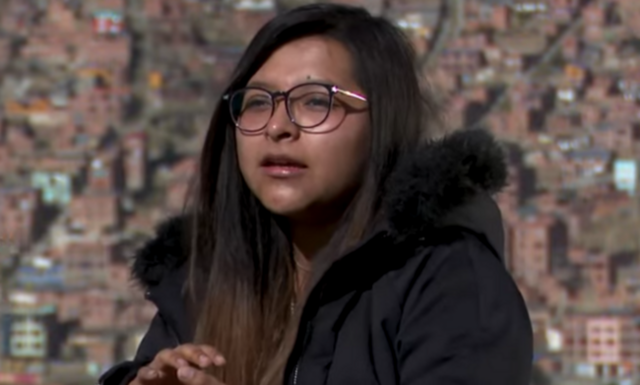
When Fabiola Acarapi traveled to DevConnect Argentina in November 2025 and said “I am from Bolivia,” people approached her because “everyone wants to know what is happening with cryptocurrencies in my country,” the founding engineer of the Ethereum community in her country told CriptoNoticias.
And part of what happens is a reflection of what happens in a classroom borrowed from the Catholic University of La Paz, every third Thursday of the month, where the Cryptovelada is held. Students arrive there with their worn-out backpacks, mothers bringing their children, engineers who have just left work. Nobody pays entry. They only bring desire and, sometimes, a few fritters.
Fabiola turns on the laptop and begins: “Today anyone can tell what they are learning. The microphone is theirs.”
One hundred and sixty boys and girls from all over Bolivia arrived with suitcases, mats and laptops full of stickers. Three days without sleep, only coffee, code and dreams. That It’s the Ethereum Bolivia Buildathon that turns a living room into a camp of ideas.
There are those who sleep under the table, those who wash their faces in the school bathroom and those, on the third day, present its first product running on Arbitrum or Avalanche.
We had kids who arrived with their suitcases and even their beds. [colchonetas] because they knew they were going to spend the entire three days hacking. Imagine, they came from all over Bolivia, from distant towns, with the clothes they were wearing and full of enthusiasm. They settled on the floor, shared power outlets, took turns sleeping for two hours and continued programming. At the end of the third day, when they presented their projects, many were crying with emotion… and so were we. Because those 160 hackers were not just numbers, they were kids who had never had an opportunity like this and in 72 hours they created real products that they want to continue developing. That, for me, is the most beautiful thing we have done this year.
Fabiola Acarapi, co-founder of Ethereum Bolivia.
Of the 36 projects they presented, 34% were decentralized finance (DeFi). The winning team, Dynexa, created a dapp that converts loyalty program points, airline miles, and gift cards into tokens redeemable for stablecoins.
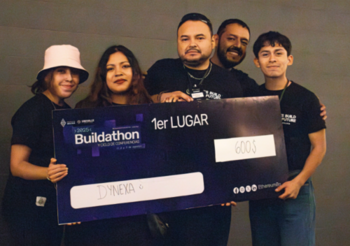
The second place, Torito, created a simple tool for you anyone exchange their USDT or USDC to bolivianos without having to go to a dangerous corner or pay commissions. In this way, the young people of Bolivia told the world that they also want to build the future.
We do not teach how to trade or how to get rich quick. We teach how to build, how to get remote jobs that pay in dollars, how a neighborhood boy can support his family without having to migrate. That’s why Solidity workshops are taught, on how to use AI to make your first dApp, on how to apply for Protocol Labs scholarships or jobs at Chainlink.
Freddy Chambi, leader of the Ethereum community, Santa Cruz headquarters.
That’s why they avoid talking about prices and candles. They talk about the future. And the future already has a name: they want Bolivia to host ETH Latam 2026 or 2027. “If the world doesn’t know what we are doing, let them come and see it with their own eyes,” said Acarapi.
USDT, the other side of Bolivia
While Fabiola and 160 Bolivian hackers slept on the floor of Santa Cruz creating dApps that They dream of changing Bolivia from aboveanother reality hit from below on the street.
When a journalist from Natalie Brunell’s team arrived in that same city, he did not see young people developing dApps. What he saw, in reality, were endless rows of trucks standing in the sun, drivers sleeping inside the cabins because the country had run out of dollars to buy diesel.
In Plaza 24 de Septiembre, in front of the cathedral, a man in a cap and plaid shirt whispered to him: “I have twenty dollars… do you want them for 240?” That was two and a half times the official change.
And he wasn’t the only one. They were everywhere. In the market, at the door of the Burger King, even inside the terminal bathroom. A silent army that no longer exchanges greenbacks… exchanges hope.
At CoperAgro, an agricultural company that has been around for thirty years. Karina, with a tired smile, explained without drama:
“Before, dad went to the bank and took out dollars for fertilizers. Now the bank says there are none. So I I get into Binance, I buy USDT in pieces of 500 or 1,000 dollars, fifteen times a month, and thus the company remains alive,” he explained.
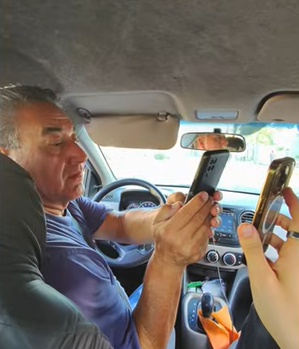
A taxi driver charged him for the trip with Meru, scanned the QR and told him: “Look, boss, with this I feel like I have real dollars in my pocket.” And in the duty free from the airport where the prices are no longer in dollars or bolivianos… they are in USDT.
A businessman summed it up for the journalist in a phrase that she herself could have said: “The government ran out of dollars… but we found ours.”
He reflects the same hope as the young people. They give life to your dreams at the ETH Ethereum Buildathon. It is the same illusion, although written with different keys, but with the same heart beating strong.
The orange code spreads through Bolivia
Bitcoin becomes the flame that illuminates paths that no one else sees. While Karina at CoperAgro adds transactions on Binance so as not to close, Juan Pablo Rojas and Alfredo tour Bolivia distributing knowledge about the currency created by Satoshi Nakamoto.
Both are founders of the Bitcoin Research community. They began activities in 2022 and have already added more than 63 businesses that accept BTC, from pizzerias in El Alto to the artisanal ArteFlow on the shores of Lake Titicaca. There, twenty days ago, they celebrated their ‘orange pill‘, the bitcoiner baptism, with stores that for the first time charged a coca tea in satoshis.
Juan Pablo tells it with that voice that seems to come from the Andes, firm but warm, like a fire in the night: «We go to every corner because we know that bitcoin is not just money; It is sovereignty for those who never had it.
And Alfredo, his traveling companion, nods with a smile that hides battles won. In a recent podcast, he recounted how, from a chance encounter with a blind person, his flagship program was born: they translated the White Paper to braille and set up workshops where touch replaces the screen. «He told me: ‘Bitcoin is like the internet, money that connects without asking permission.’
That man, in a workshop in La Paz, rejected the hand offered to him to navigate an app: «I can’t depend on a third party; I must depend on myself alone. Those words stuck in them like a mantra, and now they plan the same for the deaf: lessons in sign language, because self-custody does not understand barriers.
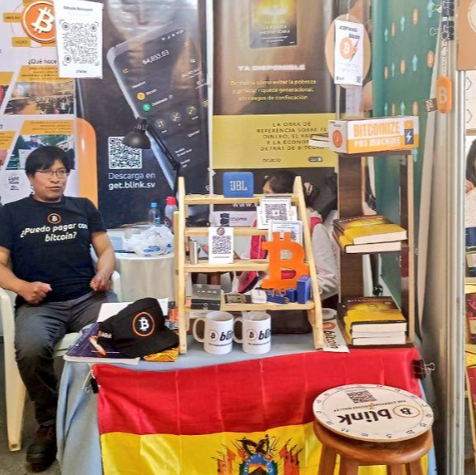
In the Salar de Uyuni, under a sky that seems infinite, Juan Pablo and his team “planted the seed” weeks ago, teaching tour guides how to receive tips in BTC while the salty wind whips their faces.
Bitcoin Research, backed by allies like Veintiuno.lat, dispels myths like someone sweeping Andean dust: “It is not a program; “It is a service like the internet, open to everyone.” And in every workshop, in every business that is added, A network is woven that does not stop at physical disabilities: reaches the heart of those who just want to sleep knowing that their future does not depend on an empty ATM.
Therefore, when Fabiola dreams of ETH Latam in Bolivia and Natalie sees prices in USDT in the duty freeJuan Pablo and Alfredo walk the highlands with a map in their hands and a fire on their chests. Because in Bolivia, bitcoin does not conquer territories; conquer souls. One by one, barrier by barrier, sat by sat. And at the end of the day, when the sun sinks into Titicaca, everyone, the hacker with a mat, the taxi driver with Meru, the salesman with Braille, begins to breathe a little more freely, each in their own way.