
The adoption of cryptocurrencies in Latin America has ceased to be a niche trend and has become a real useful tool for thousands of users.
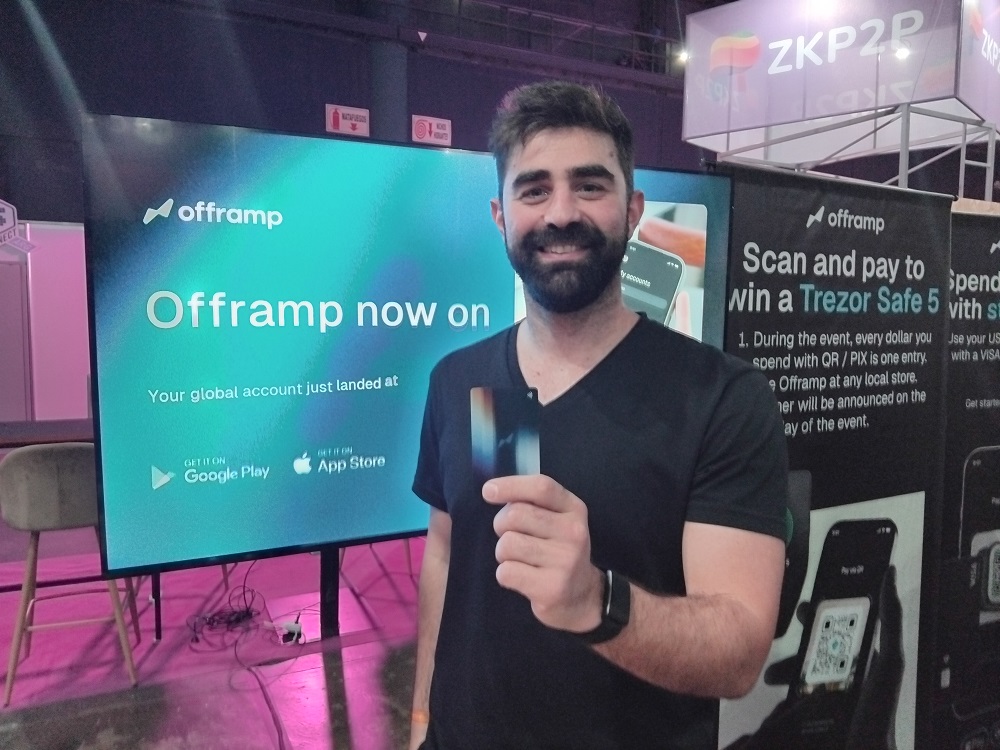
In this context, the infrastructure that allows the bridge between fiat money and digital currencies becomes critical. During the DevConnect event in Buenos Aires, we had the opportunity to interview Tobías Frieder, who leads the expansion in the region of Offramp, a neobank built on stablecoin technology.
Frieder, an economist from the University of Buenos Aires (UBA), Argentina, with a master’s degree in behavioral economics, came to the cryptocurrency industry driven by a personal interest that he later transformed into a professional career, passing through companies like Kraken before landing in his current role. His arrival at Offramp was not a coincidence, but a product of his experience as a user.
«It was in a very particular way. I had closed my startup and was looking for a job. Because of my personality, I need to work on a product that I really use and love,” Frieder said. Noticing the company’s lack of local presence, he contacted the founder directly: “I wrote to him that, given the opportunity in Latin America and that they had no one here, I would love to lead the region.”
A financial bridge for the global south
Offramp’s value proposition focuses on democratization of access to financial services which are traditionally reserved for residents of developed economies.
As the executive explained, The platform works as a virtual wallet where the reference currency is stablecoinsallowing users in Africa, Southeast Asia and Latin America to access dollar-based operations.
“We seek to offer first-world financial products to people from emerging countries,” said Frieder. This includes the ability to receive payments, invest in tokenized assets (such as US Treasuries), and use a US-issued Visa card.
“It is a financial offer very similar to that of the first world, but enabled by stablecoin technology for the global south.”
Tobías Frieder, Offramp expansion leader for Latin America.
On-chain custody and security at Offramp
One of the most sensitive points for users of digital assets is the custody of funds, especially after the collapses of centralized platforms in recent years.
When asked about who safeguards the tokens, Frieder was emphatic in the distinction of his operating model compared to traditional exchanges or lending platforms (lending).
«A great feature of Offramp is that the funds are always on-chain. When a user deposits, those funds do not go to our treasury; They go to an address that the user can verify in the block explorer. “We do not have access to those funds.”
Tobías Frieder, Offramp expansion leader for Latin America.
This architecture seeks to mitigate counterparty risk. “Unlike past situations like FTX or Celsius, where users lost funds due to custodian issues, in our case that cannot happen because the assets remain on the blockchain and out of our control,” he added.
The system uses a hybrid structure to allow the operation of the card and, at the same time, provide security in withdrawals. “We offer a secondary wallet where the user has the private key and the 12 words to sign withdrawal or sending transactions,” Frieder explained, detailing that for everyday use of the card the debit is automatic, but the movement of funds requires the user’s signature.
Technology behind the Offramp card
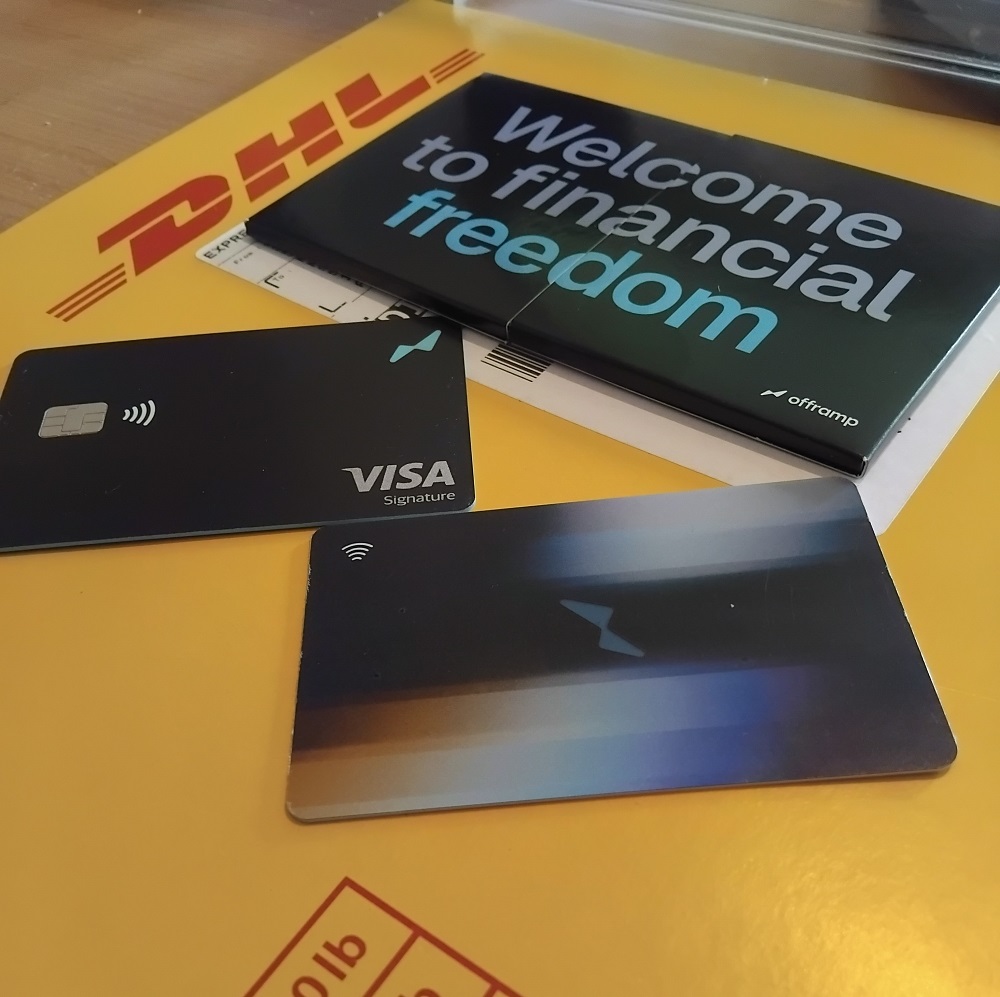
To materialize payments in the real world, the platform relies on the infrastructure of the Rain company and the Visa network. The internal operation is transparent to the user, who operates as if it were a debit card, but technically It is based on a credit model guaranteed by stablecoin holdings.
«For the user it works like a debit card: if you have 50 dollars and you spend 50, they are debited. But technically, it is a secured credit card. When you have 50 USDC in your account, Visa dynamically gives you 50 dollars of credit,” explained the interviewee.
Regulatory compliance is an unavoidable requirement in this scheme. Frieder confirmed that the platform requires “know your customer” (KYC) processes through global suppliers.
«Today, players like Visa or Mastercard do not issue cards without identity verification. Options without KYC are usually limited or have a dubious future,” he said.
CriptoNoticias reported days ago the case of the Aqua Wallet card that was offered without the need for KYC and was recently withdrawn from the market.
Local integration and regulatory framework
Since Argentina and Brazil represent key organic markets for the company, The strategy has included integration with local rails to optimize the user experience and exchange rates.
While the international card is ideal for foreign purchases or digital services, domestic use in countries with exchange controls or price gaps requires specific solutions.
To do this, they have carried out an integration with Manteca, a locally regulated company in Argentina for payments with the national QR system.
“When paying with QR, the transaction does not go through Visa, but through Manteca’s local infrastructure, offering a much more favorable exchange rate,” explained Frieder.
This allows users to diversify their operation: “Thus, the user can use QR for local expenses or transfer to their bank to pay the rent in good exchange, and use the card for international purchases (Amazon, ChatGPT, travel) directly debiting USDC.”
In relation to the regulatory framework, Frieder clarified that operations involving local fiat currency are carried out under the structure of its partners. «Rain is responsible for regulatory compliance for the use of the card. However, when there are transactions with pesos (deposits, withdrawals, QR), they are made through Manteca, and there it operates under the regulatory framework of Manteca as PSAV in Argentina.
Future plans
Offramp maintains its current focus on stablecoins as a transactional utility vehicle, without seeking to compete in the field of exchanges or speculative trading. When asked if they plan to incorporate direct payments with bitcoin (BTC), ether (ETH) or other cryptocurrencies beyond stablecoins, the response was cautious.
«In principle it is not in the roadmap in the short term. We do not seek to be an exchange or a trading tool. “The possibility of accepting deposits in BTC and ETH is being discussed, perhaps to use them as collateral and obtain credit in stablecoins, but there is no immediate plan,” he assured.
Looking to the future, the company is committed to deepening regional interoperability, working on incorporation of virtual accounts that allow users to operate locally in multiple jurisdictions. «We are incorporating virtual accounts so that users from Argentina can have accounts in Brazil, Mexico and Colombia. This will allow you to send and receive money locally as if you had an account in those countries,” he explained.
Finally, beyond the financial infrastructure, Frieder highlighted a curiosity about the hardware they offer their users, which has generated traction in recent events: a physical card with distinctive visual characteristics.
«As a recent novelty, at ETH Latam we present a special edition of our physical card that lights up when paying. Functionally it is equal to a contactlessbut it had a very positive viral impact. We are happy to combine useful functions with details that make the experience more fun,” concluded Frieder.