

Bernstein postpones bitcoin’s arrival at $200,000 by 2027.
This new stage would be with less volatility and slower, but sustained price increases.
Investment firm Bernstein notes in its most recent report that bitcoin (BTC) has entered a longer bull market phase.
“In light of the recent market correction, we believe that the BTC cycle has broken the 4-year pattern (with peaks every four years),” indicated the firm’s analysts.
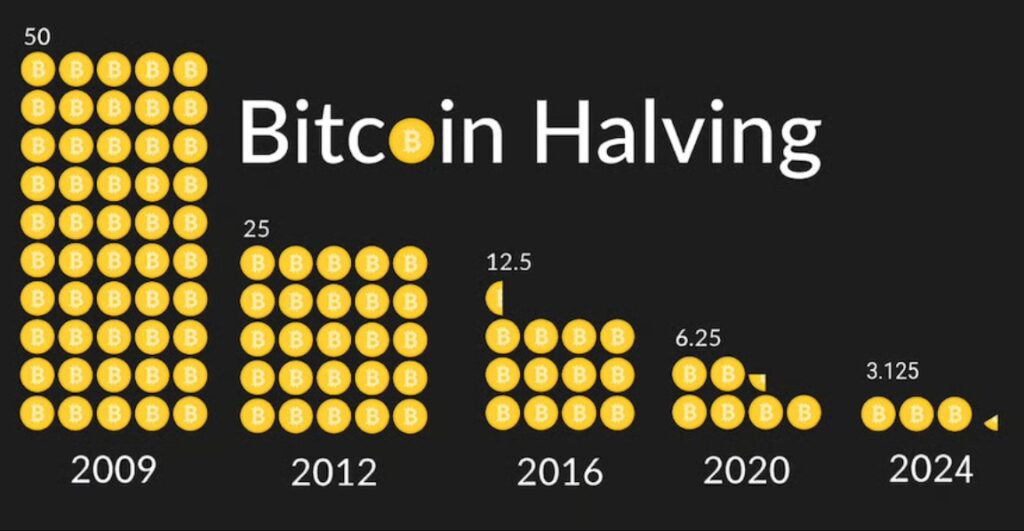
That pattern they refer to is linked to the halving, the event that halves the mining reward and that has historically ordered bitcoin cycles into bullish and bearish phases every four years.
Under that logic, After three years of increases, the fourth – 2026 – should be a bearish period, something that Bernstein now puts into doubt.
What was stated by Bernstein specialists is echoed in one of the most recent analyzes by Jason Hamlin, founder of Nicoya Research.
As reported by CriptoNoticias, Hamlin warns that the halving will no longer be a decisive factor in anticipating BTC highs, since its impact is reduced with each cycle. In 2024, the reward fell to 3,125 BTC and inflation fell to 0.83%, a much smaller cut than in 2016, when it went from 8.8% to 4.4%.
This lower relevance of the cycle suggests that other factors, such as macroeconomic factors, will be more determining for the price of the most valuable asset on the market.
Institutional investment changed the game for bitcoin
In this scenario, Bernstein maintains that the true driver of the market is institutional investment. According to its analysts, This would give way to a new stage with lower volatility and slower price increases.but more sustained over time.
In this regard, the firm highlights that BTC “is in a longer bullish cycle, with firmer institutional purchases that offset any panic selling by the retail public.”
And examples abound: Strategy, the company founded by Michael Saylor, acquired 10,624 BTC at the beginning of December, raising its reserves to 660,624 BTC. That is, the company took advantage of the price drops to continue accumulating, which shows that the type of demand that is reconfiguring the market cycle.
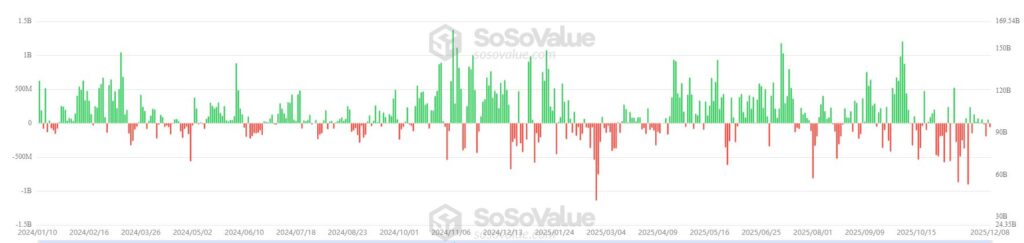
Added to this is the behavior of bitcoin ETFs. “Despite the 30% price correction, outflows were less than 5%, which demonstrates the strength of institutional interest,” explain Bernstein analysts.
It should be noted that, since its launch in January 2024, These instruments have already raised more than 57 billion dollars.
With that support, Bernstein updates his forecasts. He no longer expects bitcoin to reach $200,000 this year, but rather to have a slower but constant rise: “$150,000 by 2026, a possible peak in 2027 of $200,000 and a long-term goal close to $1 million by 2033.”