
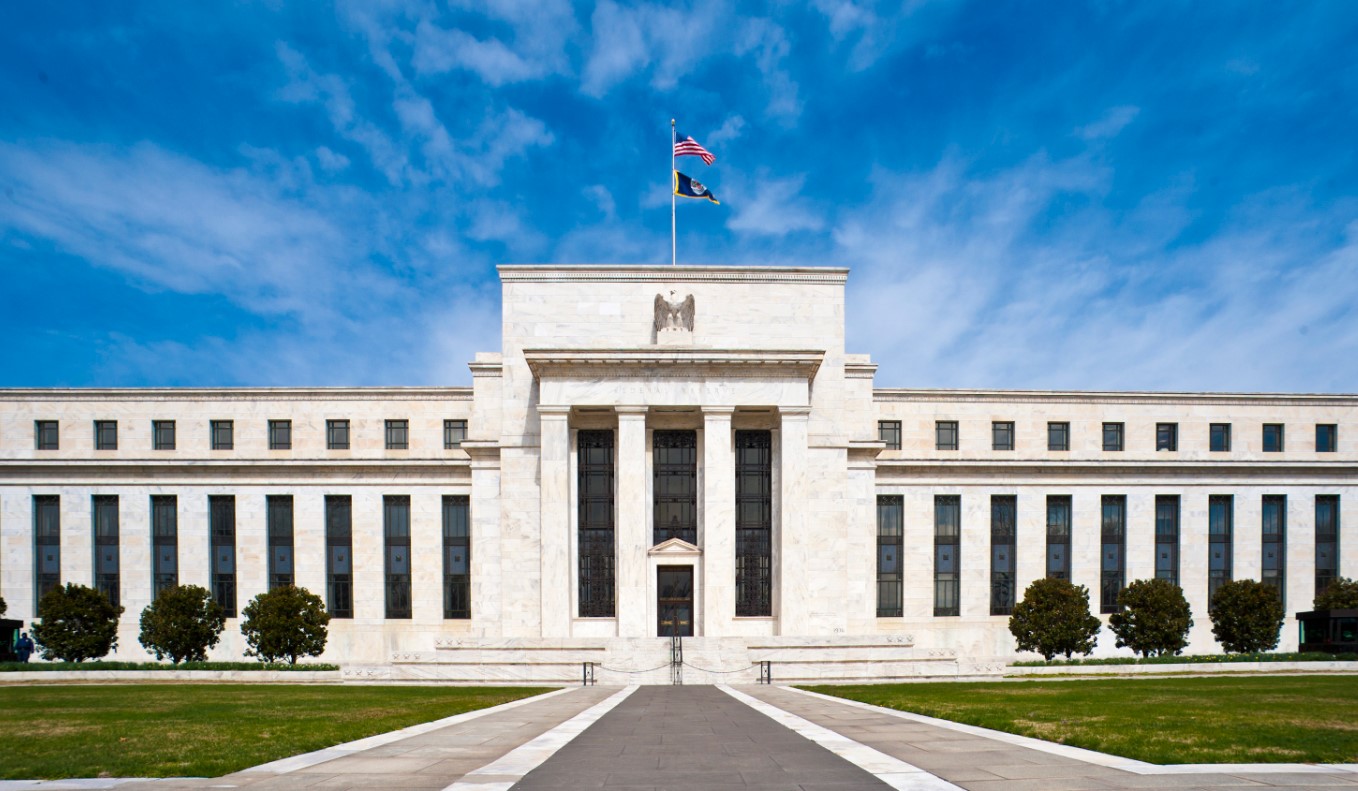
The FED’s balance sheet is at its lowest level since 2020.
In the medium term, this means greater liquidity in financial markets.
The US Federal Reserve’s quantitative tightening (QT) program officially ended on December 1, after more than three years of systematic reduction of Central Bank assets. A factor that is usually positive for bitcoin (BTC).
According to data of the FED, the balance sheet of the monetary institution fell in November by USD 37,000 millionstanding at USD 6.53 billion. This is the lowest level since April 2020. This is seen in the following graph:
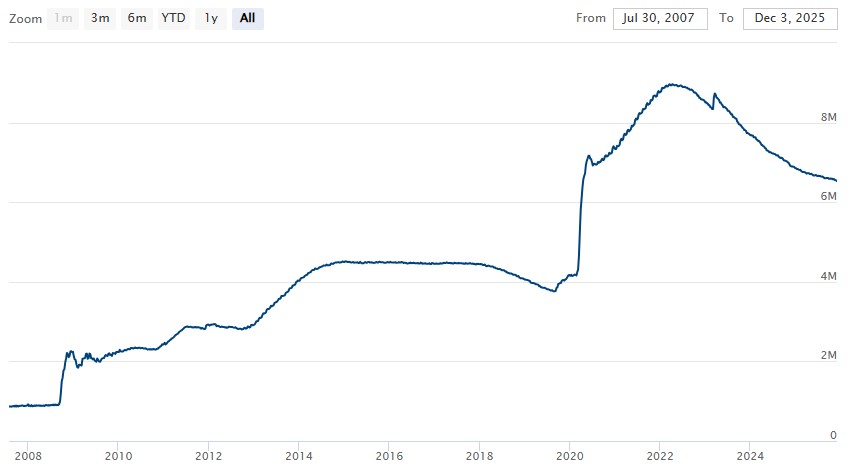
Additionally, during QT, the Federal Reserve reduced its portfolio by USD 2.43 trillion, equivalent to 27% of the total. The above, reversing more than half of the USD 4.81 trillion incorporated during the quantitative easing applied in the pandemic.
The fall has been visible in Treasury securities. These fell by USD 4,000 million in November, to USD 4.19 trillion (as seen in the following graph). Also in mortgage securities (MBS), which fell by USD 16,000 million, reaching USD 2.05 trillion. Likewise, its lowest level since 2020.
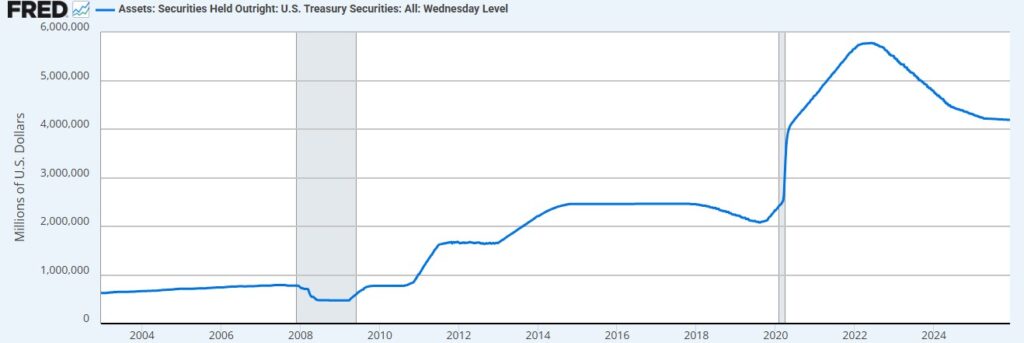
The above graphs confirm that the restrictive phase of US monetary policy seems to have reached its end point. Additionally, the move coincides with increased expectations of interest rate cuts. And with a change in tone from the US central bank towards a less contractionary stance.
Greater institutional interest in bitcoin thanks to the FED
Brazilian financial analyst André Chalegre explained to CriptoNoticias that the FED’s decision to end the QT in the US. implies immediate relief for the markets. As well as a better outlook for bitcoin. This, “improving financial conditions in general.”
“In the short term, this tends to increase the risk appetite for institutional investors through ETFs and also even for the retail sector,” he said. And he added that, in the medium term, it can be estimated that the FED will inject liquidity “through other means.” This, since the FED’s priority “is to maintain liquidity shock stability.”
It must be taken into account that the behavior of the bitcoin market has shown correlation with global liquidity cycles. Especially since the monetary expansion of 2020, when the COVID-19 pandemic. Although a gap has opened two months ago, as seen below:

In that order of ideas, less monetary pressure in the US implies a more conducive environment for institutional entries into bitcoinespecially through ETFs, Chalegre insists. This, since they represent a significant source of demand in the US market.
However, while the end of QT does not guarantee an immediate change in the price of bitcoin, it does mark a critical point in the Federal Reserve’s stance. The expectation of rate cuts, added to the possibility of new liquidity injections, creates an environment that has historically favored risk taking in financial markets.
With the FED’s balance sheet at its lowest level since 2020 and signs that restrictive monetary policy is coming to an end, the coming months could define a more constructive scenario for the digital currency.
As previous cycles have shown, the bitcoin market tends to react strongly when financial conditions expand again.