
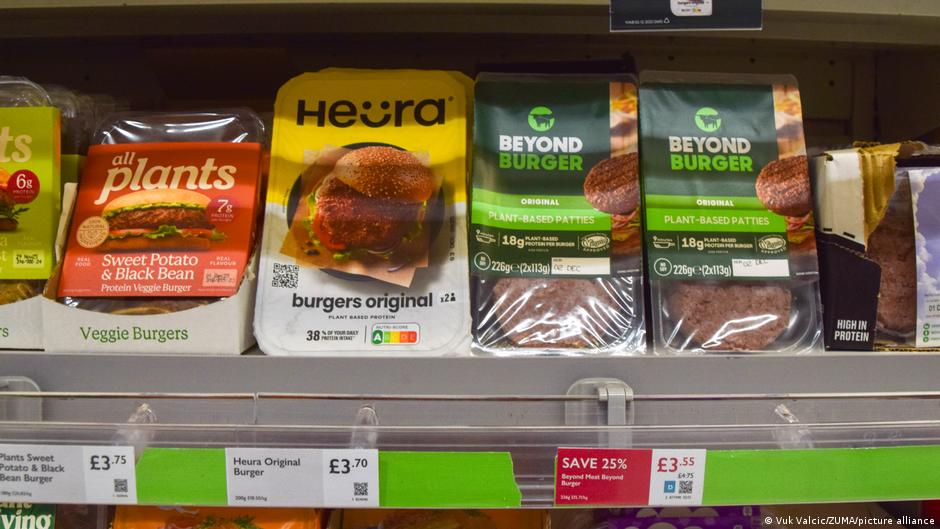
EU countries and legislators are set to clash on Wednesday over whether to ban the use of terms like “veggie burger” and plant-based “sausage”.
It’s a long-running debate, with cattlemen saying such language has confused consumers and weakened their sector.
Why are veggie sausages controversial?
The European Parliament reignited the controversy in October when it backed a proposal to reserve the label for foods containing meat, including steaks, sausages and hamburgers.
Supporters say the rule will help protect the value of traditional meat products and avoid consumer confusion.
The measure was introduced by French conservative lawmaker Céline Imart, who argued that it would prevent confusion with traditional meat products.
Imart stressed that the goal was not to ban plant-based foods, but to protect the “true meaning” of long-standing culinary terms.
Member states must now negotiate with Parliament, although many – notably Germany, Europe’s largest market for vegan and vegetarian products – have expressed objections.
German discount chains Lidl and Aldi have protested the ban, warning that sales could fall because consumers are already familiar with the existing names.
Do people mistake plant-based products for meat?
This controversy has received unexpected support from abroad. Former Beatles star Paul McCartney has joined a group of British MPs urging the EU to keep existing rules.
While the United Kingdom is no longer a member of the European Union, the group argued that the bloc’s decisions still affect broader markets. He said consumers intentionally choose plant-based products and do not confuse them with meat.
Meat producers disagree. France’s industry body Interbev claims that plant-based products blur the lines between categories and exploit meat terminology for marketing purposes, undermining the recognition of “natural, unprocessed” products.
France attempted to impose such a naming ban in 2024, but the rules were struck down by the country’s Council of State in early 2025 following a ruling by the EU Court of Justice.
The European Parliament previously rejected similar legislation in 2020, but the political balance changed after the 2024 European elections. Gains by conservatives and the far right, who have aligned themselves closer to agricultural interests, helped revive the proposal.
However, divisions continue even within those groups. Manfred Weber, leader of the conservative European People’s Party group, dismissed the idea as “not a priority”, insisting that consumers “are not stupid.”
Edited by: Louis Olofse