
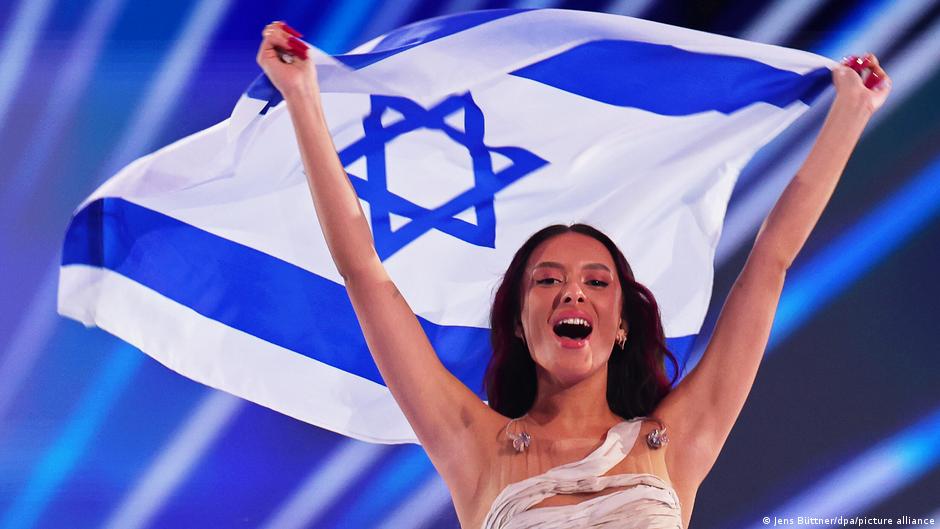
Iceland has become the fifth county to announce that it will boycott the 2026 Eurovision Song Contest, after Israel’s participation in the contest was officially confirmed last week.
Israel’s entry was approved after members of the European Broadcasting Union (EBU) decided not to vote on imposing sanctions on the country, despite boycott threats from several broadcasters over Israel’s actions in the war in Gaza.
Following the EBU’s decision, Spain, one of the so-called “Big Five” largest contributors to Eurovision, said it would boycott the 2026 event due to Israel’s participation.
Eurovision host broadcasters in Ireland, the Netherlands, Slovenia and now Iceland are also withdrawing from the song contest, which attracts millions of viewers worldwide.
Eurovision director Martin Green said, “We respect the decision of all broadcasters who have decided not to participate in next year’s Eurovision Song Contest and look forward to welcoming them back soon.”
EBU rift over Israel at Eurovision
On 4 December, the EBU, which runs Eurovision and represents public broadcasters from 56 countries, held its bi-annual meeting, where some members called for a boycott of Israel over alleged voting interference and its actions in the war in Gaza.
The Assembly decided to approve stricter voting rules in response to allegations that Israel had previously manipulated the vote in favor of its candidate.
Eurovision’s voting system faced scrutiny when Yuval Rafael, a survivor of Hamas’ October 7 attack on Israel, came second in this year’s public vote. Last year’s representative, Eden Golan, also reached fifth place despite a low jury score.
“The majority of Members agreed that there is no need for a further vote on participation and that the Eurovision Song Contest 2026 should proceed as planned with additional security measures in place,” the EBU said.
The war in Gaza has sharply divided host broadcasters and participants over the past two years.
Alfonso Morales, Secretary General of Spain’s RTVE, announced its withdrawal, saying, “The situation in Gaza, despite the approval of the ceasefire and peace process, and Israel’s use of the contest for political goals, makes it difficult for Eurovision to maintain a neutral cultural event.”
Spain is one of the “big five” large-market countries that contribute most to competition.
The Irish broadcaster also issued a similar statement on its decision to withdraw from the event: “RTÉ feels that Ireland’s participation is inappropriate given the catastrophic loss of life in Gaza and the humanitarian crisis there, which is putting the lives of many civilians at risk.”
Ireland has won seven times, a record it shares with Sweden.
Welcoming Israel will promote understanding
Israeli President Isaac Herzog was pleased that Israel was approved to participate in the 2026 show, saying, “It deserves to be represented on every stage around the world.”
“I hope that this competition will continue to be a competition promoting culture, music, friendship between nations and cross-border cultural understanding,” he said.
Germany and Austria, which will host next year’s competition, have been supportive of Israel staying in it.
German Chancellor Friedrich Merz suggested in October that he would support Germany’s withdrawal if Israel was excluded.
Eurovision in ‘most serious crisis ever’
“I have profiled the political history of the contest and I can say that this is really the most serious crisis we have ever seen, because we see such deep divisions in the European Broadcasting Union on this issue,” Dean Vuletich, a Eurovision expert and author of the book “Postwar Europe and the Eurovision Song Contest,” told DW.
He said the differences go beyond earlier EBU disagreements over the continued inclusion of Israel.
“In the past, there has been consensus regarding the exclusion of certain members for political reasons: Belarus in 2021, Russia in 2022. But here we see that there are actually very opposing views, supporters of Israel, critics of Israel, and they are not able to reach consensus on this issue.”
This controversy has also come up at a time when the Sangh wants to celebrate its own.
“Next year it’s the 70th anniversary,” Wooletic said. “It was supposed to be an even bigger party than usual, but the boycott by so many broadcasters means it will be mired in political controversy.”
This article was first published on December 5, 2025, and was updated following Iceland’s decision to join the boycott. Edited by: Shawn Sinico