

Nikolić maintains that many people today believe that a salary equals stability.
For the analyst, the real challenge is not in buying bitcoin, but in maintaining it.
Fernando Nikolić, cryptocurrency analyst, warns that the main obstacle to the adoption of bitcoin (BTC) is not technological, but cultural and educational. In his opinion, most people do not even realize how broken the current financial system is.
In an analysis of this, he points out that there is a deep disconnect between real living conditions and the way people perceive their situation.
“The majority of people do not have any financial decision-making capacity,” he says. As an argument, he says that many “believe that their salary is their wealth” and assume that a monthly salary equals stability.
According to his vision, this highlights that millions of individuals go through their adult lives with serious economic limitations and a level of literacy that is not the most adequate in the area.
Along these lines, the analyst goes further and maintains that A false sense of security currently persists around what people consider their heritage. It indicates that many view their home as a foolproof investment or assume that retirement accounts offer guaranteed protection, perceptions that, in their opinion, are far from reality.
The popularizer adds that even those who have a certain margin of decision take things for granted such as that their future pension is assured. For the specialist, this mix of unfounded trust and lack of understanding makes the bitcoin message difficult to incorporate.
Although having fiat money can be seen as synonymous with stability, that perception does not always coincide with its real purchasing power. Its value tends to erode over time for its unlimited printing, while bitcoin offers a predictable issuance scheme and a limited supply. This makes it possible with its demand to preserve long-term value and not only to sustain itself with salaries or investments that lose purchasing capacity.
Test starts after purchasing BTC
For Nikolić, before talking about adoption, it is essential to recognize that there is a basic problem. He explains that, even when a person manages to identify these flaws and develop enough autonomy and curiosity to question the system and buy bitcoin, the challenge does not end there… The real test comes after acquiring BTC.
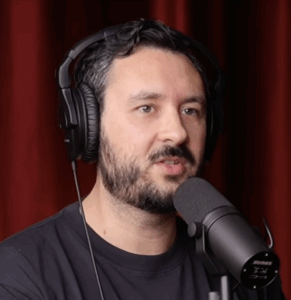
The challenge that the specialist points to is sustaining the investment when volatility hits and the social environment becomes hostile. He adds that the price could drop by half as family, friends and colleagues question the decision. “The hard part is maintaining something that’s collapsing halfway through while everyone tells you you’re an idiot,” he says.
This emotional pressure, added to the lack of training, causes many to enter into a bad moment and leave with losses. «Most people don’t have the stomach for this. They buy at the peak, sell at the bottom or simply abandon,” laments Nikolić. After that, he concludes by saying: “Bitcoin is more difficult to maintain than to buy.”
This contrast between theory and practice also appears in another of the analyst’s conclusions. As CriptoNoticias reported in August, Nikolić then considered that the understanding of bitcoin does not usually arise from books or technical debates, but from urgency. In countries marked by decades of inflation—he cites the case of Argentina—, devaluations and constant loss of purchasing power, the motivation to approach BTC is not philosophical, but immediate.