
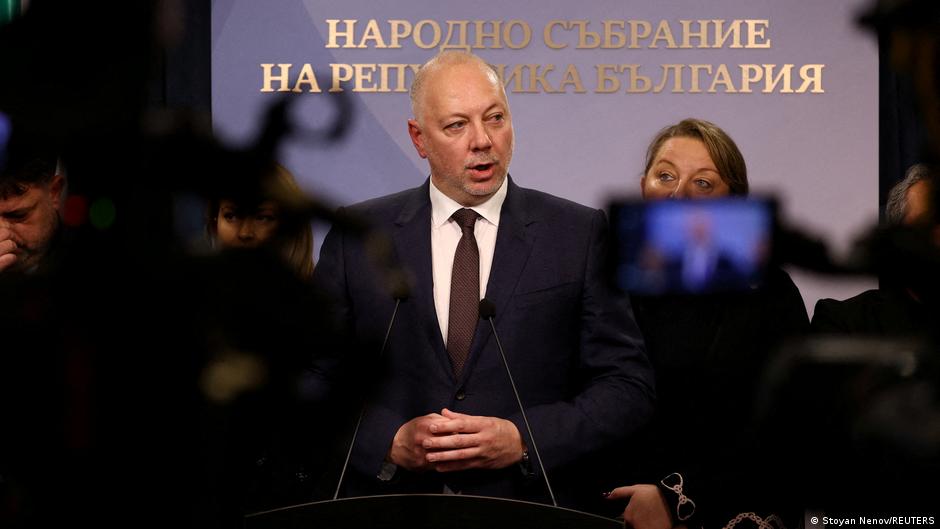
Bulgaria’s Prime Minister Rosen Zelyazkov announced his resignation on Thursday after weeks of mass protests over his handling of the economy and government corruption.
“Our coalition met, we discussed the current situation, the challenges we face and the decisions we need to take responsibly,” Zhelyazkov said.
“Our desire is to reach the level that society expects,” he said. “Power arises from the voice of the people,” he said.
The announcement came minutes before Parliament was scheduled to vote on a no-confidence motion against his government.
Thousands of protesters were out again in Sofia and other cities on Wednesday night, even after Zhelyazkov withdrew his controversial 2026 budget.
Why have there been mass protests in Bulgaria?
Among other things, the protesters were upset with planned increases in taxes and social security contributions. Protesters have said the money will finance corruption, and ordinary Bulgarians see little improvement in their daily lives.
Indeed, young Bulgarians in particular took part in the ongoing demonstrations and said they saw no way to plan a future in the country.
Even President Rumen Radev had asked the government to resign. In a statement on his official Facebook page he wrote: “Between the voice of the people and the fear of the mafia. Listen to the public squares!”
Although Radev has limited political power, he now must convene Bulgaria’s political parties in parliament to form a new government. In the unlikely event that he becomes incapacitated, he will appoint a caretaker government that will rule until elections are held.
The country’s political crisis comes just ahead of its planned entry into the eurozone on January 1. The controversial budget was Bulgaria’s first budget calculated in euros.
Edited by Shawn Sinico