
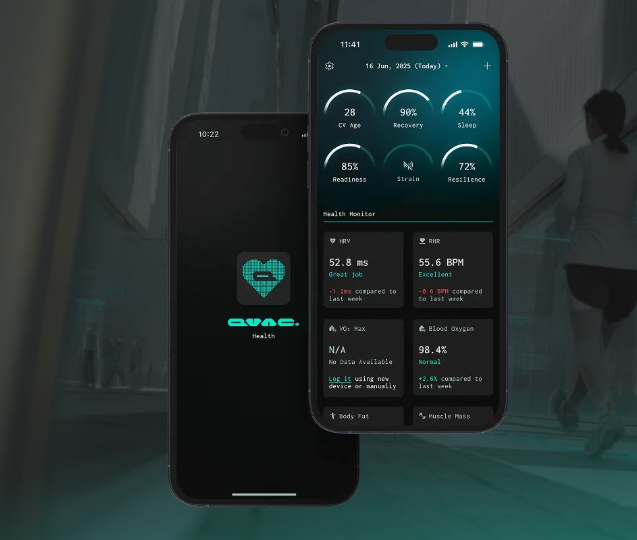
Tether, the company that issues the USDT stablecoin, launched QVAC Health on December 10. It is an artificial intelligence (AI) application that monitors users’ health data and stores it within devices (phone or computer), without using the cloud or third-party servers, increasing user privacy.
QVAC (QuantumVerse Automatic Computing) is the platform base where those are built apps of AI, such as QVAC Health, QVAC Workbench and a third called QVAC Translate, not yet available.
QVAC Health is built within Tether’s new artificial intelligence division, called Tether AI. The latter, launched last May and reported by CriptoNoticias, is an open source tool that allows developers to create various AI applications.
In this context, the Tether company itself introduced QVAC Health, a free app that monitors health data such as activity, sleep, heart rate and nutrition from different sources, such as smart watches and rings.
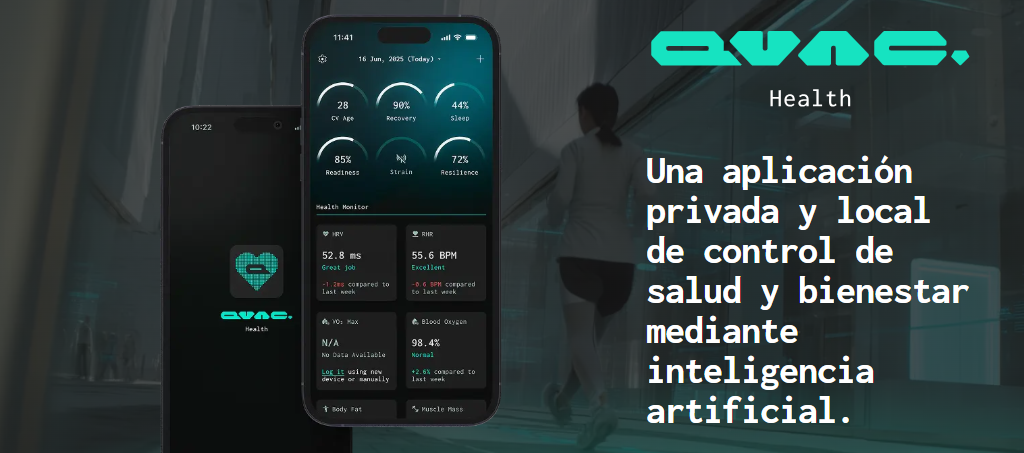
Anyone with an iPhone or Android phone can download those apps. No subscription or registration required. In addition, they work without an internet connection once the AI models are downloaded.
On the other hand, in parallel with Tether AI, the company is developing a wallet that will include artificial intelligence agents capable of autonomously managing money. They would include the option of payments with bitcoin (BTC) and USDT.
Local storage: the blow to Big Tech’s business model
The application processes the information with artificial intelligence models that run on the device itself (technology known as “on-device AI”).
The data is saved in a folder encrypted and isolated from the rest of the operating system. Only available to the user. The web from QVAC Health clarifies the following:
QVAC Health processes all your health data entirely on your device. Personal information, medical records, and biometric data are never sent to external servers. Your data is kept private and secure on your device.
QVAC Health website.
This represents an important change compared to the current scheme. Most health apps ddepend on native services (like HealthKit on iOS or Google Fit on Android) to read, store and sync biometric information.
That model implies that data passes through the layers of the operating system and, in many cases, are backed up to iCloud or Google services for functions such as restore, synchronization between devices or system statistics.
In this process, part of the information is recorded on the Apple or Google platforms. QVAC Health’s proposal aims precisely to avoid this circuit, which protects privacy.
By not using these native services for reading or storage, the app keeps the data outside the usual routes of the operating system.
Even when running on an iPhone, Apple does not have access to content within QVAC unless the user voluntarily decides to enable integrations like iCloud or HealthKit.
In the absence of those voluntary connections, information remains local, without telemetry or external copies, which differentiates Tether’s proposal from the cloud-based storage model predominant in current mobile ecosystems.
The future of Tether AI: using bluetooth technology for greater information sovereignty
Tether advancement that the development plan includes direct connectivity via Bluetooth Low Energy (BLE).
That implementation would allow QVAC Health to read raw sensor data without going through the manufacturers’ APIs (Application Programming Interface) or the cloud services associated with each ecosystem.
In other words, the app could obtain the biometric information directly from the portable device, without Apple, Google or the brand providing the data that is intended to be protected. act as mandatory intermediary.
That ability to collect end-to-end data is key to user sovereignty.
As already mentioned, QVAC Health operates outside of native services by storing data exclusively in its local space.
With future direct connectivity via Bluetooth, it would extend that same logic when obtaining information: it would allow sensors to be read without going through the manufacturers’ APIs or their intermediate software layers.
In practice, this would add a greater degree of sovereignty: not only storing data outside the device ecosystem, but also capture them without intermediarieskeeping the entire flow (from acquisition to processing) within QVAC’s own environment.