
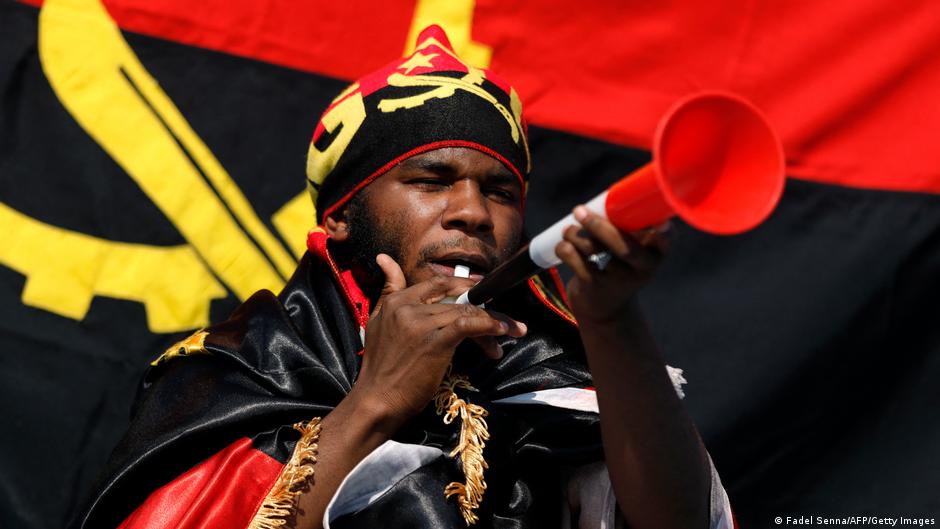
Almost 20 years after the birth of the idea, the fourth edition of the African Youth Games gets underway in Angola this month. With the 2022 edition canceled due to scheduling issues, it took until last summer in Algeria for the continent’s youth aged 14-17 to finally be able to compete against each other. The inaugural African School Games (ASG) was a success, and a reminder of how important these events are for youth.
African Youth Games (December 10–20), with 14–17-year-olds from across the continent competing in 33 sports. The inclusion of two traditional board games, Kila and Vela, nods to African heritage and allows for cultural learning.
“It’s a good idea to do sports development to host events to give opportunities to youth,” Bella Bello Bitugu told DW.
“The question you ask yourself is what will happen from now on? For example, this is the third that Ghana has participated in and we have the largest contingent, 70 people coming. So what will happen after that? Where is the monitoring, where are the facilities, where are the programs at home?”
Bitugu is a Senior Lecturer in the Department of Physical Education and Sports Studies at the University of Ghana. He studied in Ghana and Austria and specializes in development through sport. He is also a former technical advisor to the Ghanaian Minister of Youth and Sports.
The matter of sports washing?
Bitugu is also curious about the fact that the country continues to face criticism human rights record Such huge investment in sports recently. Last summer, the men’s basketball players hosted AfroBasket and won. This was the 12th time they won the Continental Basketball Championship. In mid-November, Lionel Messi’s Argentina attracted a huge crowd to a friendly match in Luanda as part of the country’s 50th independence anniversary celebrations. Argentina won 2-0 with Messi’s goal. The event drew a huge, enthusiastic crowd.
“I will say this [sportswashing] That’s something you can probably attribute to Angola as well,” Bitugu said.
“Finally let’s give them some good news about us, let’s open the system, let’s make some moves, let’s make some show of peace, that we have everything… Mainly a good idea, but we want to question why Angola, why now?”
The country has also invested in infrastructure. Mitrelli, a Swiss-based international company that focuses on infrastructure projects across Africa, has developed the Bengo Paralympic Sports Complex in the Bengo Province of Angola. This state-of-the-art facility covers more than 20 Olympic and Paralympic disciplines, and can accommodate up to 250 athletes. The complex opened just in time for youth sports, and while clearly a step in the right direction in terms of development there, Bitugu wonders if it will be sustainable.
“Are they going to be a white elephant?” he asked. “Because you know sports facilities are very expensive and not profitable in themselves. If you don’t get a constant flow of money from the government you have to combine it with non-sports activities. But you can’t always depend on the government for money.”
Sports is a universal language for youth in Africa
The sustainability of these events is at risk, which seems especially relevant as the event is also serving as a qualifier for the Youth Olympic Games to be held in Senegal next year. Ultimately, the main objective of these events is to provide Africa’s youth with the opportunity to get their first taste of international competition and take the next step in their development.
“Active Africa, victorious Africa, peaceful Africa, united Africa – all these things are what sport offers,” Bitugu said.
“These are the strengths of the game. Unfortunately in some cases they are abused, but these are the potential things when you bring young people together, they understand each other, they have a collegiality.
“This is a wonderful opportunity for peace, unity, tolerance, fairness and understanding, especially at this time in our world where we focus more on our differences than on money.”
Bitugu hopes both these Games in Angola and next year’s Games in Senegal can find a way to return to a more human-centred approach.
“Sports are becoming too monetized, too commercialized and the human element is being lost in such a way that people who go to sports don’t even think about anything other than winning and money.”
The hope is that the legacy of youth sports in Angola, and indeed the Youth Olympics in Dakar next year, is one of lasting investment in young people. Competition matters, but regular opportunities to develop the values that sport provides matter even more.
Edited by: Chuck Penfold