

The bulletin is not a rule, regulation or statement of the Securities and Exchange Commission.
The document provides “tips and questions” to help you better hold cryptocurrencies.
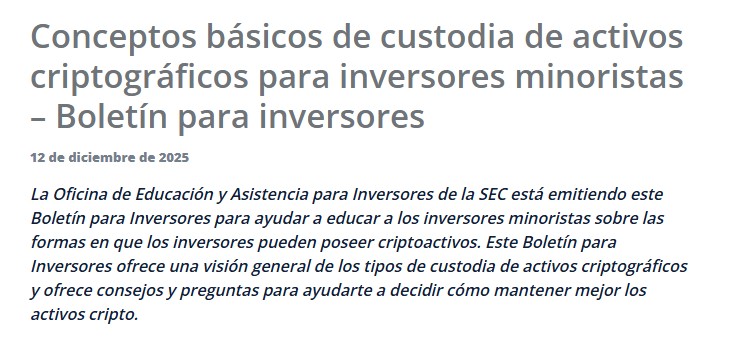
The United States Securities and Exchange Commission (SEC) published a new bulletin with the aim of guiding retail investors on how to own and custody bitcoin (BTC) and cryptocurrencies. The document was prepared by the Office of Investor Education and Assistance and is for informational purposes only.
According to clarify the agency itself, the bulletin does not constitute a rule, regulation or official statement of the SEC. It has neither been approved nor rejected by the commission. Therefore, it has no legal effects nor modifies current legislation.
However, the text explains what is meant by custody of digital assets and details the operation of outsourced custody and self-custody wallets. Likewise, the SEC recalls that The loss of a private key implies the definitive loss of access to the assets.
The newsletter also differentiates between hot wallets – connected to the internet and more practical to operate – and cold wallets – offline physical devices that offer greater protection against cyber threats. Besides, emphasizes the importance of protecting the seed phraseused to recover a digital wallet.
This educational approach by the SEC occurs in parallel with regulatory advances in the United States. On December 12, the Office of the Comptroller of the Currency (OCC) approved the establishment of five national trust banks linked to the bitcoin and other digital assets sector.
These are BitGo, Fidelity Digital Assets, Ripple, First National Digital Currency Bank and Paxos. These entities will be able to offer custody services, although without taking insured deposits or granting loans, CriptoNoticias reported.
Taken together, these initiatives reflect increased interest by US regulators in establishing reference and supervision frameworks around the custody of digital assets.