
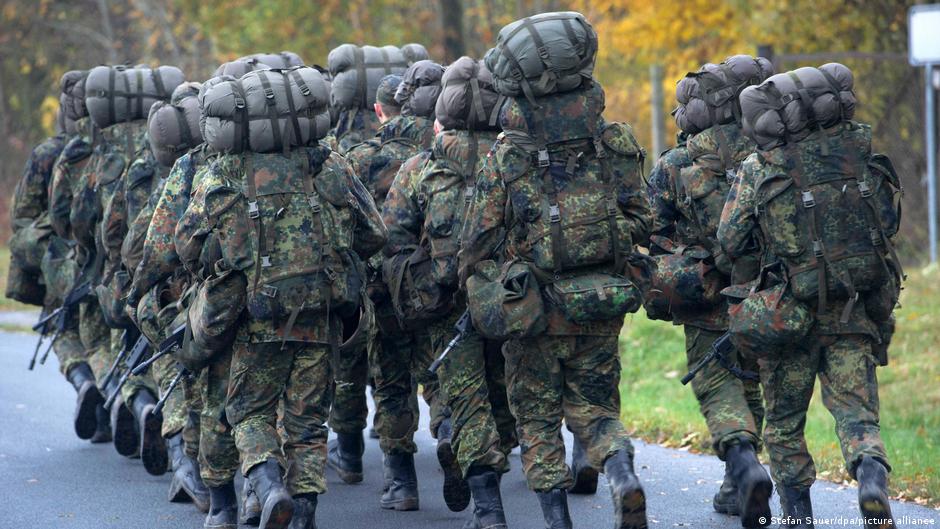
The Bundestag budget committee has approved a €52 billion ($61 billion) military spending package as Germany looks to rapidly scale back the security threat posed by Russian aggression.
The Budget Committee is in charge of all large-scale arms purchases, so it does not require full parliamentary approval.
Military outlays have been exempted from rules restricting public debt for the next few years as Germany tries to bring its fighting forces back to full combat readiness after years of underfunding.
What will the Bundeswehr buy with this money?
The military equipment to be purchased includes clothing and protective equipment for soldiers worth €21 billion and 200 Puma infantry fighting vehicles worth €4 billion.
The missile shield system Arrow 3 rockets developed by Israel and the US are also on the 29-point list of wanted purchases proposed by the German armed forces or Bundeswehr.
German arms maker Rhinemetal is also to receive a €1.76 billion order for a satellite-based reconnaissance system to support Bundeswehr forces deployed in Lithuania, on NATO’s eastern flank.
What have German officials said?
Speaking to media in Berlin, Defense Minister Boris Pistorius said the decision to approve the spending puts the government and Parliament on the path to meeting ambitious defense commitments.
In a statement, his ministry said: “We are sending a signal to the (NATO) alliance and our allies: Germany is moving forward.”
It stressed, “We are fulfilling our obligations to the alliance and accepting our responsibility for security and peace in Europe.”
Edited by: Dmytro Lyubenko