
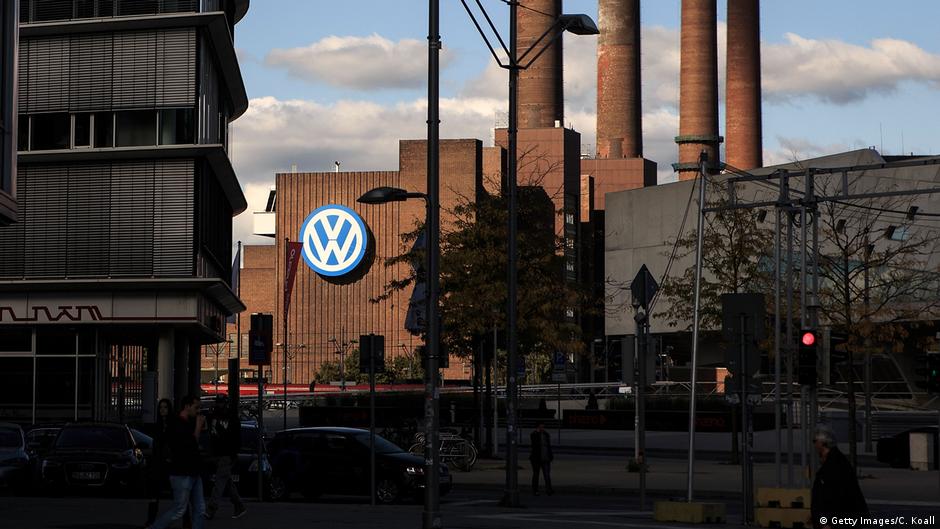
Their worldwide exports have turned them into some of Europe’s most prosperous regions, but now Germany’s auto capitals are headed for tough times.
Cities like Wolfsburg, Ingolstadt and Stuttgart – home to Volkswagen, Audi and Mercedes respectively – are seeing dramatic declines in tax revenues as their major companies struggle.
The result has been a chaotic budget session, with officials struggling to cover the growing funding gap through borrowing, higher fees and spending cuts.
In Friedrichshafen, a high-earning community on Lake Constance in southwestern Germany and home to auto parts supplier ZF, the city is set to more than double fees for daycare over the next two years, a blow to many families.
In Ingolstadt, the government is cutting public programs and reducing the number of city employees, while taking on large borrowings. It even banned the purchase of Christmas trees for public places.
“The city is in deep financial crisis. There is no other way to express it,” Ingolstadt’s deputy mayor Dorothea Denecke-Stoll told DW.
record deficit
The pain reaches beyond the auto industry. Cities across Germany are facing rising losses after years of poor business conditions. Stiff competition and falling demand abroad have hit exports, while higher energy and labor costs domestically have squeezed margins.
German cities rely heavily on commercial taxes to finance their annual budgets. In the years before the pandemic, revenues continued to rise due to a boom in trade overseas.
However, the pace has slowed down. While tax revenues still increased between 2023 and 2024, inflation outpaced them.
René Geisler says that “there is stagnation in tax revenues.” A researcher focusing on community finance at the Technical University Wildau told DW that this is “a negative sign, because tax revenues are always increasing in a healthy economy.”
According to a recent report, spending constraints remain high, with increased migration and an aging population drawing greater attention, as well as the expansion of some social benefits. report By the Bertelsmann Foundation in Gutersloh, Germany.
The Association of German Cities has already warned that the total shortfall between communities is poised to reach €30 billion ($35.28 billion) in 2025, surpassing last year’s record deficit of €25 billion.
By comparison, this is a marked decline in tax revenues in Germany’s car cities. A series of profit warnings across the industry have forced city planners to constantly update calculations made at the beginning of the year.
In Ingolstadt, tax revenues for 2025 are expected to be less than half of the original calculation. Stuttgart was forecasting a shortfall of about 40% less than revenues in 2024.
German cities are required by law to balance their budgets, requiring officials to prepare their plans over the winter.
Wolfsburg and Ingolstadt are still looking for a solution. Stuttgart’s mayor, Thomas Fuhrmann, announced in November that the city would also have to return to its plans for 2026 and 2027.
“The foundation we wanted to build on no longer exists,” he wrote in an online post. “We have to go back to the drawing board.”
reversal of fortune
Carmakers rapidly increased exports in the years before the COVID-19 pandemic, making the German auto city one of the most prosperous in the country and the continent.
Ingolstadt boasted Germany’s second-highest GDP per capita in 2023, after Wolfsburg, and both were in the top five regions in all of Europe.
But Audi, like its parent company VW, has struggled in recent years. Sales in China have been disappointing, with deliveries in the first half of 2025 alone falling 10% year-on-year. Along with car makers, parts makers have also struggled.
“We certainly believe the auto industry is in a period of transformation, with the shift to electric vehicles and other areas that go along with it,” Denecke-Stoll said. “This also affects suppliers in Ingolstadt, and this contributes to the bigger picture.”
The scale of the shortage still took the city by surprise. Ingolstadt originally calculated a €30 million deficit for the coming years. The actual amount is now almost three times higher – a budget gap of €88 million between 2026 and 2029.
In Ingolstadt, identifying savings has become a laborious process. The more than 90 identified items included cuts to garbage services, park maintenance and services for senior citizens.
While the moratorium on Christmas-tree purchases saves an estimated €20,000, other solutions will be necessary. According to Denecke-Stoll, the city took on new debt at the beginning of the year and may have to raise property taxes
“This has been a big point of contention in the city council,” he said. “But according to my calculations we can’t avoid going down that path.”
rethinking the budget
Communities are now taking back the services expanded during good years.
Families in Friedrichshafen have benefited from lower child care costs due to the unique profit-sharing structure with parts supplier ZF. The Zeppelin Foundation, a charitable organization that is the majority owner of ZF, manages and distributes funds for social and cultural programs in the city budget.
Those dividends are being reduced due to ZF’s struggles, forcing the foundation to use its reserves. Childcare fees have been dramatically increased in the latest budget, causing the monthly cost to double for children over three and triple for children under three by 2026.
Flora Pfaff, a city resident and mother of three, says the new costs will be a burden on families.
“Many people living in Friedrichshafen accepted the higher rents there because it was balanced with the cost of child care,” he told DW.
Geisler believes changes in the car industry will particularly test some cities.
“I think that in car cities, which until recently was a very modern industry – good wages, good factories, a big budget with lots of community services and a good quality of life – that will probably not be easy to maintain,” he said.
But Denecke-Stoll thinks Ingolstadt will find a way. For example, with Christmas trees: civic groups are already making efforts to replace some of what is missing.
“I wouldn’t say the city’s prosperity is in danger,” she said. “But there will be spending cuts that residents will see and feel.”
Edited by: Uwe Hessler