
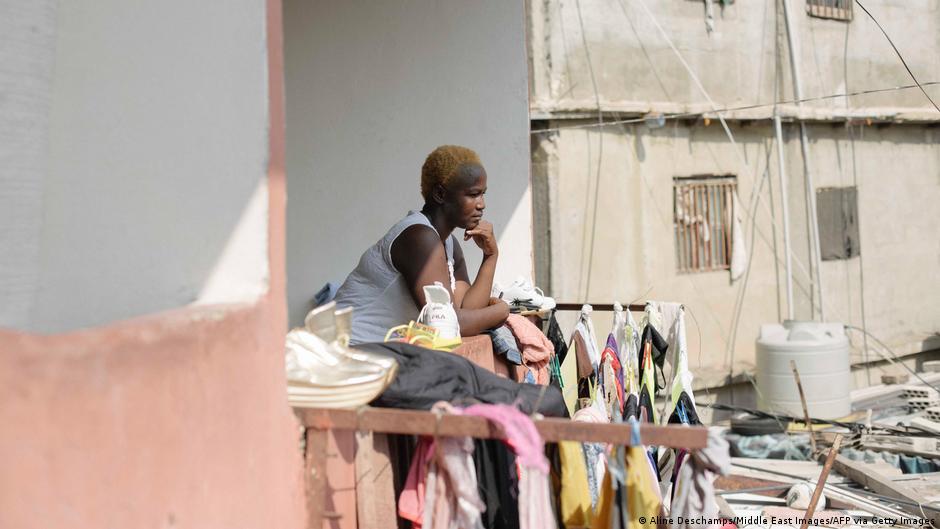
Abang Sharon arrived in Lebanon on April 24 last year after traveling from Cameroon. The 21-year-old girl had one goal in Lebanon – to work and earn money so she could support her family back home.
An agency arranged everything for her to go to Lebanon, but later, in a video published by a migrant rights organization in early December, Sharon describes how she was working “in a toxic family”. No salary, no secure contract, no security and always the feeling that no one could really help him.
Rights Organization, This Is Lebanon, or TIL, A post on their website stated Sharon “worked only one day without pay for her first employer. The second family made her work for two weeks, but instead of compensating her directly, they paid the recruiting office $60, which Sharon never received. It was in the third household that Sharon’s exploitation increased. Starting in May 2024, Sharon was tasked with not only household duties, but also cleaning her employers’ two business premises.”
Despite all this work, Sharon was not paid her scheduled salary of $200 (€170) per month for eight months. Her employers explained that they had already paid the agency $2,000, as if this was a reasonable excuse for not paying Sharon.
Sharon’s physical health deteriorated and she complained of chest pain and frequent nosebleeds. When she told her employers she no longer wanted to work, her meals were withheld.
It wasn’t until he contacted TIL that things started to change. The non-profit has been standing up for the rights of migrant workers in Lebanon since 2017 and, if all else fails, has been known to publicly name and shame those involved in their exploitation. TIL often succeeds in recovering some of the money it is owed from workers, but it says what is really needed is structural reforms and real accountability.
‘Sponsors’ exploit migrant workers
Because Sharon’s story is not the only one. Their experience is part of a system known as “Kafala” in the Middle East. It is an Arabic word for “sponsorship” or “guarantee” and the system basically links a migrant worker’s legal presence in a country with their employer, who acts as their “sponsor” or “guarantor”.
Often worst affected by the exploitative nature of the kafala system are women from African or Asian countries who work in private Lebanese households. Domestic workers are excluded from local labor laws and their sponsors usually confiscate their passports upon arrival. This gives the sponsor-employer too much power over the employee and sets up a situation of exploitation and even violence.
Melissa Koume N’Guessan Epiphany, of the group Union Fête la Force (in English, it means “Together we are stronger”), knows this system very well, as she came to Lebanon from the West African country, Ivory Coast, several years ago.
“The kafala system has a massive negative impact on migrant women,” she says. “Many of them experience having their passports confiscated, unpaid wages and a complete loss of independence.”
His group was first established in August 2023 but was officially announced in November this year. The group consists of about 30 women from different countries and Koume N’Guessan Epiphanie says they have already achieved a lot by providing aid to the homeless, children and the sick.
She explains how aid is usually organised. If a woman is in danger of having a child, the community is informed. People organize and alert the group’s network, which then organizes what is needed.
Another organization, Agna Legna Bisidet, plays a role with Lebanese and international groups. It focuses mostly on women from African countries, and especially Ethiopia, who have been abused or mistreated in Lebanon.
‘Breaking’ a Kafala contract is a crime
Local lawyer Mohana Ishaq explains the Kafala system from a legal perspective. She is the head of legal affairs and advocacy for the anti-trafficking unit at another local organization called Kafa.
Kaffa Violence and Exploitation (“Kaffa” means enough) was first established in 2005 and previously focused on domestic violence. Since 2010, it has also focused on migrant domestic workers.
Ishaq explains how Kafala works. A “kafeel” or guarantor provides the money to bring the domestic worker into the country, and many guarantors feel that they have some kind of “ownership” of the worker.
The amount paid depends on the woman’s origin – English language skills, education and racism all play a role. Women are usually only allowed to live with their guarantor, often without their own room. Some people sleep in the kitchen or on the balcony. Some are moved to other homes or put to work in the guarantor’s businesses – like Sharon – and usually without additional pay.
If a migrant worker tries to leave, they risk committing a crime. Anyone who abandons their guarantor may be arrested and charged with breaking contract.
“What is happening here in Lebanon is modern slavery,” Ishak says bluntly.
Does the Lebanese government care?
There is a telephone hotline for migrant workers that was set up by the local labor ministry. But according to TIL and CAFA, the hotline is not used much. Complaints seem to have no consequences. It is not yet clear whether Lebanon’s new government, formed in February 2025, is taking this issue seriously or not.
What is clear is that, despite years of campaigns and advocacy by human and migrants’ rights groups, the kafala system still exists in Lebanon.
An important reason for this is its economic impact. The business of agencies that bring foreign workers into the country – and who are often accused of exploitation, forced labor and human trafficking – is worth a total of about $57.5 million (€48.9 million) a year.
In 2022, the agencies successfully blocked the creation of a standard contract for migrant domestic workers. Lebanon’s supreme court stated that such contracts would harm the agencies’ business. Review of their human rights obligations was abandoned.
This is why the Kafa organization works at two levels. It provides direct aid to those affected but also lobbies local politicians. This work is about safety, housing and legal support, but also about political pressure: setting standards, changing language and outlining responsibilities.
But there is a problem, Ishaq says, and it’s around the culture of Kafala and the lack of awareness that it can be a problem. Many guarantors see themselves as victims and even seek gratitude from migrant women.
The Lebanese state forbids discrimination but Ishak has seen many examples of how racism affects migrant workers. For example there are swimming pools that do not allow migrant workers to go into the water. This will happen only when they are allowed to come to the campus. Ishaq has seen this himself. She has regularly seen migrant domestic workers sitting at separate tables from their employers in restaurants.
This is also not a small problem. Kaffa estimates that before the COVID-19 pandemic, Lebanon was hosting about 250,000 migrant domestic workers. After the pandemic, the number dropped to about 60,000, but has recently risen again to about 150,000.
embarrassed in action
Behind these figures are people like Sharon.
In February 2025, Sharon managed to return to Cameron, but with only $300 of her wages for eight months.
The agent who brought her to Lebanon and her employer both said that the other was responsible and it was only when TIL got involved and threatened to make the matter public, that the agent became more responsive and offered to settle her account.
The fact that Sharon managed to get her salary, but not any official help, didn’t help. This was only due to a dedicated network of advocates in Lebanon and the threat of bad publicity. Or, as TIL argues, no one should need the threat of a social media post to receive their pay.
This story was originally published in German.