
Amid tariff disputes, the war in Ukraine and environmental problems, Europe is looking for a new direction for its economic strategy. An important question is what role environmental-friendly production and agriculture and the protection of natural resources should play in the future.
Through its 2019 Green Deal, the EU is working towards making its industries more efficient and climate-neutral by 2050. But the plan is facing increasing criticism and pressure. At least not from the conservative EPP group in the European Parliament, which wants to regain a majority with the help of far-right parties.
Many proposals are currently being slowed down, while implementation of some measures is being postponed or withdrawn altogether.
Relaxation of reporting obligations for companies
Two central instruments of the Green Deal are the EU Supply Chain Act and the obligation of companies to report on their social and environmental impacts. Its purpose is to ensure comparability and make responsibilities visible.
Until now, around 50,000 EU companies with a workforce of at least 250 were obliged to produce such reports annually. But company complaints say the regulation is burdening them with bureaucracy and tying up too many resources, meaning small and medium-sized companies will no longer be required to report.
This rule is now going to apply exclusively to major corporations with turnovers in the hundreds of millions of euros.
Critics say fewer reporting obligations mean less transparency, both for the public and investors who support sustainable practices and want to avoid environmentally harmful or unethical business models.
The European Central Bank (ECB) has already warned that shutting down these reports could lead to regulatory imbalances. In a letter to the European Commission, it stressed that climate change has a “profound impact on price stability” and that sufficiently robust databases are needed to manage financial risks.
In the ECB’s view, this database would be at risk if the number of companies subject to reporting requirements were reduced by 80% – as is currently planned in the package.
Less monitoring of supply chains
The supply chain act rules have also been weakened by the adoption of the so-called simplification package.
This should include thousands of large companies in high-risk sectors such as the textile industry, fishing or mining industries that produce for the EU market.
Companies were obliged to identify, curb and eliminate human rights and environmental violations throughout the supply chain. This target has now been reduced to a great extent.
The rules now apply only to multinationals with more than 5,000 employees and at least €1.5 billion ($1.7) in turnover. Furthermore, victims of environmental and human rights violations in the supply chain do not have the right to sue. And companies are no longer required to submit their own climate strategies, as was originally intended.
Products not linked to deforestation? not yet
The 27 member states of the European Union also agreed on rules aimed at protecting forests. Products such as tea, coffee, soy and beef will only be available for sale in the EU if not verifiable linked to deforestation.
The idea was to ensure that companies acted responsibly to protect forests, especially in agriculture-intensive regions like Brazil and Indonesia.
However, the introduction of the new rules has been postponed until the end of 2026. Additionally, significantly fewer companies must prove that their products are manufactured in deforestation-free methods.
To put this in context, the Food and Agriculture Organization of the United Nations estimates that about 420 million hectares of forest – an area larger than the European Union – was cut down between 1990 and 2020. EU consumption accounts for about 10% of global deforestation, with palm oil and soy accounting for more than two-thirds. Forests store carbon and are extremely important for biodiversity.
Weakening environmental regulations for agriculture
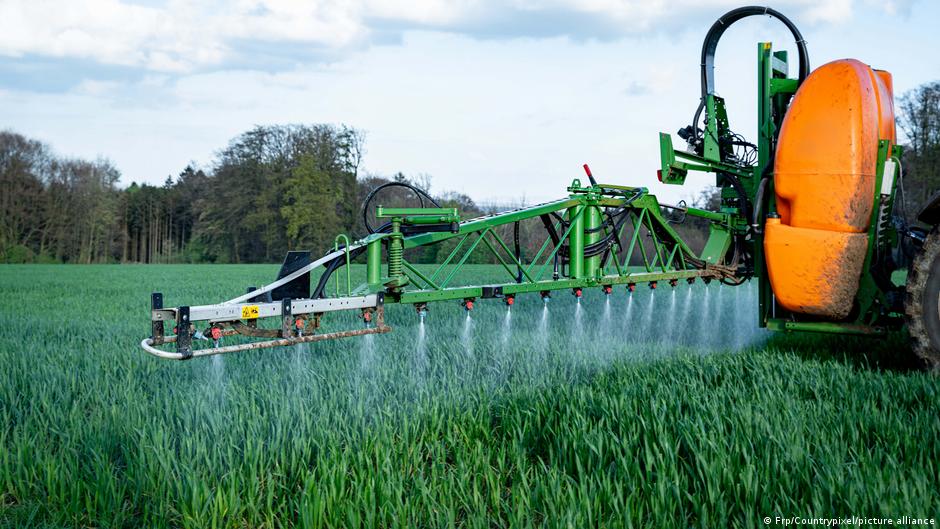
About a third of the entire EU budget goes to the agricultural sector, much of it in the form of subsidies. The bloc’s rules for more sustainable food production have long been a thorn in the side of big farms.
Here too, politicians are increasingly accepting defeat. In 2023 and 2024, farmers protested against stricter rules regarding pesticide use, which led to their not being adopted. The Nature Conservation Act, which provided greater protection for ecologically important peat lands, was largely dismantled. Farms were originally supposed to contribute to this goal.
In a series of proposals aimed at simplifying bureaucracy for farmers and deregulating the agricultural sector, the main focus is on weakening environmental rules. For example, inspections of environmental standards should be limited to a maximum of once per year.
Overall, significantly more natural landscapes across Europe will be allowed to be converted to agricultural land than previously planned. Also, small farms with up to 10 hectares of land are to be given access to subsidies without meeting certain environmental standards.
Sustainability strategies in agriculture also had to be constantly adapted to new environmental regulations. But this is no longer mandatory, meaning EU farms will have to do less for the environment in the future, despite agriculture’s key role on the climate.
Cut-off date for new combustion engine cars postponed
The EU’s decision to halt the production of combustion engine cars within the bloc from 2035 could be history before it even comes into effect.
The German government has strongly opposed the deadline and the country’s car industry has always been against the decision. Now the EU has decided to officially “review” the combustion engine phaseout, leaving question marks over when the ban will come into effect.
In the short term, this could benefit the European car industry, which relies heavily on combustion engines. But with the trend toward electric vehicles predicted to continue, experts see better long-term opportunities for carmakers introducing EVs.
Less climate commitments at home
European climate targets are also being cut further. To avoid even more serious climate disasters, the EU’s Scientific Advisory Board recommended cutting emissions by 90% to 95% by 2040 compared to 1990 levels.
Just last month, the EU agreed to its climate targets, which also include cutting carbon emissions by 90%. But there is a catch. Parts of these emissions reductions can be offset by measures taken in other countries financed by the EU.
In other words, the EU really only has to reduce its own emissions by 85%, because it can buy up to 5% through things like reforestation projects abroad.
If there are difficulties in implementation, the target can be further revised. Also, Member States decided to postpone the introduction of carbon pricing in the buildings and transport sector (ETS 2) from 2027 to 2028.
This article was originally published in German.