

“Paper” gold would be in a “Minsky moment,” says a specialist.
Tether and Paxos are the companies that are best capitalizing on the demand for tokenized gold.
The traditional way of investing in gold through derivatives and ETFs (what is often called “paper gold”, to differentiate it from physical gold), faces a paradigm shift with the arrival of cryptocurrency technology.
Different alternatives are being developed to invest in tokenized versions of gold, which are backed by physical reserves.
This modality, which allows investors to maintain indirect and fully allocated ownership of the precious metal through tokens is undermining the foundations of the fractional reserve system that has dominated the market for decades.
The rise of gold-backed stablecoins, led by companies like Tether and Paxos with their assets: Tether Gold (XAUt) and PAX Gold (PAXG), is not only capitalizing on investor demand, but is also exposing the latent fragility of the traditional system.
This imbalance could culminate in what is being called a “Minsky moment” for the global gold market. says the economist Ingo Fiedler.
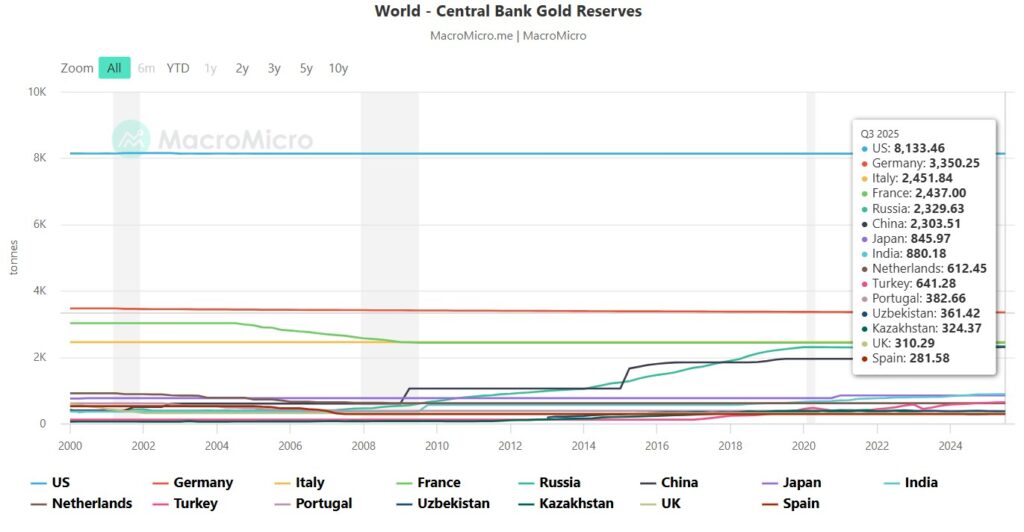
A Minsky moment is the sudden, non-linear collapse of a highly leveraged system, occurring after a long period of stability that has encouraged risk-taking. In the gold market, this risk is compounded by the ongoing geopolitical realignment, where central banks in Countries like China, Russia and Türkiye are repatriating physical gold, reducing the liquidity of the paper system. This scarcity of physical metal makes the role versus the token in gold investment a comparison where the digital asset gains ground due to its tangible support.
The fragility of “paper gold”
The paper gold system is based on the principle that only a minority of holders will demand physical delivery of the precious metal. Within this framework, Fiedler points out that, “customers hold unsecured claims against bullion banks, rather than holding specific gold bars.”
Banks operate with leverage ratios between 20x and 50x. Although efficient in calm times, “this structure becomes fragile when long-term pressures constantly reduce the availability of physical gold,” warns Fiedler. This is where the evolution from paper to token in gold investment offers a safe way out for the investor.
Tokenized gold, a digital asset that represents specific bars, offers investors the ability to bypass this system. Tether’s XAUt, for example, offers direct ownership of deliverable physical bullion stored in Switzerland, outside of fractional systems LBMA (association that regulates the main market over-the-counter of unallocated physical gold in London) and COMEX (the precious metals futures division of the CME Group, where the majority of “paper” gold derivative contracts are traded).
The company recognized for issuing USDT, the stablecoin with the largest capitalization, has positioned itself as a key investor, with 116 tons of the precious metal, outside of central banks, as reported by CriptoNoticias.
According to Fiedler, “as more investors realize the benefits that tokenized gold offers over other forms of gold exposure, not only will demand for paper gold plummet, but more and more collateral will also abandon the paper gold system.” This migration creates the conditions for a sudden and non-linear collapse, that is, the “Minsky moment” for the global gold market.
Tokenized Gold: Assigned Ownership vs. Paper Rights in Gold Investment
For individual investors, The surest protection against a system collapse is to maintain a fully allocated metal. However, traditional physical gold is expensive to hold and difficult to trade, which has driven a preference for paper gold, which has low custody fees and is easier to use as collateral. This demand has kept the system stable, until now, says the analyst.
Tokenized gold is presented as an alternative that combines the security of assigned property with the fungibility and liquidity of a digital asset. “Each XAUt token corresponds to a different physical bar, stored in Switzerland,” he explains. Unlike futures or ETFs, which only offer a financial claim without direct physical collateral, tokenized gold offers direct ownership and the possibility of physical redemption at any time.
In addition to security, tokenized gold solves the disadvantages of traditional assigned ownership. While allocated gold is slow and expensive to transfertokens can be transferred “in seconds, in any size and at any time, for a few dollars per transaction.”
Given these advantages, it is expected that the adoption of this digital asset will grow and, over time, put greater pressure on the paper gold system. Fiedler states that “any investor who migrates from unallocated fractional exposure to fully allocated tokenized bullion gradually depletes the liquidity underpinning the paper gold market.”
This reduction in the margin of safety creates a dynamic where allocated gold becomes exponentially more advantageous than paper gold.
Traditional companies join tokenized gold
The importance of this market is evident with corporate movements such as the acquisition, announced on November 20, of Gold Token SA by MKS PAMP SA, a company with 60 years of experience in precious metals. The operation seeks to expand MKS PAMP’s presence in real-world asset tokenization (RWA), focusing on the supply of tokenized gold.
The arrival of tokenized gold products like Tether’s XAUt not only offers a superior digital asset, but also accelerates the erosion of the foundation of the paper gold market. This convergence of structural factors and technological innovation point—according to Fiedler’s thesis—that the sudden collapse of the traditional system is an increasingly closer possibility.