
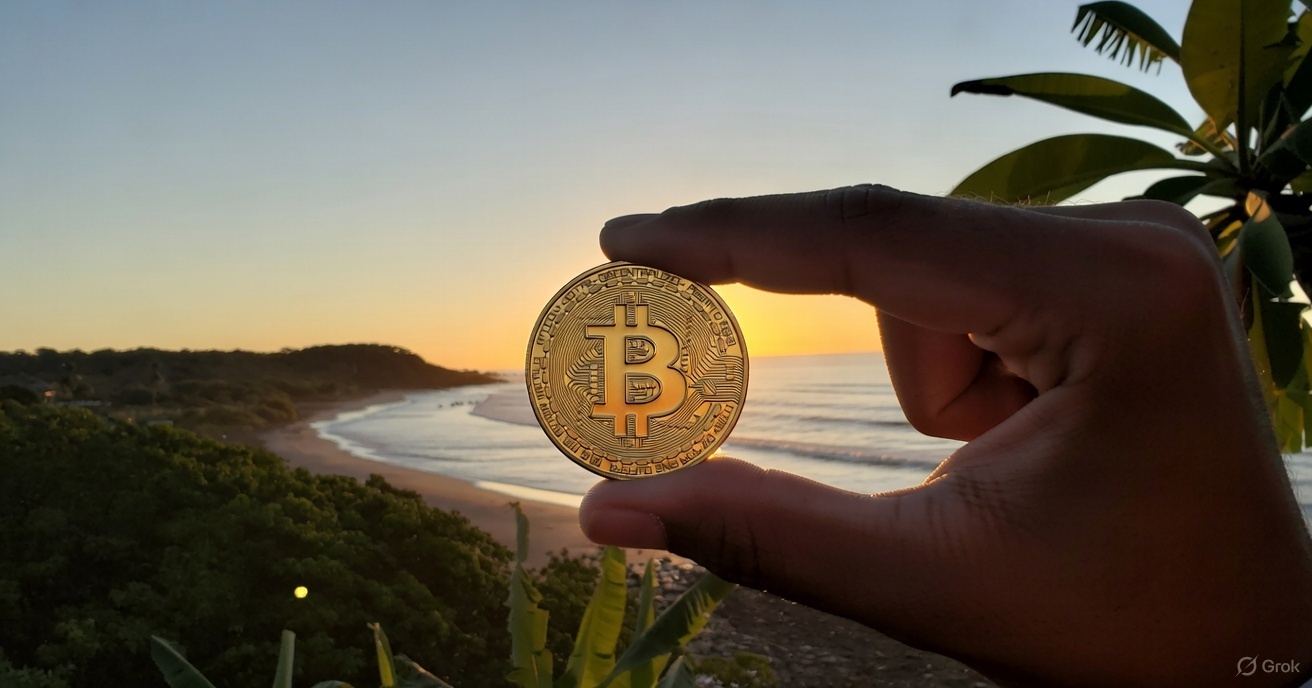
While the region’s central banks try to contain inflation with traditional financial tools, on a Salvadoran beach a fisherman collects his catch with a QR code in bitcoin (BTC), instead of pesos or dollars. This increasingly widespread practice illustrates a trend in Latin America where local communities manage their own finances.
On the eve of the year 2026, five of these communities They stand out for strengthening their circular economies and supporting others through the exchange of resourcestools and knowledge. This collaboration contributes to the expansion of the regional network.
The collaboration, which operates without central authorities or mandatory intermediaries, directly contributes to the expansion of the regional network and reflects the original design of Bitcoin. As Satoshi Nakamoto wrote when introducing the currency in 2008: “it is completely decentralized, with no central server or trusted parties, because everything is based on cryptographic proof instead of trust.”
Such a phrase, from Satoshi’s initial announcement on the Cryptography Mailing List (October 31, 2008), where he presented the whitepaper, summarizes the fundamental principle that allows initiatives like these to prosper. That’s because trust is built on verifiable code and the voluntary participation of nodes and users, not central institutions, which facilitates precisely the kind of horizontal cooperation that characterizes these Latin American citadels.
Bitcoin from El Zonte to new citadels
At the forefront of Bitcoin communities is Bitcoin Beach in El Zonte, El Salvador. This bitcoin circular economy, launched in 2019, opened its second round of grants in 2025, offering up to 0.05 BTC to established projects and 0.02 BTC to emerging initiatives.
“We are looking for projects that build real economies with bitcoin,” explained Scott Wolfe of the Federation of Bitcoin Circular Economies (FBCE). The community also launched the Bitcoin Beach Fellowship, a ten-day intensive program for global leaders, and hosted children’s entrepreneurship fairs accepting BTC, as well as recording episodes of their podcast on real adoption on El Zonte.
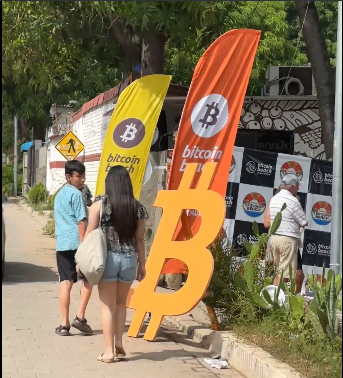
In second place is La Crypta in Argentina, with its “Cruzada21” project. Led by Agustín Kassis, the initiative distributed the first “emergency kits” to ten communities selected from among 26 candidates.
Each kit included a Bitcoin and Lightning node, fifteen points of sale, and two hundred collectible bitcoin payment cards. “Now there are ten, but soon there will be twenty, thirty… and one day, who knows, even a thousand communities!” declared Kassis in August 2025. To materialize this vision, specialized “squads” They install the infrastructure, train users and document the process.
Its progressive approach guides from simple card payments to cryptocurrency wallet features and full self-custody, thus stimulating real circular demand where sats flow daily.
Sowing bitcoin, reaping community
The third position is occupied by the movement originating in the Dominican Republic, which is home to the Latin American Federation of Bitcoiners. This organization launched in June 2025 with 22 communities in 7 countries, reached 39 in 16 nations a month later.
In September, Puerto Bitcoin Mazatlán (Mexico) was incorporated, led by Paulina Martínez, as community number 40, thus strengthening the Mexican presence alongside BTC Isla Mujeres. This network coordinates mass education and commercial adoption, facilitating notable collaborations such as the Maxi artificial intelligence virtual academy in Bolivia.
Fourth, various communities in Brazil, such as Praia Bitcoin and Montanha Bitcoin, have come together at events such as SatsConf, promoting physical devices for bitcoin payments and works of art to reinforce regional cohesion.
Praia Bitcoin applied in August 2025 to become the world’s first bitcoin community bank, but the request was rejected by Ceará authorities. After the refusal, co-founder Fernando Motolese argued that the decision reflected resistance to the decentralized model of bitcoin.
The community also developed social initiatives, such as satoshis-funded food distribution to schoolchildren, and announced plans for 2026 that include self-generated power generation as well as small-scale Bitcoin mining.
He stressed that the proposal for a “bitcoin community bank” was, in fact, the opposite of traditional banking. For him a best solution It is a simple laptop running Bitcoin, Lightning, BTCPay Server and LNbits. This managed by volunteers for people ignored by the conventional system. The stance, he argues, exposed how the state system suppresses that which threatens its control.
A well-planted seed grows firmly.
Closing the list, Bitcoin Berlin in El Salvador has successfully expanded its model to Bitcoin La Laguna. In just one month, it made progress that took Bitcoin Berlin two years, attracting remittances and tourism through knowledge sharing. In February 2025, he organized the third edition of the Berlin Walls International Muralism Festival, funded by donations in bitcoin through the Geyser Fund, creating murals that fuse local art and bitcoiner symbols to encourage an open-air museum and cultural tourism.
This Salvadoran community also recorded significant educational and community advances, such as free English classes at your bitcoiner center and practical workshops on hardware wallets, with collaboration from projects such as Node Nation to teach young people how to operate nodes and miners.
Additionally, the community organized the Bitcoin Berlin Festival in November 2025, combined with the Bitcoin Economy conference, attracting international and local visitors for talks, cultural activities and demonstration of what it is like to live within a BTC circular economy.
These five initiatives are part of an ecosystem with dozens of active communities in the region. In them, daily transactions in satoshis are common and the exchange of knowledge contributes to the continuous expansion of the model.