
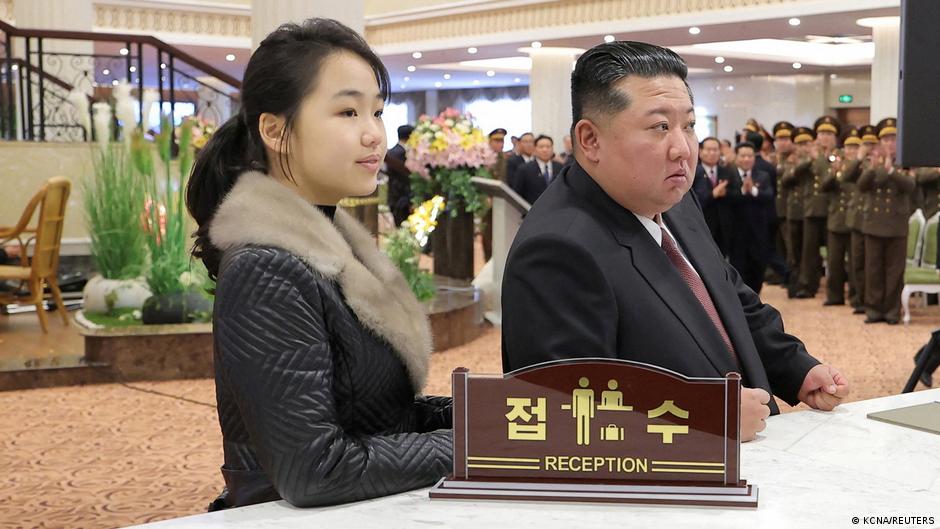
North Korean leader Kim Jong Un and his daughter Ju A have opened what state media calls an “attractive mountain tourist destination and vacation spot for the people.”
Five luxury hotels have opened their doors in Samgyeon, a remote northern city near China, according to the official Korean Central News Agency (KCNA).
Despite widespread economic hardship across the country, Pyongyang promoted its latest luxury hotels, which included amenities such as barbecue restaurants, hot tubs and leisure spaces.
Kim tours bedrooms and other facilities of the new hotels
Kim, who attended the ceremony on Saturday, declared the resort a “clear proof of the rising status of our people”, despite the hardships endured by most North Koreans.
According to KCNA, he personally inspected the facilities, even testing the strength of the beds. His daughter, whom many analysts believe to be the heir apparent, accompanied him on this grand tour.
State media insisted that the hotels were proof that citizens “have nothing in the world to envy.”
The inauguration comes as Kim seeks to highlight the country’s economic progress ahead of a party congress next year, when a new development plan is expected to be unveiled.
According to KCNA he said the new resort is “a clear testament to the ever-rising ideals of our people and the development potential of our state.”
Foreign tourists are likely to be the target market
Tourism in North Korea remains a strictly regulated affair limited mostly to government-approved tours that offer only controlled glimpses of life in the hermit kingdom.
But Kim is on a campaign to boost tourism, and the opening of new hotels in Samgyeon follows North Korea’s launch of the Wonsan Kalma coastal tourist zone earlier this year.
He declared Samjeon “an innovative and highly civilized city representing the country’s tourism culture.”
“The main target demographic is foreigners,” Peter Ward, a research fellow at the Sejong Institute in Seoul, told AFP. But, he added, Samjiyon’s visit could also serve as a reward for “productive units” of workers.
“Large-scale group tourism may soon be accommodated through border areas with China,” said Lim Eul-chul, a professor at the Institute of Far Eastern Studies at Kyungnam University.
Edited by: Richard Connor, Darko Janjevic