
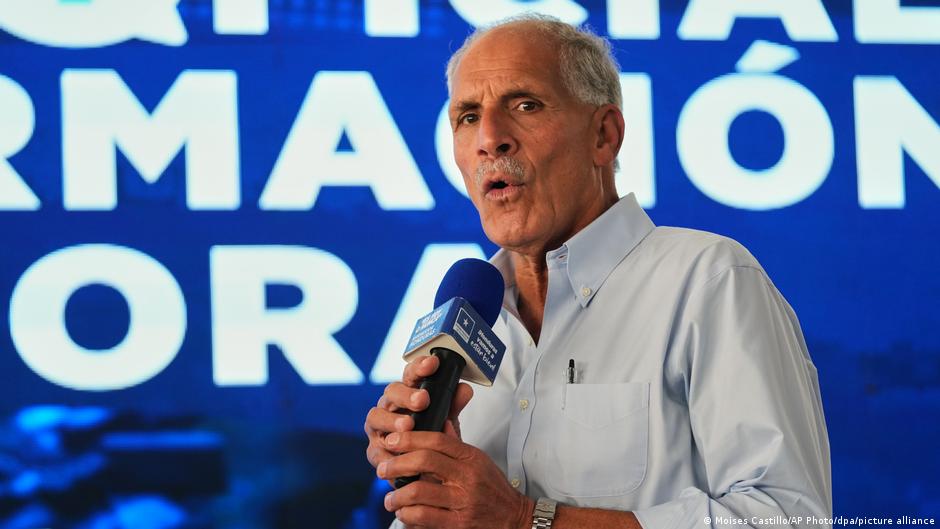
Conservative candidate Nasri Asfura won Honduras’ Nov. 30 presidential election, the country’s National Electoral Council (CNE) said on Wednesday.
The announcement comes after weeks of vote counting in which Asfura and his main rival, Salvador Nasralla, went head-to-head.
What were the results of the presidential election in Honduras?
According to the count, Asfura, who is from the Conservative National Party, received 40.27% of the votes.
His opponent, Salvador Nasralla of the conservative Liberal Party, won 39.53%.
Rixi Moncada, who is from outgoing President Xiomara Castro’s leftist LIBRE party, finished third with only 19.19% of the vote.
The current president was elected in 2021 on a promise to tackle corruption and violence in the country.
Asfura previously served as mayor of Tegucigalpa, the capital of Honduras, from 2014 to 2022. This was the second time she ran for president of the Central American country.
“Honduras: I am ready to govern,” Asfura said in a post on Platform X after the results were announced. “I will not let you down.”
Asfura wins after Trump’s endorsement
US Secretary of State Marco Rubio congratulated Asfura on her victory in a post on Twitter.
“The people of Honduras have spoken… [US President Donald Trump’s administration] looking forward to working with [Asfura’s] Administration to advance prosperity and security in our hemisphere.”
Trump endorsed Asfura just days before the vote, saying he was the only candidate Washington would want to work with. In a post on his Truth social platform, Trump accused Nasrallah of being a “borderline communist” who was working to split the anti-LIBRE vote.
Both Nasralla and Moncada condemned the post as outside election interference.
On Tuesday night, Nasrallah addressed the US President, saying: “Mr. President, your endorsed candidate in Honduras is complicit in silencing the votes of our citizens. If he is truly worthy of your support, if his hands are clean, if he has nothing to fear, why does he not allow every vote to be counted?”
Trump’s administration aims to increase its influence in Latin America, and reaffirmed its commitment to the “Monroe Document” in a November 2025 strategy document that asserts Washington as the hegemonic power in the Western Hemisphere.
Wednesday’s result reflects a broader rightward swing in Latin America, with far-right politician Jose Antonio Caste elected Chile’s next president last week, defeating leftist Gabriel Boric.
Edited by: Farah Bhagat