
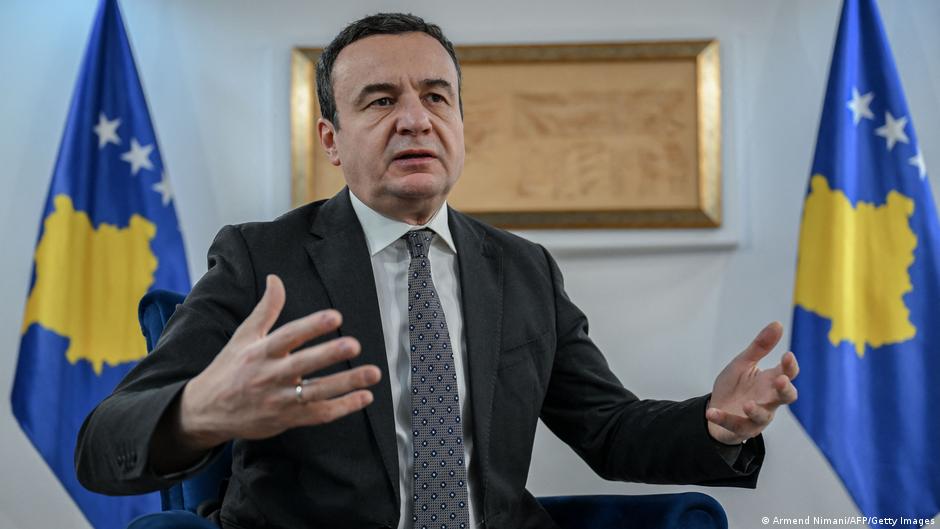
Acting Prime Minister Albin Kurti won a clear victory in Kosovo’s second parliamentary election in 2025 with nearly 44% of the vote, exit polls showed on Sunday evening, but his leftist Self-Determination Party fell short of an absolute majority.
If confirmed, the Klan Kosova TV network estimates would lead to 49 out of 120 seats in parliament for the nationalists – just one more than in the February elections.
Exit polls give the Democratic Party of Kosovo (PDK) about 27% of the vote, the Democratic League of Kosovo (LDK) about 16%, and the Alliance for the Future of Kosovo (AAK) about 7%.
Kosovo has been mired in political paralysis for most of the year, after Kurti’s leftist party lost the absolute majority it won in 2021 and failed to garner the support of another party to form a government.
Months of failed coalition talks led President Vojosa Osmani to dissolve parliament in November and call early elections.
Since then, Kosovo’s legislature has been unable to agree on its leadership, leaving the body effectively paralyzed and unable to function.
High stakes for Kurti and the rivals
Kurti, who has ruled since 2021, was hoping for a similar decisive result to his 2021 victory, when he was able to form a government largely on his own. His reform agenda has yielded mixed results so far.
If Vetevendosje falls short of a majority again, there will be uncertainty over whether Kosovo’s main political parties will be willing to compromise to form a coalition government.
Opposition parties have repeatedly refused to rule with Kurti, criticizing his handling of relations with Western allies and his policies toward Kosovo’s ethnically divided north, where a Serb minority lives.
At the same time, Kurti has blamed the opposition for the current deadlock.
Bedri Hamza, former finance minister and new head of the Democratic Party of Kosovo (PDK), was Kurti’s strongest rival.
Hamza blends nationalistic values with liberal economic policies advocating free markets, economic growth, a strong private sector, and social security.
Funding and institutional deadlines loom
Failure to form a government will prolong the crisis at a critical moment. Lawmakers must elect a new president in April and ratify loan agreements worth about €1 billion ($1.2 billion) with the European Union and the World Bank, which are set to expire in the coming months.
Kosovo also faces financial pressure following tensions with Serbia in 2023, which prompted the EU to impose sanctions.
The bloc has said it will lift the measures after ethnic Serbian mayors are elected in northern municipalities, although the sanctions are believed to have cost Kosovo hundreds of millions of euros.
Campaign promises and voter disillusionment
During the campaign, Kurti promised one extra month’s pay per year for public sector workers, one billion euros annually in capital investment, and the creation of a new prosecution unit to combat organized crime.
Opposition parties focused on promises to improve living standards. Many voters say they are disillusioned.
Edited by: Lewis Olofse, Sam Dusan Inayatullah