
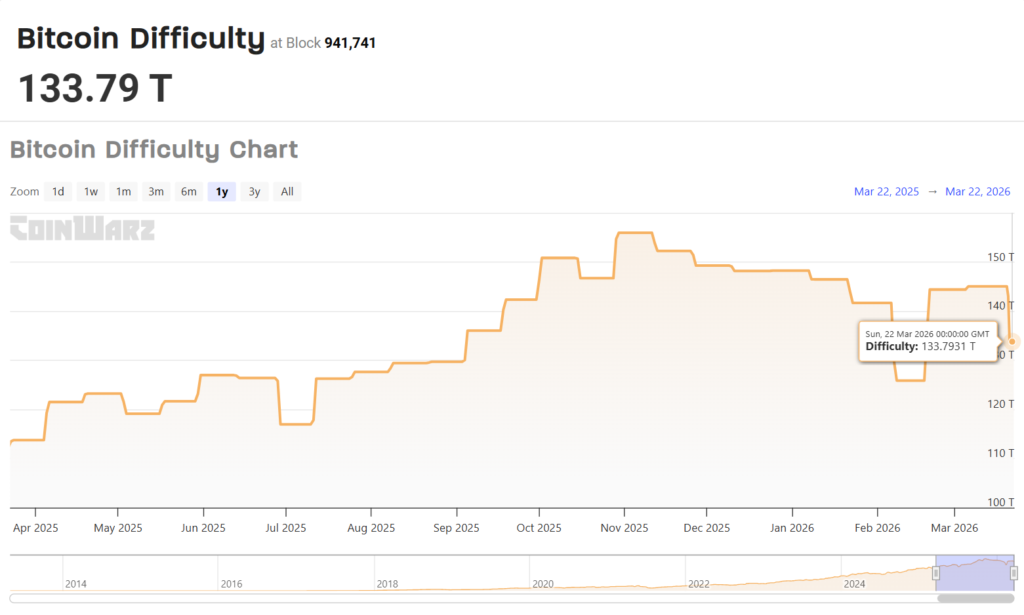
The difficulty fell 7.76% on March 21, the second highest of the year.
Public mining companies have not stopped selling BTC in 2026.
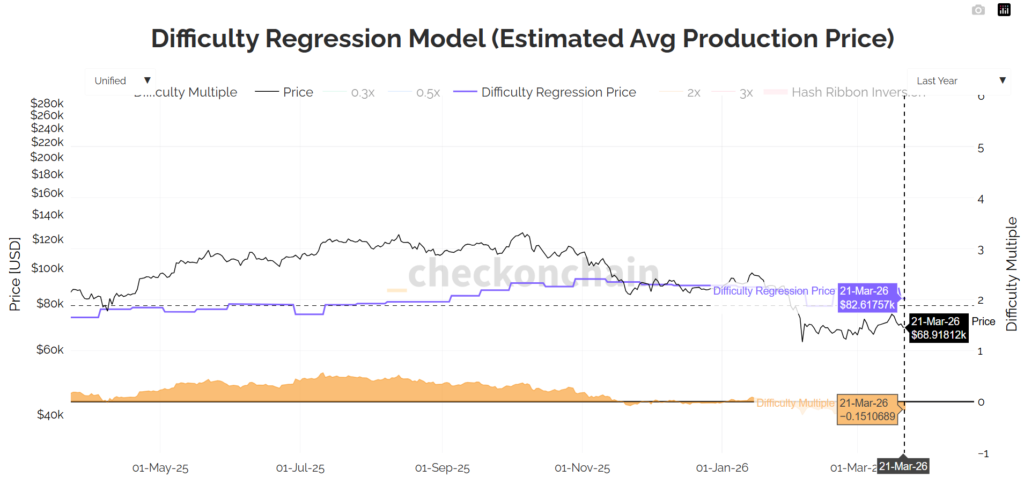
Even though the price of bitcoin remains above $68,000, the average production cost of each unit of BTC is around $82,000 for miners, according to CheckOnChain’s difficulty regression model. This Disparity of almost USD 14,000 would lead miners to sell BTC reserves in order to sustain their operations, increasing the downward pressure for the price of bitcoin.
The main trigger for this profitability crisis does not come only from the price of Bitcoin. Conflicts in the Middle East, especially escalating tensions with Iran and threats to effectively close the Strait of Hormuz, have sent oil prices soaring above $100 per barrel. This is the second highest price that oil has reached in the last ten years. Now, after the Donald Trump threat This Saturday, March 21, to attack Iranian power plants if Tehran does not open the Strait of Hormuz, tension and risks for mining will increase.
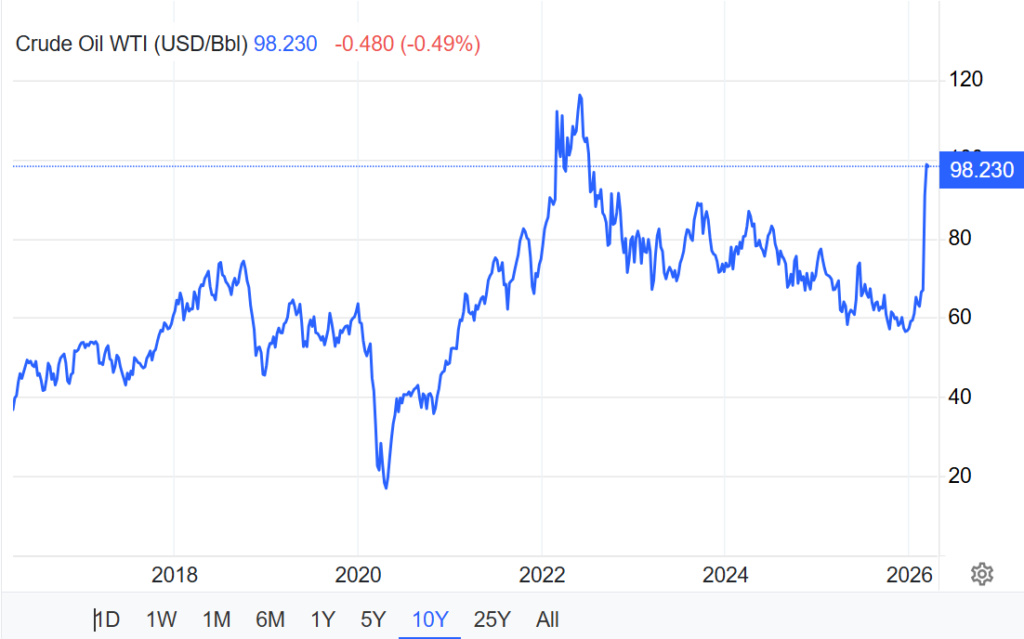
Since electricity represents between 70% and 90% of mining costs, this energy shock is passed directly to miners’ bills. Hormuz is the route through which 20% of the world’s oil passes; Any disruption raises global energy costs and, consequently, wholesale electricity prices in key mining regions such as the United States and Asia.
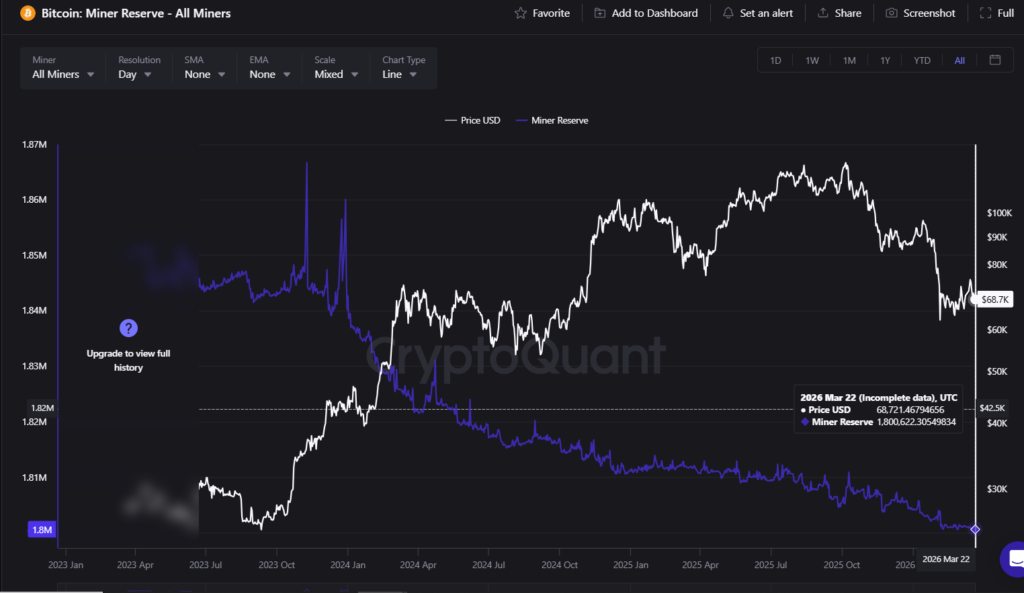
When block revenues fall far below operating costs, the answer is to shut down machines or liquidate both the newly mined BTC and the accumulated reserves. In fact, throughout 2026, this has been the dynamic. As we have reported in CriptoNoticias, the miners’ Bitcoin reserves have not stopped falling, currently being at all-time lows.
Among the miners that have sold the largest amount of BTC are Mara, CleanSpark, Cango and Bitdeer, while Core Scientific plans to sell 2,500 BTC this quarter. All of these sales are made in order to pivot towards the Artificial Intelligence industry, which they believe can offer more stable income than Bitcoin mining.
The mining capitulation has also caused a record drop in mining difficulty of 7.76% on March 21, the second largest of the year, and has reduced the global hashrate below 930 EH/s. In fact, before the difficulty drop, the production cost was at USD 88,000, which represented a disparity of almost USD 20,000 with respect to the spot price of Bitcoin. This difficulty adjustment represents a respite for miners.
But every negative difficulty adjustment is a clear sign that less efficient traders are taking their equipment offline to avoid bigger losses. The result is a sustained increase in supply on exchanges that amplifies any bearish trend.
Historically, these periods of capitulation have marked price floors, but while they last they generate a vicious circle: more sales, more fear, less demand and greater downward pressure. If there are no bullish catalysts to absorb the mining sale, we could see the price of bitcoin hitting new bottoms. We already saw this happen in the opposite direction in 2024, when miners’ sales slowed the price rise at the height of the launch of Bitcoin spot ETFs in the United States.
The current difference between the cost of producing a bitcoin and its market value is not just an operational problem for miners. It is a macro factor that, fueled by the geopolitical instability in the Middle East, is adding fuel to Bitcoin’s bearish trend in the near term. Until the price consistently exceeds the marginal cost of the most efficient miners – around $74,000-85,000 depending on the models – the selling pressure of capitulation will continue to be a drag on any attempt at a sustained recovery.