
Last week had generated some optimism among the bulls. On Monday, March 16, bitcoin (BTC) was close to $76,000 and market sentiment was visibly improving.
Different analysts were talking about a possible capital rotation from gold to bitcoin, and institutional demand accompanied: net inflows into spot ETFs in the United States had accumulated six consecutive positive days. CriptoNoticias was reporting these signals as they appeared.
But the week didn’t take long to get complicated. A series of events—macroeconomic, political, and war—pressured the price downward. Bitcoin closed the week near $70,000, in a fragile balance that finally broke on Friday, March 20.
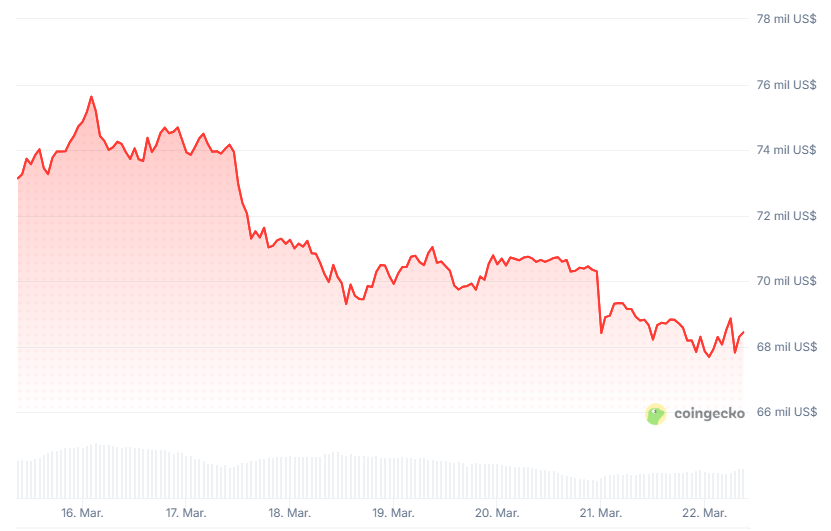
At the time of this publication, this Monday, March 23, bitcoin is trading around $68,500. It has not recovered the 70,000 level since losing it on Friday. And the outlook he faces this week looks even more turbulent.
The following graph shows how the price of bitcoin has behaved over the last 7 days:
What destroyed optimism about bitcoin
On Wednesday the 18th, the underlying Producer Price Index for February in the United States came out at 3.9% year-on-year, above the expected 3.7%. Wholesale inflation was accelerating, and bitcoin processed it with a 1.8% drop in a few hours.
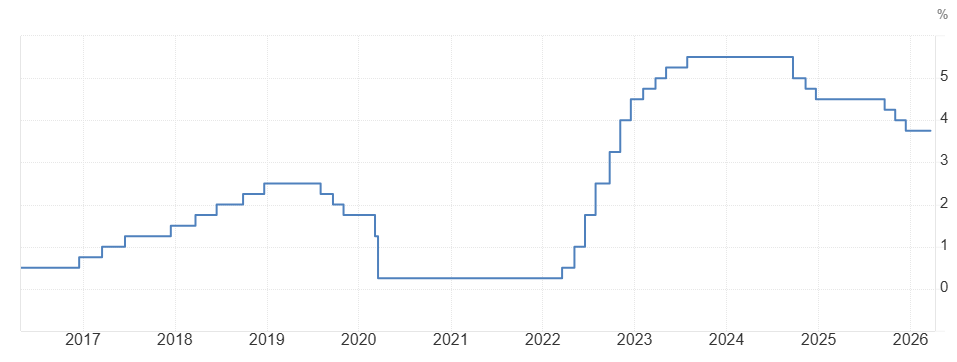
That same day, the Federal Reserve (FED) kept interest rates unchanged — as the market anticipated — but Jerome Powell’s speech was forceful: without real progress against inflation, there will be no cuts. With the underlying PCE at 3.0% and tariffs still not fully digested, the horizon of high rates extended. For bitcoin, that means less available liquidity.
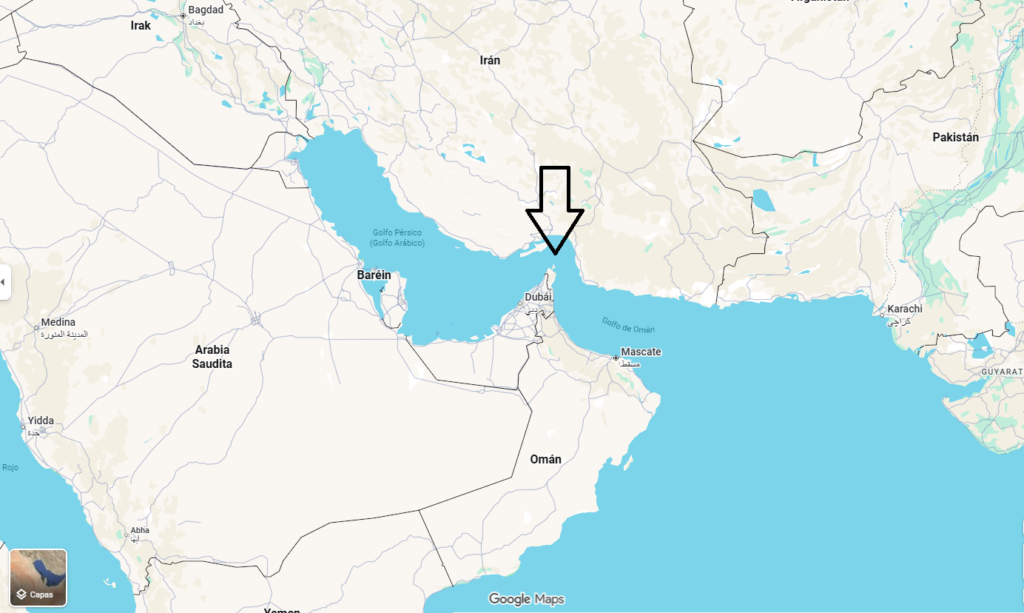
On Thursday the 19th, the price dawned close to $70,000 when another piece of information disturbed the markets: Brent oil reached $119 per barrel, driven by the conflict between the United States, Israel and Iran and the closure of the Strait of Hormuz. The chain of consequences is direct: more expensive oil, more inflation, less chance of rate cuts, less liquidity for assets like bitcoin.
Bitcoin found support near $70,000 and hasn’t fallen much further yet. But he did not regain ground either. And in that state of fragility he arrived at the weekend.
War escalates: the worst may be yet to come
This Monday, the conflict in the Middle East added a new dimension of risk. Iran’s Revolutionary Guards threatened to attack Israeli power plants and US bases in the Gulf if Trump carries out his threat to destroy Iran’s power grid.
Trump had set a 48-hour deadline – which expires this Monday night – for Iran to reopen the Strait of Hormuz (which is the maritime passage through which 20% of the world’s oil production passes).
Israel, meanwhile, launched a new wave of attacks on Tehran. According to the press, the Iranian supreme leader is wounded and incommunicado.
Wall Street futures reacted lower at the opening of Sunday’s session: S&P 500, Nasdaq and Dow Jones fell around 0.7%, while WTI crude rose more than 2% and Brent crude nearly 1.5%.
Market expectations: fear takes shape
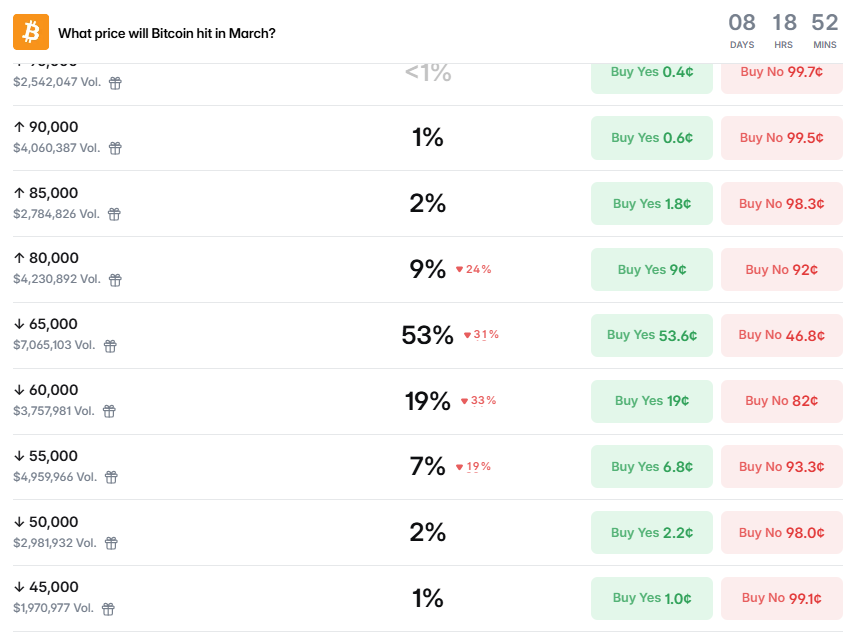
On the Polymarket prediction platform, bets show a clear shift towards pessimism. The option with the highest probability assigned is that bitcoin closes March below $65,000with a 54% implicit probability. The possibility of it exceeding $80,000 before April 1 is barely 9%.
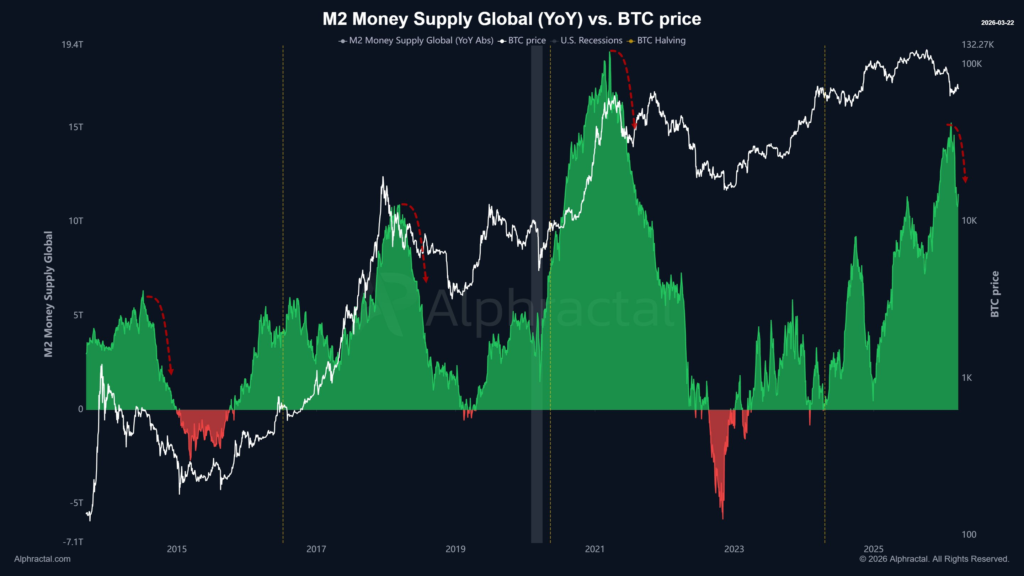
Added to this is a medium-term macroeconomic signal that should be monitored: the annual rate of change of the monetary mass M2 global economy—an indicator of liquidity—began to slow. Although the monetary aggregate continues to grow in absolute terms, the pace of expansion is falling.
Historically, when the global M2 in annual variation becomes negative, it coincides with cycle floors in bitcoin. That’s not what’s happening yet, but the direction of the trend is not positive.
Are there arguments for optimism?
The answer to the question in this intertitle is: “Yes, although few and isolated.”
Trader Michaël van de Poppe pointed out yesterday that The total cryptocurrency market capitalization is in an accumulation zone historically valid, with a significant gap from its 21-week moving average.
In his reading, this divergence usually closes within two to four weeks, which could imply a recovery.
In the medium term, there are those who are betting that Kevin Warsh – Trump’s nominee to replace Jerome Powell as FED chair in May – will have a more expansionary profile, which could usher in a shift in monetary policy. But that, if it happens, does not change the immediate present.
The variable that defines everything
The determining factor in the short term remains the same as at the end of last week: the duration of the conflict in the Middle East and the situation in the Strait of Hormuz.
If the war drags on, energy remains expensive, inflation does not subside, the FED does not cut interest rates and bitcoin has less of a tailwind. If a de-escalation occurs, the scenario changes radically.
For now, with Trump’s deadline expiring tonight and no signs of negotiation, the market operates under the logic of risk: No one knows what will happen, but many are choosing to reduce exposure before it is resolved.
Bitcoin, which a week ago almost touched $76,000, today is trading below $69,000 and faces the week with less certainty than ever.