The United States Commodity Futures Trading Commission (CFTC) announced this Tuesday the creation of the “Innovation Task Force” (Innovation Task Force). This new technical division has the primary objective of establishing clear rules of the game for developers and companies that build financial products on emerging technologies.
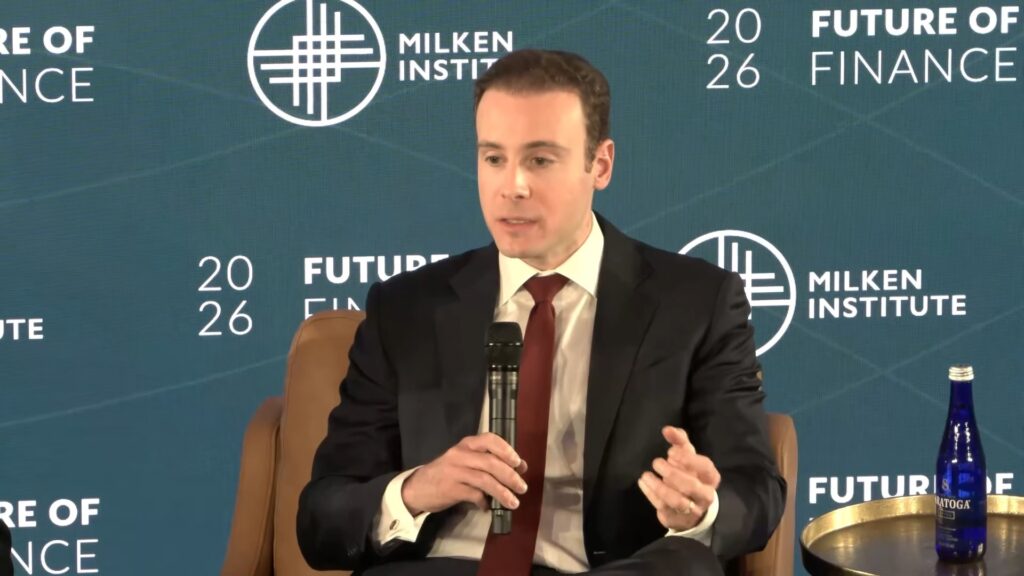
Under the direction of Michael Selig, the organization aims to enable US market participants have legal security to operate in the digital assets sector and new generation financial derivatives.
The initiative arises as a direct response to the need for organization in sectors that have grown rapidly. The Innovation Task Force will work closely with the Innovation Advisory Committee to develop a regulatory framework that will focus on three key pillars: digital assets and distributed ledger technology, artificial intelligence alongside autonomous systems, and prediction markets.
Selig noted, during the launch in Washington, that the establishment of this regulatory framework It is essential to promote responsible innovation at the local level. According to the official, the purpose is ensure that the players in the US market are not left behind compared to other jurisdictions.
“By establishing a clear regulatory framework for innovators building on the new financial frontier, we can foster responsible innovation at home and ensure that US market participants are not left out,” Selig said.
With this movement, the institution seeks to move from a supervision model based on punitive actions against the industry of Bitcoin and cryptocurrencies towards one focused on prior clarity.
The division will operate as the implementing arm of the Commission’s innovation agenda and will be led by Michael J. Passalacqua, Senior Advisor to the Presidency.
A relevant aspect of its operation will be coordination with other federal agencies. In particular, joint work is expected with the Securities and Exchange Commission (SEC) and its own specialized unit, in order to harmonize criteria and avoid fragmentation that has characterized the regulation of digital currencies in previous years.
This announcement continues the inter-institutional cooperation efforts that began at the end of January 2026. At that time, the SEC and the CFTC relaunched the so-called “Crypto Project” to eliminate past jurisdictional disputes, as reported by CriptoNoticias.
The current vision, supported by figures such as Paul Atkins, chairman of the SEC, is based on applying minimal effective regulation that allows the technological development of Bitcoin and other networks without stifling economic activity.