
Forensic analysis illuminated the crystal nature of Bitcoin, removing technical anonymity.
Under regulation, the use of privacy tools is today interpreted as a critical alert.
The era of hiding money in tax havens is dead. This concept of “bank secrecy” or “offshore safe havens” is being dismantled by a combination of digital surveillance and judicial agreements that do not stop at borders.
Over the last decade, we have witnessed a pincer movement in which, while bitcoin (BTC) promises financial freedom, the United States build a tracking system capable of turning privacy into an almost impossible luxury to achieve. What we see today in Latin America and Europe is the inauguration of a control infrastructure that redefines who can move capital and under what rules.
This paradigm shift is becoming tangible on three fronts. who have coincided this week in Latin America. The first happened on March 19, when the former CEO of Nodus International Bank, Tomás Niembro Concha, admitted before the United States justice for his role in a $25 million fraud to evade sanctions linked to PDVSA.
Almost at the same time, Costa Rica broke a historical taboo by extradite for the first time one of its own citizens, former magistrate Celso Gamboa, on drug trafficking charges. Meanwhile, in The Hague, Europol activated a permanent monitoring center that makes it clear that money tracking It is part of a surveillance that does not rest.
Bitcoin: a glass wall in the face of global surveillance
For the bitcoin user, this deployment of control demonstrates that the risk It no longer depends on which country you keep your money in, but on the technical architecture of your assets. Although the Bitcoin protocol is independent of any government, its operation is, by design, the most transparent that exists.
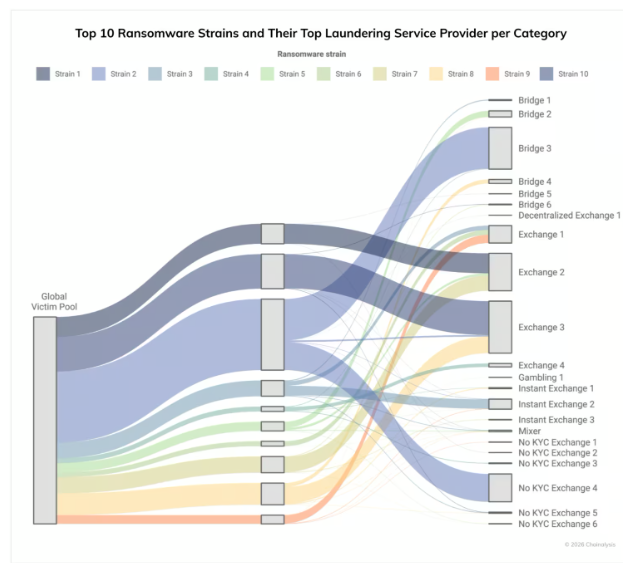
Imagine that the network is a glass wall where every movement is recorded in indelible ink for everyone to see. In this scenario, agencies like the DEA or Europol no longer need to ask a central bank for permission; They use forensic analysis software that illuminates spending patterns and connects those public records with real identities.
In this way, privacy is no longer an automatic characteristic of technology to become what we call “operational hygiene.” It is not necessarily about hiding illegal actsbut to protect personal security: prevent any outside observer from knowing how much money you have, where you spend it or who your family members are. However, this protection today is a double-edged sword.
While a citizen seeks to “cover their tracks” to avoid being the target of extortion or data leaks, the global surveillance system interprets these same privacy practices as a warning signal.
In the new risk map, the user faces a technical paradox in which if he does not protect his trail, he is exposed to anyone’s gaze. But if you use advanced tools to anonymize your funds, you risk being labeled as a suspicious profile by the same algorithms that today track the big cartels.
The digital stain and the power of the remote veto
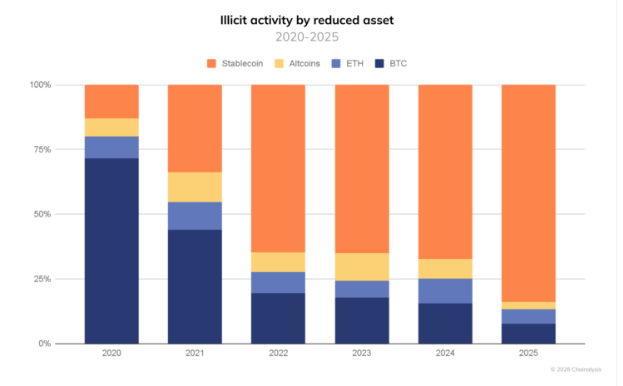
In the case of stablecoins like Tether’s USDT, the scenario is even more complex because, unlike Bitcoin, these currencies have a centralized “owner.” Here the risk for the user is not only surveillance, but silent exclusion from the financial system.
Operating under pressure from regulators and laws like the GENIUS Act of 2026 in the United States, companies like Tether have a technical “panic button” that allows them to be blacklisted to any wallet address linked to suspicious activities.
This gives rise to a dangerous phenomenon known as “digital smudge.” Imagine that you receive a legitimate payment for a vehicle sale or professional service. However, there is no way to know if those funds passed, three transactions ago, through a wallet linked to a case like that of Nodus Bank or traffic in the Andean corridor. The moment those assets touch your digital wallet, your money can be frozen instantly.
The result is an absolute technical blockade, executed by a private company on another continent, without prior trial and extremely difficult to appeal. For the Latin American businessman, this means that the immediate liquidity offered by USDT has a hidden price. It derives from vulnerability to the veto power of a third party who can decide, in seconds, that your funds no longer have value in the global market.
However, it must be clear that global supervision responds directly to the sophistication of the new criminal networks. In the last decade, organizations such as “The Wolves” in Ecuador or the cartels in Mexico have ceased to be local structures and have become transnational corporations.
These networks Today they use the speed of cryptocurrencies to finance massive migratory routes and evade international sanctions with the same agility with which an investment fund operates.
Faced with this scenario, the response of institutions is to try to match that speed with absolute traceability. And in the midst of this struggle, companies issuing digital assets are caught between innovation and their own survival. Given this, they choose to prioritize radical regulatory compliance to avoid multimillion-dollar fines that could bankrupt them in a matter of hours.
Towards a financial world of mandatory transparency
For the Latin American citizen, the impact of this new financial order is deeply bittersweet. On the one hand, the siege on digital money suffocates the logistics of the networks that finance violence in our region, an advance that few would question. But, on the other hand, this same efficiency drastically compresses the space of personal financial freedom.
We are facing a choice of compromises, because while Bitcoin offers delegated sovereignty in which you control your private keys but forensics watches your trailstablecoins give up the convenience of the digital dollar in exchange for accepting a private justice system in which your savings can be frozen without notice.
In the long term, we are heading towards a financial ecosystem where technical transparency will be the only valid passport to participate in the global economy.
In the next eighteen months, the full implementation of regulatory frameworks, as is happening in Spain and Paraguay, will define whether we will end up in a duopoly of hyper-transparent assets, or if the tension between the sovereignty of the individual and State control will generate new innovation niches in the digital periphery.
While some regulate, others, as is the case in certain communities in Cuba, are already exploring how to sustain their financial sovereignty. As CriptoNoticias has reported, they operate outside of state intervention.
The truth is that the risk map is no longer a still photo kept in a regulator’s office; It is a live graph that updatesblock by block, with each transaction that crosses the network.
Disclaimer: The views and opinions expressed in this article belong to its author and do not necessarily reflect those of CriptoNoticias. The author’s opinion is for informational purposes and under no circumstances constitutes an investment recommendation or financial advice.