
To win the war in Iran, “the stock market must rise,” says Bitmex.
According to the exchange, “the stock market is a matter of national security.”
The war conflict that began on February 28, 2026 between the United States, Israel and Iran would be forcing a drastic change in the White House’s economic strategy. According to a recent analysis by bitcoin (BTC) and cryptocurrency exchange BitMEX, the development of the fighting “could further link the US stock market to national security considerations.”
This means that, under the Donald Trump administration, the stability of stocks on Wall Street is no longer seen only as a money issue, but as a key piece of the defense and political survival of the country.
Although Washington considers the offensive a military success, the economic cost is outweighing the battlefield victories. “While in some respects the war has been a success, with the elimination of Iran’s most prominent political figures, economically it is proving challenging,” say BitMEX analysts.
Among those killed in the bombings of government complexes in Tehran are the former supreme leader, Ayatollah Ali Khamenei, the secretary of the Supreme National Security Council, Ali Lariyani, and senior military officers such as the commander of the Revolutionary Guard, Mohammad Pakpour.
In retaliation for the attacks, in addition to bombing military and oil facilities in countries such as Qatar, the United Arab Emirates and Saudi Arabia, Iran has blocked the Strait of Hormuz. This is a key maritime passage for the global oil industry that connects the Persian Gulf with the Gulf of Oman, through which 20% of the world’s oil transits. Such actions have reduced oil and gas exports from the Gulf and caused an increase in their prices.
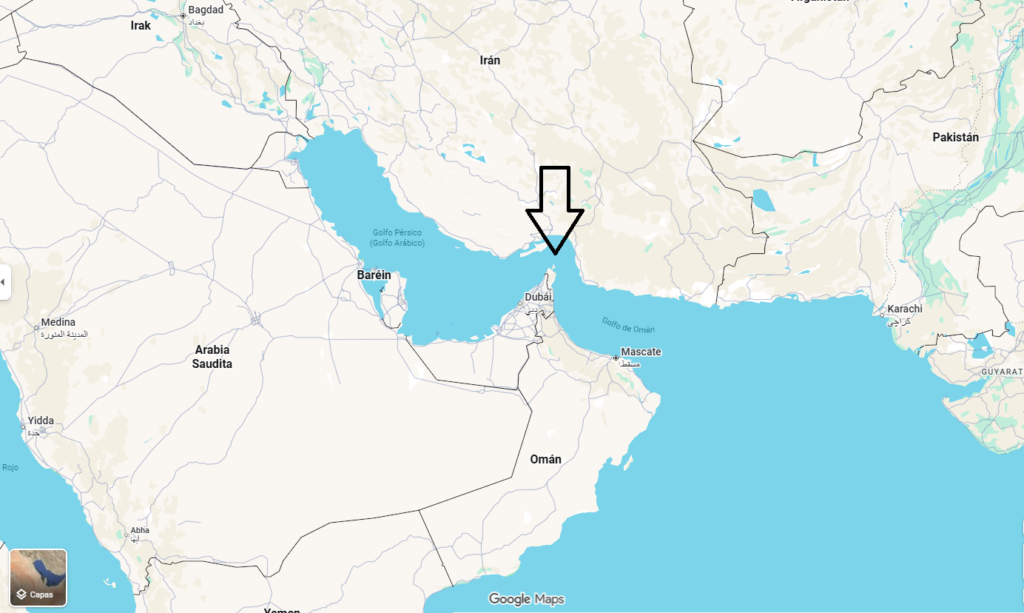
With the closure of the Strait of Hormuz, oil prices soared to $120 per barrel on March 8, a price that had not been reached since 2022. generating what BitMEX describes as a “catastrophic energy crisis”.
Such a situation threatens a “devastating impact on the affordability crisis”, that is, a scenario where massive increases in energy and transportation costs make it difficult for families to pay for basic goods and services.
Precisely, this blow to the domestic economy and potentially to the US stock market is what activates Trump’s political response, whose strategy is governed by a very specific pattern of reaction to financial crises.
The stock market as part of American security
This behavior of the president follows a pattern that BitMEX calls “TACO” (Trump Always Chickens Out or “Trump always chickens out”). It is a concept that describes the president’s tendency to back down on his commercial or military threats when they cause falls in the stock market.
According to exchange analysts, it is likely that Trump worries that falling stock prices will erode his image of success economic, which forces it to seek sudden de-escalations.
“After posting messages inciting escalation, on Monday, March 23, 2026, Trump made a surprise post on Truth Social that he was holding productive talks with Iran and would postpone any military strike against Iranian power plants and energy infrastructure for five days,” the report states.
As CriptoNoticias reported on Monday, President Trump indicated that the United States and Iran had held “very positive and productive” conversations. However, fighting continues with Iranian bombings in Kuwait, Jordan and Bahrain. Israel, meanwhile, also responds with bombing of Iranian military infrastructure.
In this context, the exchange questions the timing of the official announcement: “Why five days? Five days take us until Friday. “Trump might as well have said he was postponing the attacks until the closing bell of the New York Stock Exchange rang on Friday afternoon.”
Conditions for a ceasefire between Iran and the US
While this is happening, there appears to be a rapprochement between Washington and Tehran. Iran received a 15-point US proposal through Pakistan, intended to open a path towards a ceasefire.
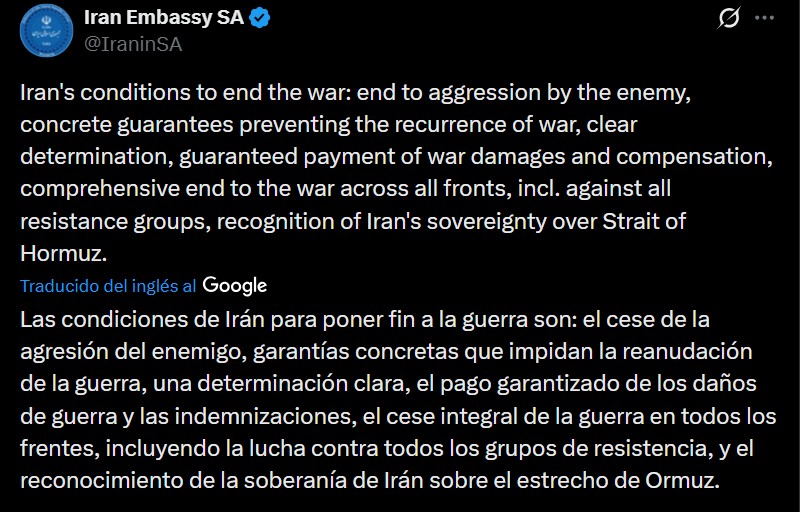
However, the Iranian embassy in South Africa set out the conditions of his country for the end of the war, today March 25. Among those is the cessation of aggression and concrete guarantees that prevent the resumption of the war.
Whether the story of the negotiations is true or false, the Bitmex report maintains that “Trump does not appear to prioritize the Iranian people, Israel’s national security, the security situation in the Gulf countries, oil supply problems in Asia or the affordability crisis in his country. The only thing that prevails over all this is the US stock market. “Trump seems to want to calm the markets for a week to buy time.”
This period — says Bitmex — would serve as “time to review military strategy, time to resupply or, perhaps, according to our most skeptical thinking, time to review financial market strategy.”
Institutional intervention and the future of bitcoin
The company suggests that “one strategy could be to try to manipulate financial markets to win the war. This could involve greater collaboration between the national security apparatus and the American financial sector. “Perhaps the War Department will exert greater influence over the Federal Reserve (FED) or institutional investors, with the goal of mitigating the damage caused by Iran.”
In practice, Trump could seek to have the Department of Defense put pressure on the FED to print money or keep interest rates low, injecting the liquidity necessary to artificially support stock prices in the face of war panic.
If the economic situation worsens, BitMEX anticipates that the Department of Defense and the Department of State will exert direct influence not only on the FED, but also on the Commodity Futures Trading Commission (CFTC), the United States Securities and Exchange Commission (SEC) and even the largest asset manager in the world, BlackRock.
The objective would be to mitigate the damage caused by Iran through coordinated purchases of assets or regulations that favor the rise of marketsstabilizing the stock market at any cost.
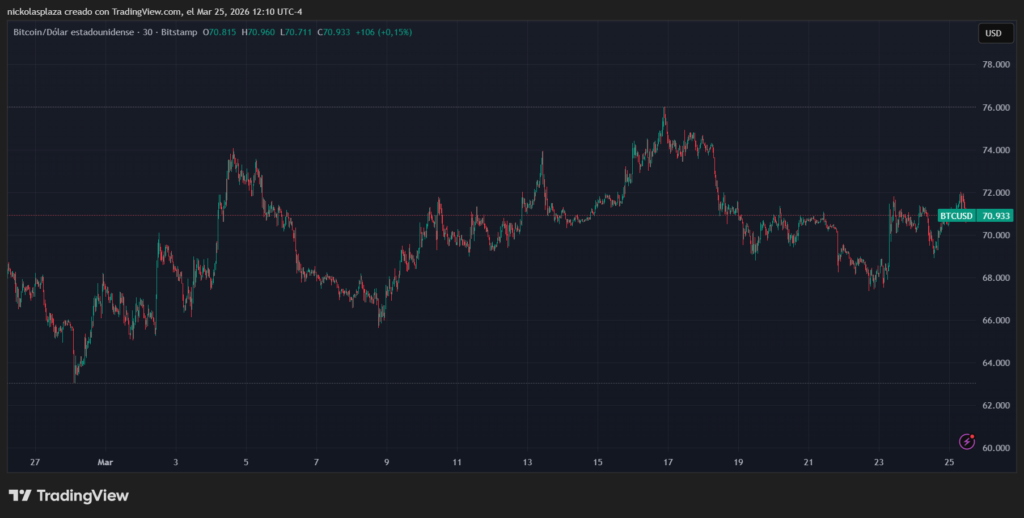
If this massive government intervention were to take place, it would generate a liquidity overflow effect that would directly benefit digital assets. Although the analysis does not mention it, bitcoin would likely be favored due to its close correlation with traditional markets. As shares rise due to state intervention, capital also flows into the digital currency, which is currently lateralizing around $70,000.
This strategy would require a strong expansion of liquidity (printing money or cheap credit). Historically, bitcoin acts as a shelter against inflation and the debasement of fiat currencies. As there are more dollars circulating to support Wall Street, the relative value of a scarce asset like bitcoin tends to rise.
Furthermore, in a financial system where investment decisions may be subordinated to the interests of the Pentagon, bitcoin stands out as the only censorship-resistant and apolitical asset. Faced with the possibility of “authoritarian capitalism”, global capital could migrate towards BTC to ensure its sovereignty away from the direct control of US intelligence agencies.