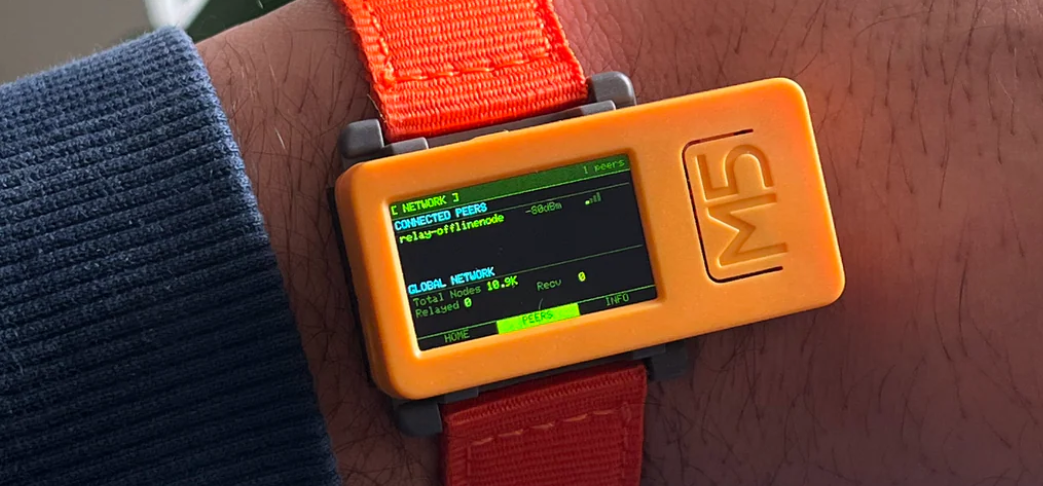
Includes a companion app with local AI, offline maps and Bitchat support.
The device weighs 15 grams and relays encrypted traffic from two mesh networks simultaneously.
The developer known as Satvik, from the Offline Protocol project, announced the launch of IntelligenceMesh Relay, a portable hardware node designed to relay encrypted messages in mesh networks over Bluetooth without the need for internet, WiFi, user accounts or prior configuration.
The device weighs 15 grams, measures 52 by 25 by 14 millimeters and can operate connected to USB-C indefinitely or on its own battery for three to four hours of active use.
What distinguishes IntelligenceMesh Relay from a phone running as a node is that It is a device dedicated exclusively to that function. When turned on, it immediately begins discovering nearby mesh devices and relaying their traffic, without the user having to open any apps or keep their phone active.
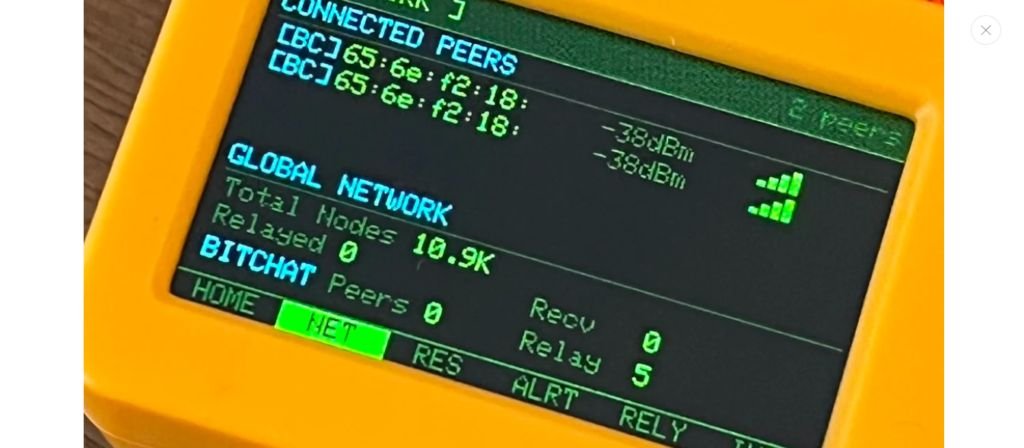
According to the place official Offline Protocol, the device simultaneously retransmits traffic from two different networks– Offline Protocol’s mesh network, supporting all of its applications and projects built on its open source toolkits (SDKs), and Bitchat’s mesh network.
A mesh network is a network where devices connect directly to each other and relay messages from one to another, without depending on cell towers or central servers. This allows communications to function in areas without coverage, during internet outages or in emergency situations where conventional infrastructure fails.
Each of the devices that joins the network acts as a node that extends the reach of messages through successive hops between nearby devices.
The Features of IntelligenceMesh Relay
The companion app that is integrated with the device adds three layers of utility:
- The first is a local AI assistant that answers questions from a knowledge base stored on the device, without an internet connection.
- The second They are pre-downloaded maps with local resource layers.
- The third is a system of local emergency alerts and automatic synchronization of preparedness information with other nearby mesh nodes. The app also shows the network topology in real time: which devices are connected, the quality of each link and the flow of messages.
The device also includes a streaming incentives which records the number of messages retransmitted, uptime, and peers served, accumulating a contribution score. The reward mechanism associated with that score is not detailed in the available source.
The hardware of OfflineProtocol’s device is built on a dual-core ESP32-PICO-V3-02 processor with Bluetooth 4.2, a 1.14-inch color TFT LCD display, and USB-C connectivity for continuous power and charging. The screen is completely customizable: the user can choose colors, arrangement of elements and order of screens from the companion app.
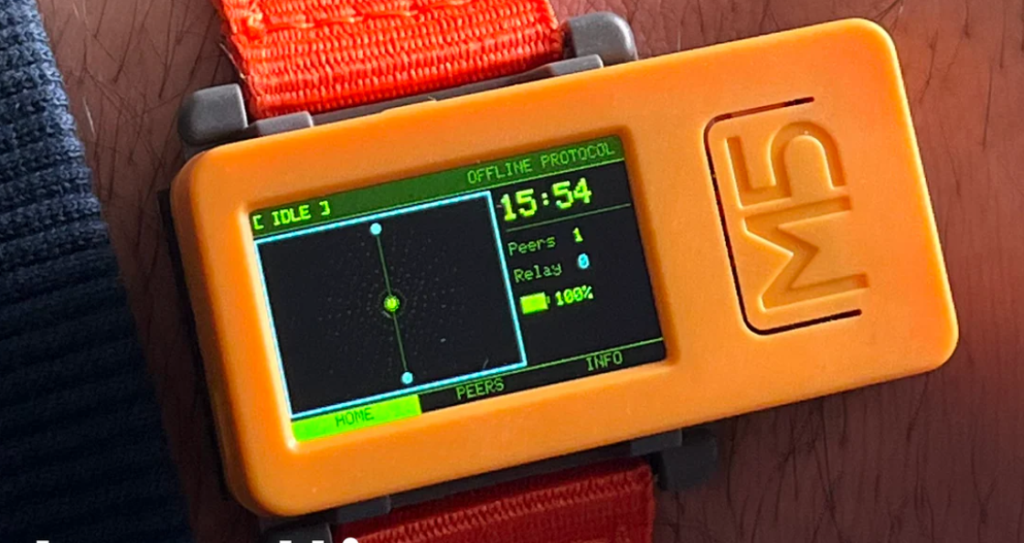
For developers, IntelligenceMesh Relay includes an open platform that allows you to build custom modules that display your own data on the device screen.
As indicated by Satvik, the device is available for pre-sale for $50 and is the project’s first hardware experiment.
The connection with Bitchat and the fundamentals of Bitcoin
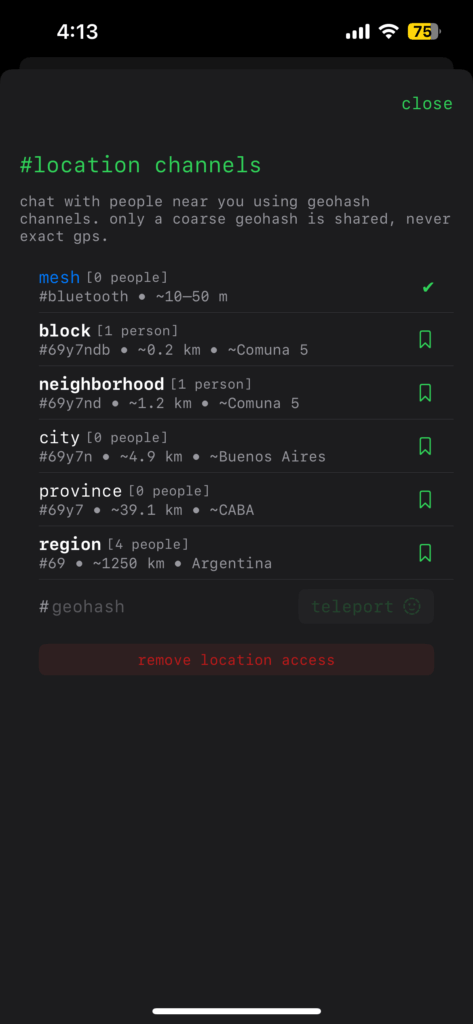
Compatibility with Bitchat is the data that gives greater visibility to the project. Bitchat, as explained by CriptoNoticias, is a decentralized messaging application developed by Jack Dorsey, co-founder of Twitter, together with the bitcoiner developer known as callebtc.
Bitchat works on Bluetooth Low Energy in mesh mode: Messages jump from device to device without the need for internet, with end-to-end encryption and without requiring a phone number or email.
Bitchat’s range depends on how many devices are in the environment to relay messages. More nodes means greater coverage and better delivery. IntelligenceMesh Relay targets exactly that problem: a dedicated, always-on node that extends the Bitchat network without consuming the user’s phone battery or requiring the app to be active.
Bitchat also allows you to create and sign offline Bitcoin transactions that propagate through the mesh network until they reach a node connected to the internet, which opens the possibility of using the relay as part of the infrastructure for offline Bitcoin payments.
The most pressing use case for devices like IntelligenceMesh Relay and applications like Bitchat is not technological convenience but resilience in contexts where communications infrastructure fails or is deliberately disrupted.
During crisis contexts, such as blackouts last January in Iran or the blackout that affected Spain, France and Portugal in April 2025, thousands of people were cut off because their messaging tools depended on the internet and cell towers that stopped working.
In war scenarios or under regimes that cut off Internet access as a mechanism of social control, that dependency becomes a critical vulnerability.
A decentralized mesh network, built on portable devices that do not require central infrastructure or permission from any authority to operate, offers a communication layer that cannot be disabled by a government order or a localized power outage: as long as there are devices turned on within a sufficient radius, the network exists.