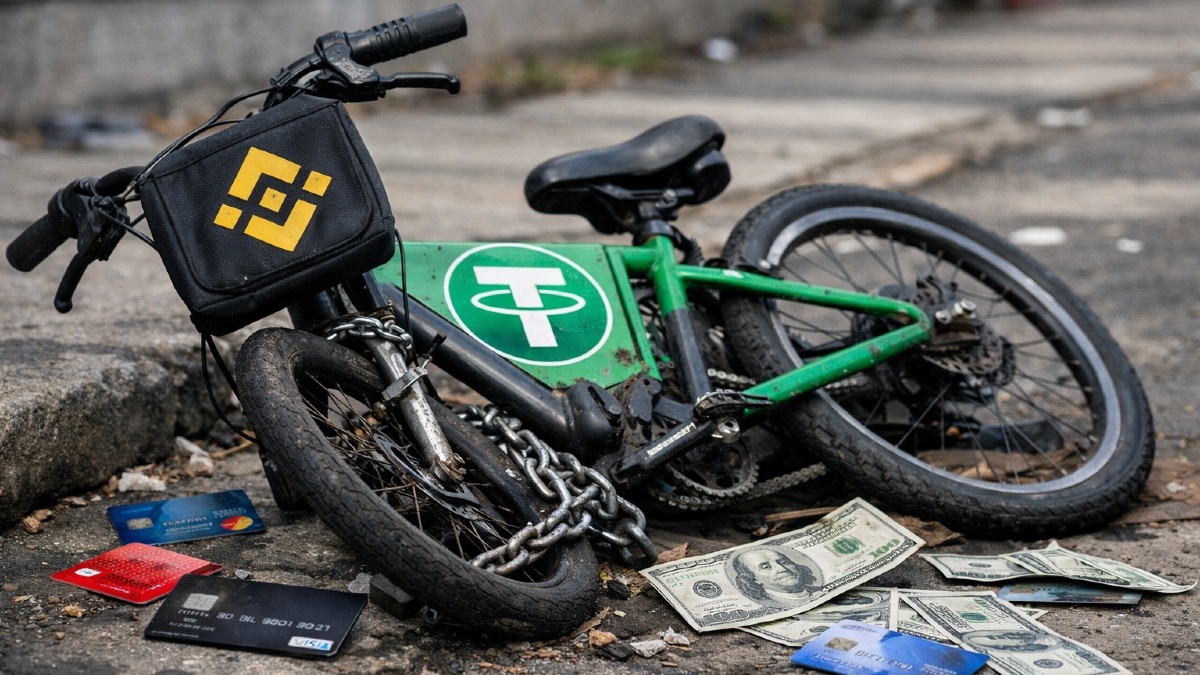
Now Venezuelans can buy USDT directly on Binance, without P2P or foreign wallets.
Buying cryptocurrencies directly on Binance is cheaper and easier, but it is more guarded.
The recent enabling of BPay Global by Binance in Venezuela has begun to modify the dynamics of local arbitration. After the arrival of this regulated fiat currency gateway in Bahrain, the gears of the so-called “exchange bicycle” – which takes advantage of the price differentials between the banking dollar and the informal market – came under unprecedented pressure.
In practical terms, the main impact of the arrival of BPay Global on the “exchange bike” lies in simplifying the process of purchasing bitcoin (BTC) and other digital assets, such as the stablecoin USD Tether (USDT).
This platform allows the creation of a dollar account directly within the Binance ecosystem, thus avoiding dependence on peer-to-peer (P2P) trading or from foreign intermediary wallets, such as Zinli or Wally, to acquire crypto assets. It is something that weakens the markup market that fuels the massive arbitrage seen this year.
The massification of the “exchange bicycle” in 2026 was facilitated due to a practical flexibility promoted by different financial entities, such as Bancamiga and Banco de Venezuela. These institutions issue virtual international cards associated with electronic dollar accounts and assign them to clients who purchase foreign currency.
This does not imply a formal lifting of exchange controls (daily, monthly and annual purchase limits remain), but It does provide greater usability to cards and dollar accounts of Venezuelan banks. This has opened an operational window that has allowed massive arbitrage towards platforms such as Binance P2P.
Before continuing, we must explain how the “bicycle” with USDT usually works in the country. This is based on capturing dollars from the banking system at rates of 530 bolivars per unit on average, which are deposited in the freely convertible accounts of financial institutions.
Once the electronic currencies have been acquired, they are recharged to foreign wallets and USDT is then purchased in the Binance P2P (with a surcharge that has exceeded 10%). Subsequently, these USDT are sold to bolivars at a much higher rate (30% higher, on average, compared to the official dollar) and finally the process is repeated.
Now, does the arrival of Binance’s BPay Global put the “exchange bicycle” in Venezuela in check? To answer it, CriptoNoticias spoke with two Venezuelan economists specialized in digital assets. These are Daniel Andrés Peláez and Daniel Arráez.
The “exchange bicycle” in Venezuela is not eliminated, it becomes less profitable
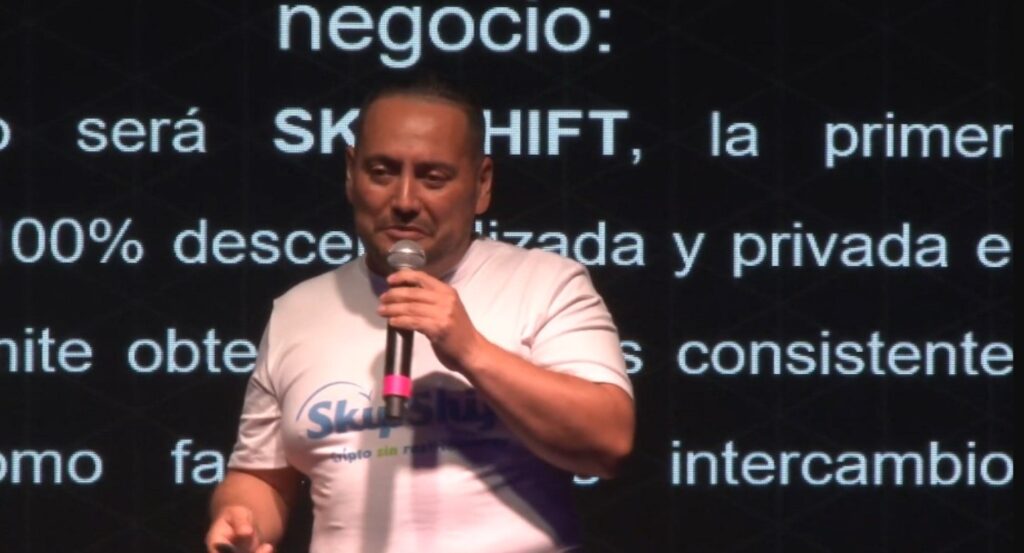
For Peláez, The arrival of Binance’s BPay does not put in check the “exchange bicycle” in Venezuelabut it makes it less profitable. The P2P trading specialist explains that the tool will increase the supply of USDT at a lower price, reducing the spread or differential that the so-called “bike riders” take advantage of.
He clarifies, however, that lower profitability does not mean that the exchange distortion will be eliminated. “What it does is reduce it,” says the also university professor.
«Yes, pressure is exerted on the so-called ‘exchange cycle’ because the differential is reduced. That’s definitely positive. But it does not end up eliminating the problem, since the distortion that exists is structural in the Venezuelan market and that will continue to exist,” warns the specialist. “In the short term the gap can be reduced, but it will not be eliminated, because the origin of the problem is macroeconomic, not technological,” he warns.
Despite the brief expected impact on the “exchange cycle”, Peláez foresees benefits for the sector with the arrival of BPay Global to Venezuela. According to him, by eliminating intermediaries for the purchase of USDT, operational friction is also reduced. This, remembering that there are users who do not know the steps that must be followed to acquire cryptocurrencies through the country’s “cyclical-exchange” route.
«By managing to enter the market through the BPay option, this operational friction is definitely reduced, and for them it will be much easier, efficient and faster, because once fiat leaves, crypto enters and that could even help there be much more adoption. There is like one more incentive,” he says, and then emphasizes that, due to the tool, “the market becomes much more efficient” because there is a “formalization of the flow of capital.”
But not everything is rosy. Beyond such benefits and added to the zero impact on the exchange rate distortion in Venezuela, the economist believes that, with the arrival of BPay Global, “dependency on the banking system continues” and predicts that there will continue to be limits, blockages and frictions with the traditional financial system.
The underlying problem is not solved. There could even be a possible exclusion because that would end up benefiting only those people who have dollar accounts or active international cards. Furthermore, from my point of view, I think it reduces the role of P2P, which is much more open and much more flexible. I think BPay ends up improving efficiency, but in exchange the price you have to pay is greater dependence on the traditional banking system.
Daniel Andrés Peláez, Venezuelan economist.
Beyond that, Peláez identifies that the traditional limitations of banks for the use of their products, such as cards and accounts in electronic dollars, They will add another point of distortion to the performance of BPay Global in Venezuela. In his opinion, there are three key points in which banking limitations will affect:
- Bottleneck: according to Peláez, the daily limits for the use of accounts and cards, of USD 1,000 daily, USD 4,000 monthly and USD 8,500 annually for individuals, will be a restriction and an entry barrier that will continue to generate a shortage of USDT.
- Market segmentation: the specialist warns that, with BPay Global, a division in the sector is foreseeable, because not everyone will be able to have access to that platform. He believes that one group will go towards that tool and another will continue in the P2P market.
- Possible rebound effect: Peláez considers that the possibility of an increase in the price of USDT in P2P is on the table, especially if the BPay Global system becomes oversaturated.
In short, says Peláez, “these banking restrictions are not going to eliminate the distortions, rather what they are going to do is a redistribution.” And he emphasizes that the arrival of BPay does not eliminate either P2P commerce or the exchange rate differential.
“The cure could be worse than the disease”
Economist Daniel Arráez is no stranger to Peláez’s comments. Like his colleague, he agrees that BPay Global, although it will facilitate entry into the world of cryptocurrencies in a more direct way, together with the technical limitations of Venezuelan banking will contribute to the permanence of exchange distortions.
“This regulated, highly supervised gateway, which requires extensive permission, is simply going to drag more restrictions, and these restrictions become inefficiencies, distortions,” Arráez asserts.
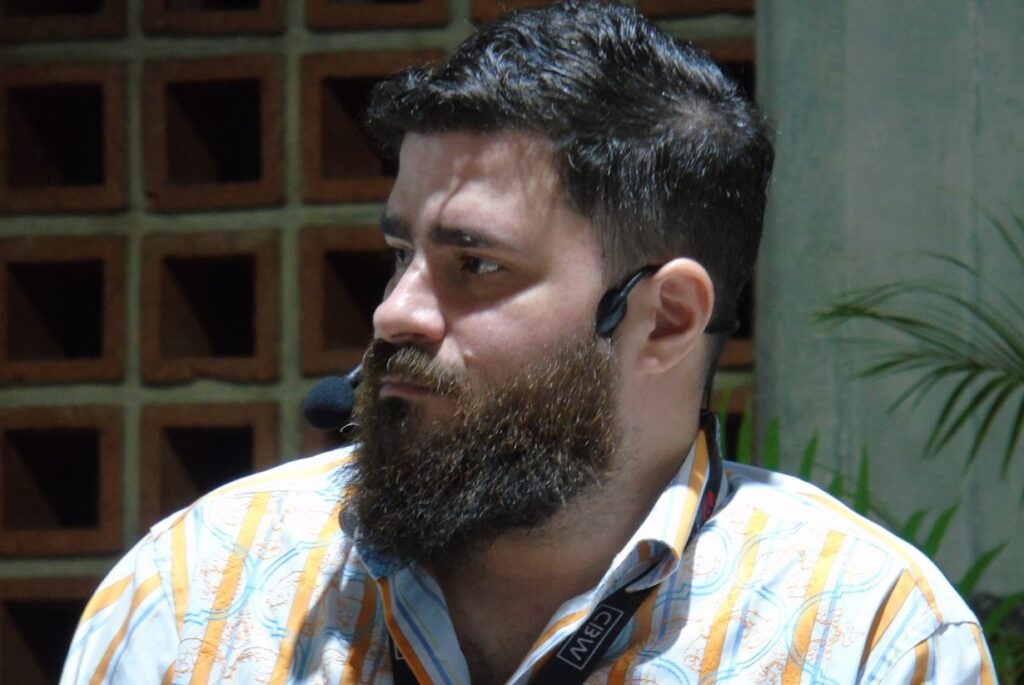
The specialist assures that only those who meet the additional identification measures required by Binance will have access to BPay Global. which go far beyond those requested to open an account on that exchange.
CriptoNoticias was able to verify that, to activate a BPay Global account from Venezuela, rigorous verification requirements must be met. These include the submission of the Fiscal Information Registry (RIF), certification of sources of income with bank references, tax returns and detailed account statements. This level of tracking allows the platform detect patterns of abusive arbitrage faster than in the informal market.
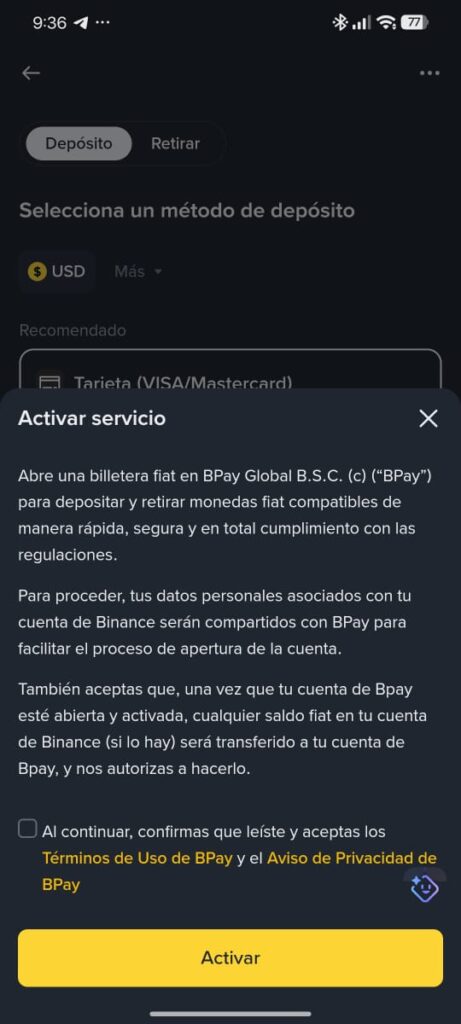
In addition to the requirements to open an account at BPay, Arráez agreed with Peláez on another factor that, in his opinion, will create distortions. It refers to the banking limitations for cards and electronic dollar accounts.
Venezuelan banks have limits, daily limits on user operations. So, you, through these exchange allocation mechanisms, will have a limit on how much you can use, how much you can spend, or how much you can receive. When you reach that limit, your trading margin ends.
Daniel Arraez, economist.
So, in the end, “it seems that the remedy could be worse than the disease,” warns Arráez, who sees “an even more differentiated market between those who are going to be the suppliers and the demanders, and those who have access to this privilege are going to be the ones who are going to have the highest margins.”
“And even so, assuming that I can have access to the privilege, nothing prevents me as an exchanger from taking the USDT that I am receiving through Binance to throw them on another platform where I can place them at the rates that I am accustomed to,” he reflects.
“As always, it is time to see how the product is received, what impact it may have on the Venezuelan economy, but, in particular, I believe that this impact may be physical and, in the end, not result in the great idea that was thought to be a beginning,” he concludes.