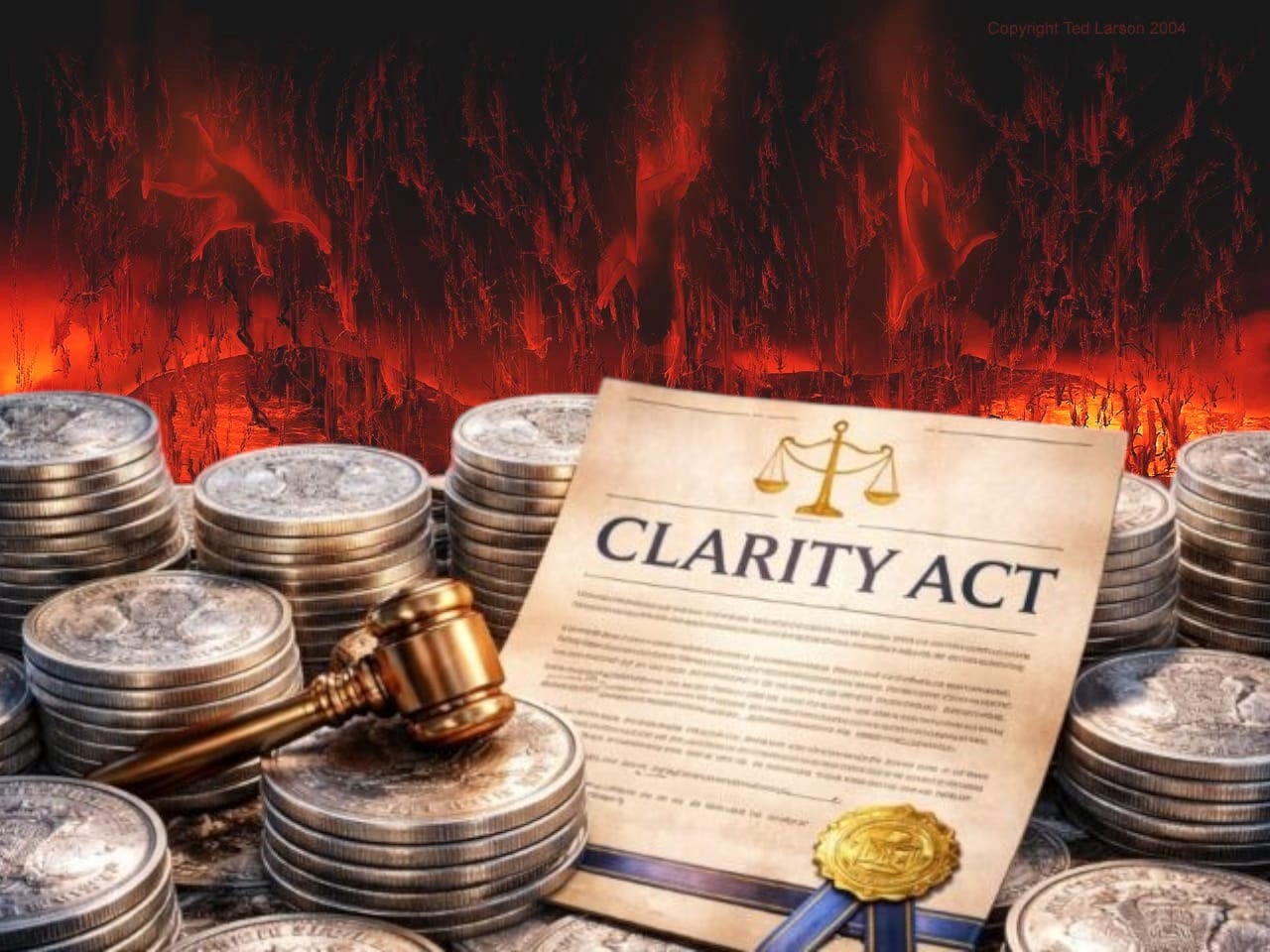
Peter Van Valkenburgh, director of Coin Center, issued a direct warning about the future of cryptocurrency regulation in the United States when referring to the debate surrounding the Clarity Act.
in a comment published in Xmaintained that The real risk is not in regulating more, but in leaving developers without clear legal protectionswhich – according to him – would open the door to a scenario of regulatory persecution and political discretion.
The Clarity law remains more stagnant than ever, as reported by CriptoNoticias, March 1 was proposed as the deadline for bankers and cryptocurrency entrepreneurs to reach an agreement but it is far from reality.
Regarding this, Van Valkenburgh questioned that, without legislation like Clarity, the ecosystem could be exposed to aggressive interpretations by different federal agencies. In his text, he spoke of a possible expansive use of regulations against developers of privacy tools, in addition to a more severe reading of the rules on securities, money transmission and anti-laundering obligations.

The Coin Center manager also warned that the problem would not only be technical, but political: In his opinion, without statutory protections for software and open infrastructure, the sector would be at the mercy of “prosecutorial discretion, political fashion and fear.” In that context, he described as a real risk that both hard-line national security sectors and authoritarian currents could use ambiguous laws against neutral or dissident technologies.
For Van Valkenburgh, the discussion about Clarity should not focus on the current administration, but on shielding the sector from future governments. His message was blunt: if Congress misses this opportunity, the result could be an environment that he himself summarized as “crypto hell”, a “crypto hell” marked by legal uncertainty, regulatory pressure and a greater threat to innovation.
What does “crypto hell” mean without the Clarity law?
In his analysis, Van Valkenburgh did not stay in the abstract and outlined what that scenario would look like concretely without a law that establishes clear limits:
The Department of Justice (DOJ) could continue to broadly use section 18 USC -1960 to prosecute developers of privacy tools, treating them as unlicensed money transmitters, even when their function is purely technological.
At the same time, the Securities and Exchange Commission (SEC) would have room to revoke previous guidance and adopt a more aggressive stance, classifying most crypto assets as securities. Additionally, it could revive attempts to expand the definition of “intermediaries” under the Exchange Act, which would affect developers and infrastructure providers whenever their software interacts with tokenized assets.
For its part, the Treasury Department and FinCEN could push for stricter interpretations of the Bank Secrecy Actexpanding the concept of “financial institution” to impose AML (anti-money laundering) and KYC (know your customer) obligations on actors within the decentralized web, even those who do not custody funds.
Under this scenario, Van Valkenburgh’s warning goes beyond a legislative dispute, and focuses on the decision about whether the future will be governed by clear rules or by the changing interpretation of regulators that affect the development of the ecosystem.