The debate over the regulation of decentralized finance (DeFi) in Europe has entered a new phase. An analysis by the European Central Bank (ECB) raised alerts by questioning the “true decentralization” of the main protocols of the ecosystem, which would open the door to a possible “MiCA 2.0”, focused directly on DAO and DeFi structures.
The Crypto Asset Markets Regulation (MiCA), approved by the European Union, established a clear framework for cryptocurrency companies, but left out a key segment: “fully decentralized” services.
That exclusion created a kind of regulatory vacuum. Under that criterion, many DeFi and DAO protocols fell outside the direct reach of the law, as long as there was no identifiable entity responsible.
However, this foundation is beginning to shake. He new ECB report analyzes protocols such as Aave, Uniswap, MakerDAO and Ampleforth, ensuring that the 100 main holders control more than 80% of the supply in these projects, that a large part of the tokens is linked to teams, treasuries or exchanges and governance is dominated by delegates that are difficult to identify, which reduces transparency.
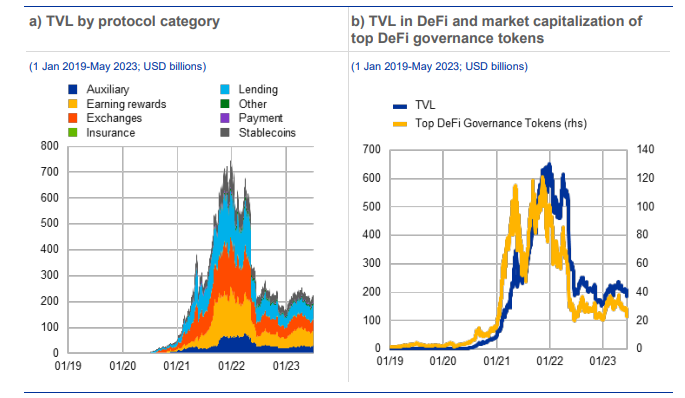
In other words, The ECB questions one of the fundamental pillars of the ecosystem: that DAOs are truly decentralized. Under this premise, the analysis ensures that, if the protocols are not “completely decentralized”, then they could no longer qualify for the MiCA exemption.
What does the ECB implicitly propose about DeFi?
Although the document is not a formal regulation, it does outline a clear roadmap for regulators, such as reevaluating what “real decentralization” means, identifying points of control (holders, developers or exchanges), requiring greater transparency in governance and reducing anonymity in decision-making.
Furthermore, the report states that there is a critical problem: Today it is not possible to identify with certainty who controls many protocolsmaking it difficult to apply any legal framework.
This suggests that the next step will be to build regulatory mechanisms that allow “anchoring responsibilities” within DeFi.
What do the experts say?
Cristina Carrascosa, lawyer specialized in cryptocurrencies, He assured that this movement is not isolatedbut the beginning of a new regulatory stage. That is to say, Europe is preparing for an extension of the MiCA lawfocused specifically on DeFi. On the other hand, DAOs would no longer be “untouchable” under the argument of decentralization and would seek to fit these systems within the traditional regulatory perimeter.
In this context, what Carrascosa considers a “MiCA 2.0” would not be a completely new law, but rather an evolution of the current framework to cover the gaps detected.
If this line is realized, the impact on the ecosystem would be profound, since DeFi protocols could be forced to identify legal entities and meet similar requirements to financial companies. DAOs would have to redefine their governance and it would reduce the scope for anonymity.
For Carrascosa, some projects could choose two paths: adapt to the regulated framework or stay outside of Europe.
Regarding the above, the expert assures that, although it is not a reality, for now, the ECB’s approach does not only affect Europe, since a methodology to measure decentralization could become an international standard, influencing regulators in other jurisdictions.
As CriptoNoticias has reported, the ECB is redoubling efforts to have greater reach within digital finance, with the development of its digital euro. The bank also sees threats to traditional finance with the global reach of stablecoins.