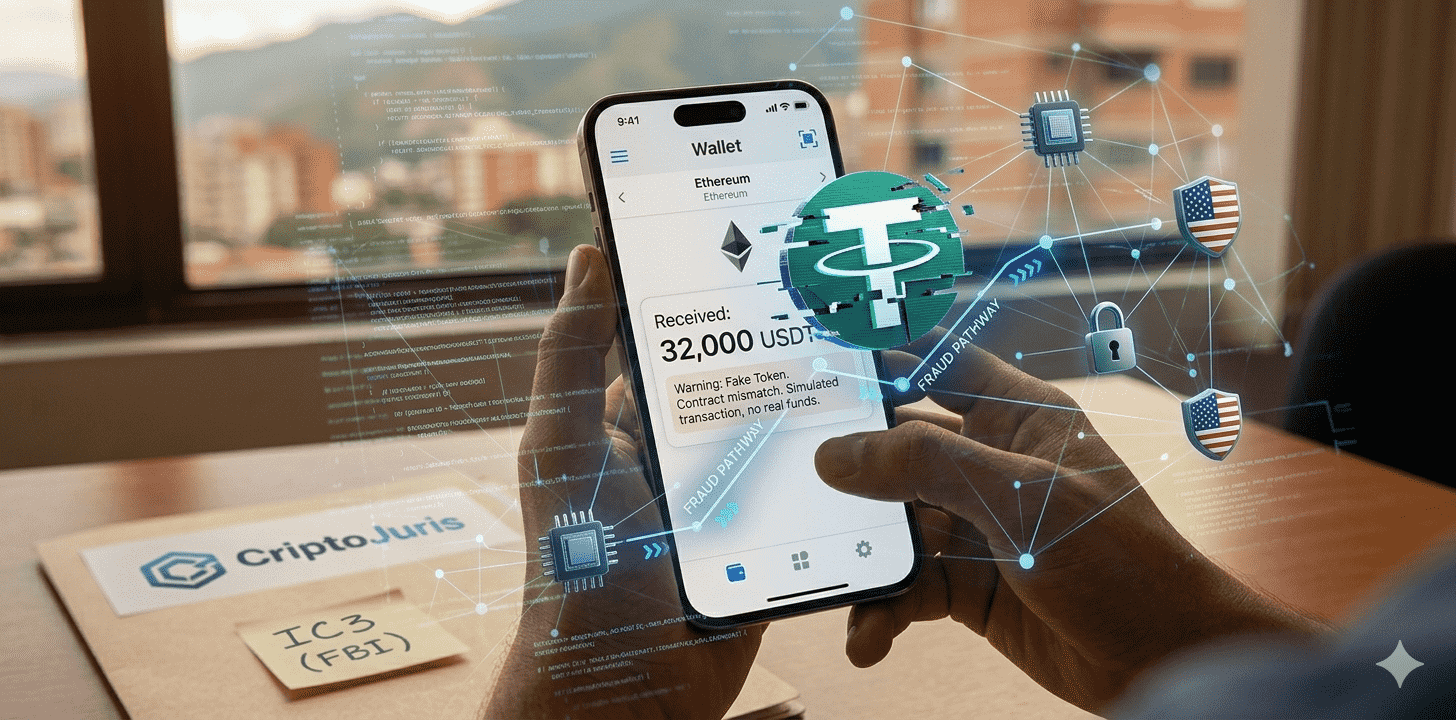
Interfaces of some wallets facilitate fraud by hiding the real address of the assets.
Technical expertise transforms blockchain data into legal evidence for foreign courts.
An alleged “fund recovery” operation in Venezuela resulted in a mirage that ended up in the files of the Internet Crime Complaint Center (IC3), a division of the FBI in charge of processing complaints of cybercrimes and online fraud. This is according to lawyer Ernesto Portillo, CEO of CriptoJuris, who reveals a sophisticated social engineering architecture where a criminal did not hack a system, but rather exploited the user’s lack of technical verification.
Portillo, whose organization has advised on the use of digital assets in Venezuela since 2018, explained to CriptoNoticias in March 2026 that The maneuver took advantage of the psychological vulnerability of the affected person. The citizen, a Venezuelan-American who had already lost capital in 2023 through a Ponzi scheme, was contacted by an alleged legal aid platform that promised to rescue his funds.
To give the ransom the appearance of legitimacy, the scammers sent 32,000 units of a token that, in the wallet interface, appeared as “USDT.” However, when trying to mobilize them, the system indicated that the management did not have funds.
This phenomenon occurs because the scammer sends an asset with no market value, but programmed to “imitate” visually the name and symbol of the Tether stablecoin.
Technically, creating a “fake USDT” is a process of duplicating metadata on networks like Ethereum or BNB Chain. Any actor can deploy a smart contract and name it “Tether USD.”
The deception works because many wallet interfaces, by default, prioritize the token name over the smart contract address, which is lthe only source of truth to determine the authenticity of an asset.

Some funds that are visible, but a wallet that says: “zero”
The lawyer highlighted that the importance of this case lies in its international scope. Despite the diplomatic barriers between Venezuela and the United States, the victim’s dual nationality made it easy for the evidence collected to serve as a formal complaint.
Portillo detailed that, upon assuming the expert opinion in 2024, he carried out an on-chain forensic analysis to dismantle the simulation. The challenge was to explain how a user could see a balance that, accounting for, was non-existent:
When I start to move it, it tells me: address without bottom, wallet without bottom. But I thought: how is it possible if I’m seeing them? So I did a traceability analysis. I put the hash in different browsers and I got to Etherscan, where it said: ‘be careful with these tokens, they are fake.’
Ernesto Portillo.
Specifically, traceability allowed the generation of a certified technical report which was reported to the FBI. Although the final outcome of the FBI investigation is often kept confidential and the recovery of funds is uncertain in these highly complex cases, the certified technical report was a crucial step.
With this precedent, Portillo questions the narrative of anonymity in the ecosystem:
«The world of crypto assets is neither anonymous nor illegal. They always have a regulation. “We are talking about private transactions, not anonymous transactions,” added Portillo.
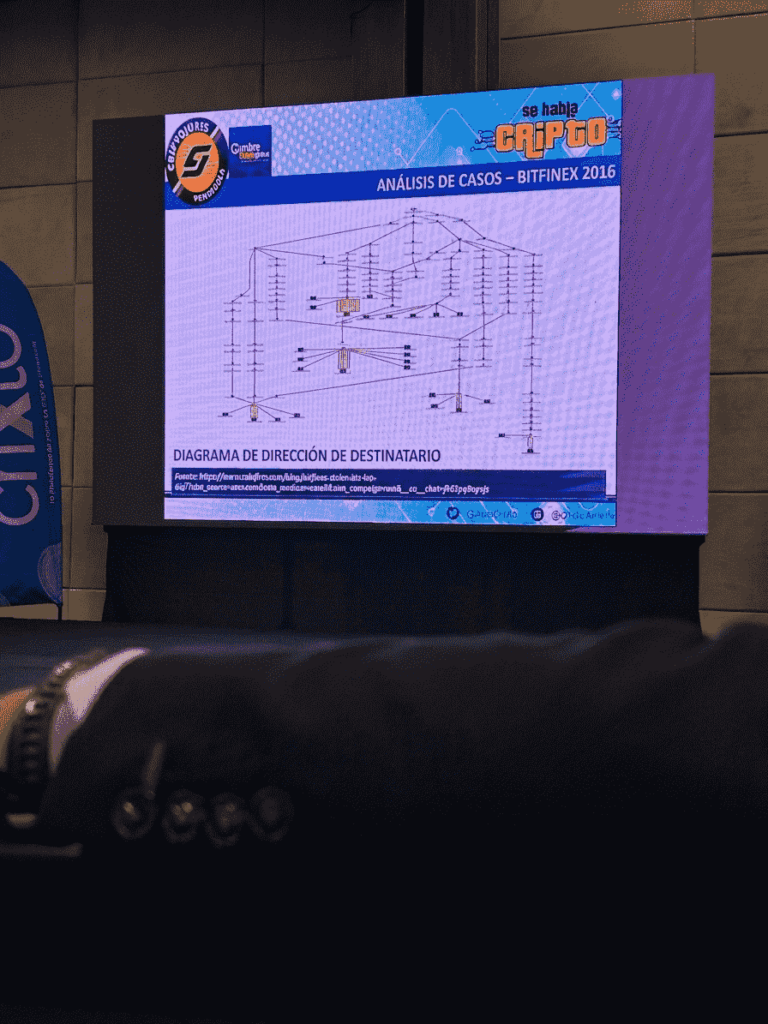
In Venezuela, Providence 044-2021 already obliges service providers (PSAV) to carry out traceability analysis. However, the weakest link remains the custody of information. For Portillo, digital fraud is, ultimately, identity theft:
A trained user is one less victim. What matters to cybercriminals today is information. People think that if their WhatsApp is hacked, nothing happens. They do not know that they have a treasure because their complete information is there, which will be used as a means to commit crimes.
Ernesto Portillo.
The resolution of the case leaves an undeniable technical premise. It’s about the fact that cryptocurrency networks are a permanent public record. Although forensic analysis requires high-end tools, the FBI complaint demonstrates that the victim’s sovereignty lies in their ability to audit the blockchain.
The case of the fake USDT perfectly illustrates the dilemma that has been posed in Venezuela for years, as reported by CriptoNoticias. Is regulation necessary? In response to this, Portillo emphasizes that what is regulated is human behavior. In this scam, the criminal did not hack the blockchain, which is neutral, but rather abused the ‘autonomy of will’ of a victim who trusted a contract that, if it had been audited under the rules of the white paper itself, would have revealed its falsity immediately.