
The first direct and formal talks between the United States and Iran since the beginning of the armed conflict are scheduled for this Saturday, April 11, 2026 in Islamabad, Pakistan.
US Vice President James David Vance and Iranian Parliament Speaker Mohammad Baqer Qalibaf will lead the respective delegations. The result of that meeting (or whatever is anticipated before its realization) has direct potential to move the price of bitcoin (BTC) in the next few hours.
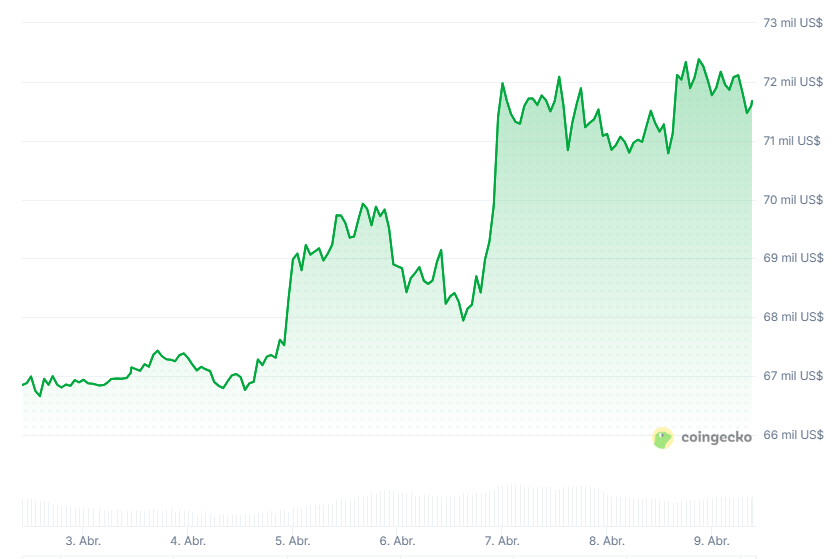
At the time of this publication, on the morning of Friday, April 10, 2026, bitcoin is trading around $71,600 in a waiting posture that operators know well: no one wants to position themselves aggressively before a geopolitical variable of this magnitude.
The following graph shows how the digital currency has performed in the last 7 days:
The two-week truce announced by President Donald Trump last Tuesday is currently under visible pressure. As CriptoNoticias reported yesterday, the State of Israel reactivated bombings on Beirut and southern Lebanon, killing – according to the Israeli army – the nephew of the secretary general of Hezbollah, Naim Qassem. Hezbollah responded with a missile towards the city of Haifa, intercepted by Israel.
Washington and Israel maintain that the ceasefire does not include Lebanon. Iran and Pakistan, as mediator, claim the opposite: that Lebanon was an explicit party to the agreement.
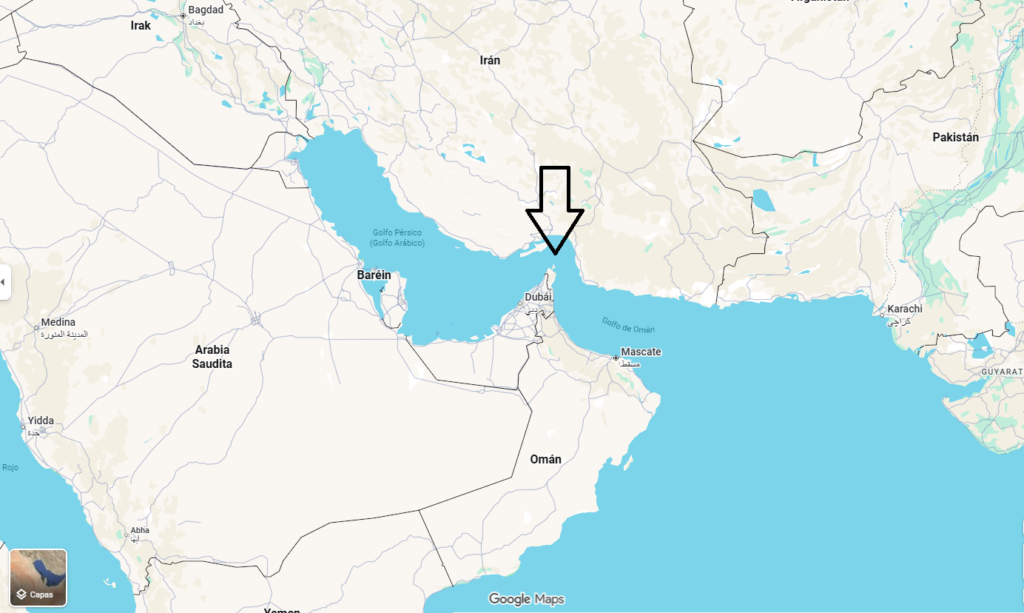
While all this is happening, The Strait of Hormuz remains to be completely liberated. This maritime canal – through which a fifth of the world’s oil and liquefied natural gas normally transits – today operates at least 10% of its historical daily traffic.
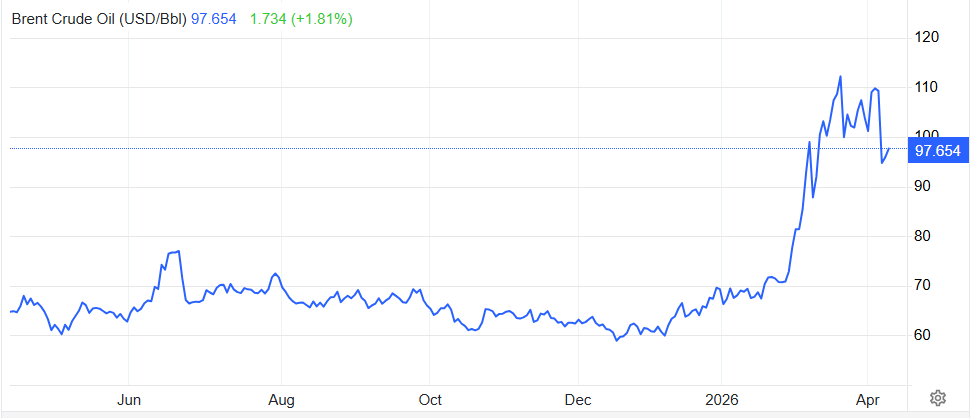
In this context, oil is once again approaching $100 per barrela price that—although it is far from the $115 reached in the last month—is relatively high at a historical level.
Why bitcoin is looking at Islamabad
The connection between geopolitics in the Middle East and the price of bitcoin is as follows. The blocked Strait of Hormuz makes energy more expensive worldwide. Expensive energy fuels inflation. Inflation pressures the US Federal Reserve (FED) and other central banks around the world to maintain high interest rates. High rates discourage appetite for assets considered risky—a category in which institutional managers still include bitcoin.
If Saturday’s talks result in concrete progress —for example, a commitment from Iran to reopen the strait or a clear definition on Lebanon— the market could react with an upward rebound for the price of bitcoin. If they fail or are discontinued, the bearish pressure on bitcoin could intensify.
The immediate antecedent is eloquent. On April 7, when Trump announced the bilateral truce, bitcoin surpassed $71,000 in a relief reaction. Two days later, with the truce showing its first cracks, the price stagnated. The market operates on expectations.
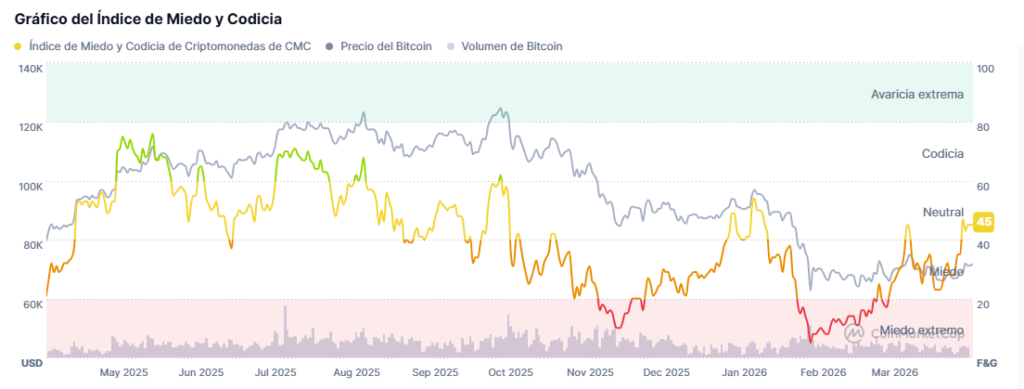
At the time of this publication, The fear and greed index of the cryptocurrency market prepared by CoinMarketCap stands at 45 pointsclassified as “neutral.” It is an improvement on the panic levels recorded in previous days, when the escalating conflict hit global financial markets. However, 45 points is not an optimistic market: it is a market that breathes, but does not trust.
This movement coincides with the analysis of the Spanish specialist Ignacio Moreno de Vicente, from the firm CryptoQuant, who maintains that the bitcoin stress cycle would be coming to an end. His argument is based on the Sharpe Ratio short-term, which touched the threshold of -40: a level that has historically marked market bottoms in 2015, 2019, 2020 and 2023. “We are closer to the beginning of an opportunity than its end,” the analyst wrote.
Not everyone agrees. Trader Willy Woo warns that on-chain models point to a deeper bottom, in the area between $46,000 and $54,000, especially if an eventual collapse of the stock markets drags down digital assets. They are two valid technical analysis readings, in dispute, on the same asset.
Decisive days are coming
The talks in Islamabad are the first formal diplomatic event since the United States and Israel attacked Iran on February 28. Iran came with a 10-point proposal released Wednesday, including maintaining its control over the Strait of Hormuz, recognizing its right to nuclear enrichment and lifting sanctions.
They are maximum conditions. That they will be accepted in the first round is unlikely. But That the parties feel is already, in itself, a signal that the market will read.
On Monday, April 13, there would be a new round of talks in Washington on Lebanon. Netanyahu, Israeli president, claimed on Thursday to have given instructions to begin peace talks with Beirut, conditional on the disarmament of Hezbollah. Hezbollah rejects direct negotiations with Israel.
There is a fragile balance. And the price of bitcoin is showing it.