11 April 2026
The success of Artemis II was seen as the beginning of the New Moon era.
The successful launch of Artemis II from California marked the beginning of a new phase in space exploration.
German astronaut Alexander Gerst said the mission showed that the spacecraft worked reliably with the crew, calling it an important milestone.
Gerst described the new era as focused on research and long-term exploration.
“It is no longer about planting flags like the first wave,” he said. The second wave of moon exploration is to explore space, he said.
The mission carried American astronauts Christina Koch, Victor Glover and Reed Wiseman, as well as Canadian astronaut Jeremy Hansen, who returned after nearly 10 days in space.
Gerst said many more test missions would be needed before humans could safely land and operate on the lunar surface.
Read more about the Artemis mission here.
https://p.dw.com/p/5C1Y0
11 April 2026
Survey shows little progress on cutting bureaucracy
Most people and businesses in Germany have seen little change in bureaucracy, despite promises by Chancellor Friedrich Merz’s government to reduce it.
A YouGov survey found that 66% of citizens said the administrative burden has remained the same since the current government took office, while 22% reported an increase.
Only 4% believed that bureaucracy had decreased, with 8% unsure. The survey was conducted for the European Digital Competitiveness Center at the ESCP Business School in Berlin.
The coalition of the conservative CDU-CSU bloc and the center-left SPD has promised to comprehensively roll back the bureaucracy through modernization, administrative reform and digitalization. However, businesses also report limited improvements.
Of the managers surveyed, 63% said bureaucracy had remained the same, while 31% saw an increase and only 4% reported a decline. Nearly half said they delayed or canceled projects last year because of slow or complicated administrative processes.
The respondents said the greatest need for digital reform was in healthcare and local administrative offices, followed by tax services and construction approvals.
https://p.dw.com/p/5C1Wz
11 April 2026
Transport strike to disrupt all cities in Bavaria
Public transport workers in Bavaria have announced another strike as pay talks for around 9,000 workers remain deadlocked.
Union Verdi said Tuesday’s walkout would affect cities including Munich, Nuremberg, Augsburg and Regensburg.
The day-long walkout is expected to cause major disruption, although some services – such as S-Bahn trains operated by Deutsche Bahn – will remain operational in some areas.
The union has already given important concessions to transport companies. Instead of approximately €670, the union is now demanding €550 in two instalments. And working hours should be reduced from the current 38.5 to 35 hours – but gradually over a longer period.
https://p.dw.com/p/5C1LO
11 April 2026
Reported rape cases rise sharply in Germany
Police in Germany have reported a significant increase in reported rape cases, according to a media survey.
newspaper sunday world 13,920 cases were reported in 2025, up 9% from the previous year and continuing a steady increase from 8,106 cases in 2018.
The figures are based on state police crime statistics, which reflect fully investigated cases rather than convictions. Although they provide a clear indication of crime trends, national crime statistics are expected to be published soon.
Justice Minister Stephanie Hubig described sexual violence against women as a serious issue and described rape as a “despicable crime” that has lifelong effects on victims.
Hubig said strict minimum sentences are needed in particularly serious cases, including cases involving date rape drugs. A draft law is expected to come before the Cabinet soon, with the coalition also planning tougher penalties for gang rape and cases resulting in pregnancy.
Also, overall violent crime – which includes grievous bodily harm, robbery, murder and manslaughter – has declined slightly from the 2024 peak, with 212,344 cases recorded compared to 217,277 last year.
https://p.dw.com/p/5C1IV
11 April 2026
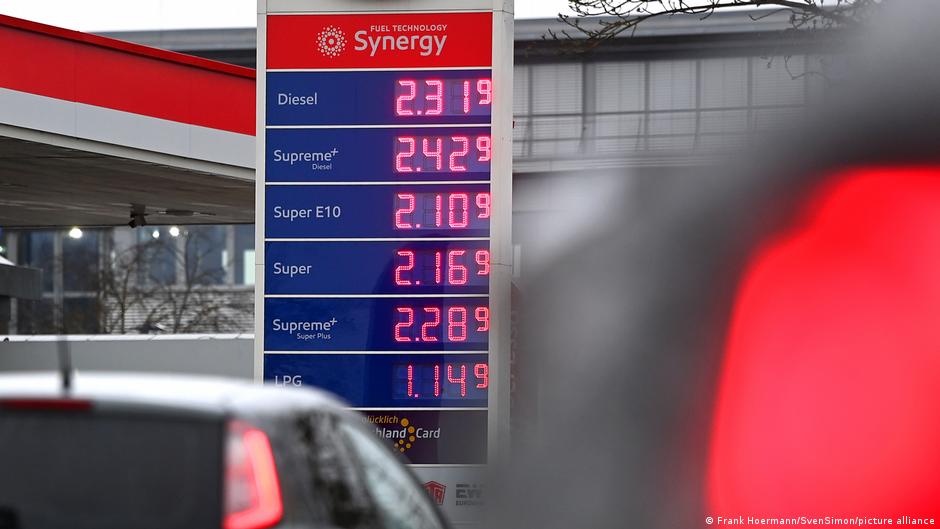
Germany’s ruling coalition collapses amid fuel price dispute
Germany’s coalition’s dispute over reducing high fuel and energy costs has escalated as centre-left Social Democrat Finance Minister Lars Klingbeil has pressed for stronger state intervention amid turmoil in the Middle East.
Finance Minister told south german newspaper Despite Chancellor Friedrich Merz’s skepticism, the newspaper cited examples from other European countries and argued that market intervention was the most effective tool.
Klingbiel has renewed calls for windfall taxes, lower energy taxes and fuel price caps – measures that have been openly rejected by Economy Minister Catharina Reich and viewed with suspicion by Merz.
“I can no longer explain to anyone why the governments of Belgium, Luxembourg, or Greece – none of which are communist countries – are limiting prices, while here prices are skyrocketing,” Klingbeil told the newspaper. Unfortunately, this “very fragile ceasefire” between the US and Iran will not bring prices down any time soon.
The controversy escalated Friday when Reich separately criticized Klingbeil’s plans in a public appearance. Merz responded by expressing concern about open conflict and in particular urging restraint from the Reich.
According to sources close to him, the Chancellor “was shocked by the public exchange and urged Minister Reich to exercise restraint.”
As recently as Thursday, Merz expressed hope that Klingbeil and Reich would jointly make a proposal.
https://p.dw.com/p/5C1Ik
Welcome to our coverage
good day From DW’s newsroom in Bonn, the former capital of West Germany.
Yes, we’re still enjoying cherry blossom season, which you can find out more about here.
Join us as Germany’s ruling coalition shows signs of instability over the fuel price crisis.
Conservative Finance Minister Catharina Reich appears to be at loggerheads with centre-left Social Democrat Finance Minister Lars Klingbeil over how to handle the issue.
For more on this and other news from Germany, stay tuned here.
https://p.dw.com/p/5C1IU