The project uses its own tokens as collateral in a protocol co-founded by one of its advisors.
They accuse the platform of transferring risk to depositors to obtain liquidity.
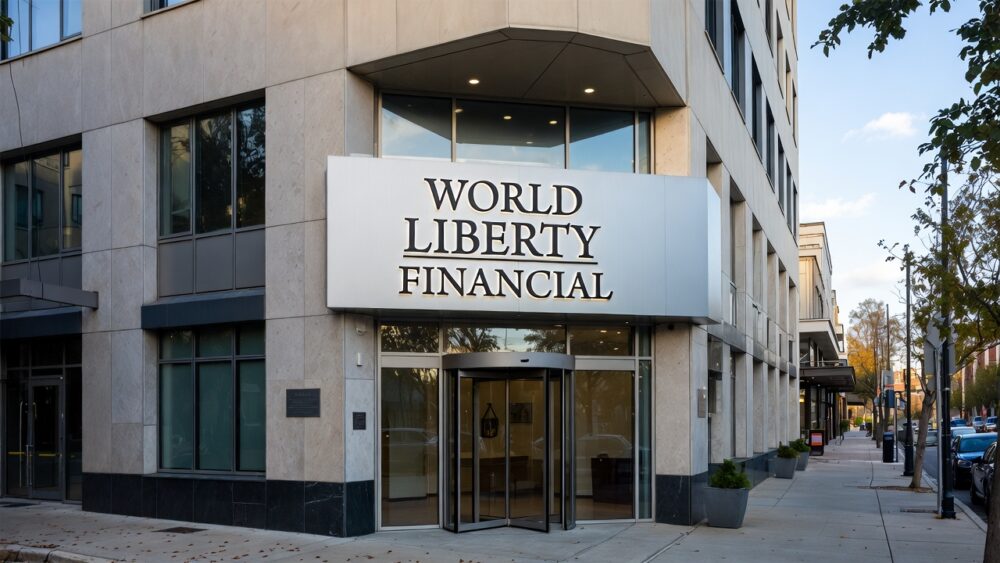
World Liberty Financial, the decentralized finance (DeFi) platform backed by President Donald Trump’s family, is facing growing rejection in the bitcoin community after revealing a controversial operation with the Dolomite lending protocol, which is an advisor and co-founder of the company.
Comments on social networks question the platform and accuse it of a “scam” after admitting the use of a circular debt strategy through which the platform use your own tokens (illiquid) as a guarantee to borrow real money in stablecoins.
The trigger for the criticism was the confirmation that wallets linked to the project deposited 5,000 million of the native token WLFI as collateral in Dolomite, where World Liberty Financial represents more than 55% of total liquidity. As reported by Criptonoticias, approximately 75 million dollars in stablecoins (USD1 and USDC) were obtained.
The controversy focuses in the nature of the strategy, considering the close relationship between Dolomite and World Liberty Financial, which creates obvious conflicts of interest.
On social networks like X, the criticism has been overwhelming. Users and analysts describe the operation as “very risky”, explaining that It is a circular diagram: Print your own tokens and use them as illiquid collateral to mine stablecoins.
They compare the operation with previous failed cases, known to the ecosystem, where collaterals concentrated generated cascading liquidations and losses for lenders. A situation that reminded many commentators of the case of FTX and other platforms that collapsed for taking funds from users for high-risk internal operations.
«They used their governance token to borrow their own USD1 stablecoin. “FTX Vibes,” he says in X @DaniREscudero. While @Tradingcartel_X sentence that «WLFI has just exposed the dark side of “DeFi innovation”».
“It’s exactly like printing Monopoly money and using it to get loans in real dollars. “This is not some random DeFi bug,” duck @Crypto_Jargonfor whom World Liberty Financial is exploding in real time “like a manipulated scam.”
There are difficulties withdrawing funds
In its criticism, the community alleges that the operation has caused loan rates to they shoot above 13%. Additionally, when using the USD1 pool above 93%, there is little liquidity available. Such a fact means that many users who deposited their stablecoins to earn interest, now They face difficulties withdrawing their money.
The pool is practically saturated. In fact, there are already several users who claim that the USD1 pool is practically saturated “while the treasury obtains liquidity.” The questions in general point out numerous red flags.
The main risks that are alerted are the following:
- A possible cascade liquidation if the price of the collateral continues to fall.
- The creation of “bad debt” within the protocol.
- The extreme concentration of risk in a single operation controlled by the partners.
World Liberty Financial defends the maneuver accusing his detractors to generate FUD. They affirm that the operation is amply covered (they would add more collateral if necessary).
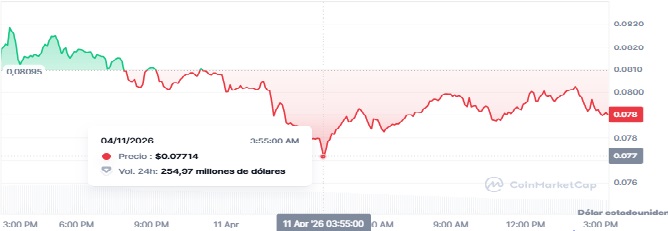
However, the community does not seem convinced. This April 11, 2026, the price of the asset associated with the project hit a new all-time lowreflecting the massive loss of confidence in the strategy.
Thus, while World Liberty Financial presents itself as an “anchor borrower” that generates yield for all users, accusations question her for shifting risk to retailers.
The controversy leaves several questions open: Is this an innovative way to generate yield or simply value extraction disguised as DeFi? For now, the community seems to have its verdict: distrust and accusations.