Energy security has once again taken on urgent priority in the EU, as Iran revealed that despite the lessons of Russia’s full-scale invasion of Ukraine four years ago, many member states are still facing oil and gas supply shocks.
The crisis has prompted member states to re-examine their efforts to diversify and cut dependence on external energy sources. It has also encouraged renewed efforts for nuclear energy.
European Commission President Ursula von der Leyen said last month that Europe’s move away from nuclear power was a “strategic mistake.”
Brussels is now considering additional funding for nuclear power. Prioritizing the deployment of so-called small modular reactors (SMRs) in the bloc by the early 2030s.
Even in Germany, which has completely shut down all its reactors, there is debate over a return to nuclear power.
Chancellor Friedrich Merz says the nuclear phase-out was a “serious strategic mistake” but “irreversible”. His close political ally and state premier of Bavaria, Markus Söder, however, says, “It is time for a new era of nuclear energy” and that he plans to build an SMR in his state.
Henry Preston, spokesman for the World Nuclear Association, an industry body, said, “The EU’s renewed focus on expanding nuclear energy is a strategically strong response to the region’s long-term energy security and climate goals.” “Nuclear remains unrivaled in providing clean, safe and scalable electricity.”
Pay attention to SMR’s ‘wrong strategy’
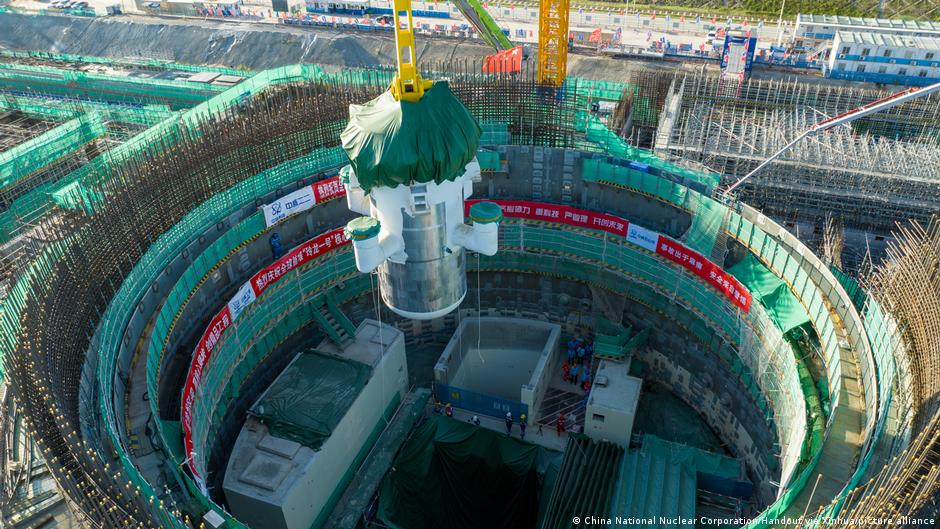
SMRs are next-generation nuclear plants typically designed to produce less than 300 megawatts of power – about a third of the output of conventional reactors.
Proponents say they would be cheaper, faster and safer to deploy than conventional reactors.
But opponents sharply criticized the EU’s renewed focus on nuclear.
“This is a wrong strategy,” said MV Ramana, a professor at the University of British Columbia whose research focuses on nuclear energy risks and disarmament.
He argued that SMRs have higher per unit power costs than conventional large reactors “because their material and function requirements do not increase linearly with power capacity.”
Luke Heywood, head of climate and energy at the European Environment Bureau (EEB), said, “Putting money into new nuclear, especially unproven SMRs, will not solve any of our energy problems.”
He described nuclear power as an “expensive distraction”.
“It’s very slow to build, very expensive and very risky. SMRs are even further behind: years, if not decades, away from large-scale deployment,” Haywood told DW.
Can nuclear contribute to baseload energy?
To reduce dependence on fossil fuels, EU countries have increased wind and solar energy in recent years.
Renewable sources now supply about half the power of the block and around A quarter of its total energy demand.
Nevertheless, proponents of nuclear power argue that it is essential to provide continuous baseload power – the minimum level of electricity needed 24/7 – in contrast to intermittent sources such as wind and solar.
Malvina Quist, director of the nuclear energy program at the NGO Clean Air Task Force (CATF), said renewable energy and flexible power generation are not enough to achieve a zero-carbon economy.
He pointed out that Germany generates far more electricity from renewable energy than France – about 59% compared to 28% – yet its grid emits 16 times as much carbon dioxide.
“Germany’s non-renewable generation is mainly coal and gas, while in France, nuclear provides about 67% of electricity at near zero carbon,” Quist said.
Without clean renewable power – energy that is low-carbon and available whenever it is needed – countries will inevitably fall back on fossil fuels, the expert underlined.
“This is where SMRs come in. As part of the clean firm power toolkit, their modular design, low upfront cost and ability to provide industrial heat make them particularly suitable for tough industrial sectors,” he said, pointing to the chemical, steel and cement industries, which require reliable heat as well as power.
But Haywood said nuclear power is not suitable for an energy system dominated by wind and solar power.
“Nuclear is not a natural partner for a renewable-based system,” he said, adding, “Modern energy systems require flexibility, requiring plants that can ramp up and down, not reactors that must run continuously to be economical.”
That’s why the idea of nuclear for baseload energy is outdated, he stressed.
Ramana reiterated this approach, emphasizing demand-side management, expanded battery storage and flexible generation to balance the variable output of solar and wind.
“Investing more in SMRs or nuclear power would divert funding from these more promising pathways,” he underlined.
Are SMRs safer than conventional reactors?
Safety remains a continuing concern for all nuclear technologies, including small modular reactors.
SMRs are considered safe by some due to their low capacity, small inventory of nuclear fuel, and reliance on passive safety systems that are designed to operate without an external power supply.
“General statements about the safety of SMRs are not possible,” said Sara Beck, head of the safety research division at the Gesellschaft für Anlagen- und Reactorsicherheit (GRS), Germany’s central expert organization in the field of nuclear safety, pointing to the substantial technical and conceptual differences between individual SMR designs.
With dozens of concepts in development around the world, SMRs currently lack a standard design.
Globally, only two SMR projects have been built so far, one in Russia and the other in China, both based on different designs.
Many innovative SMR concepts “use new materials that introduce specific safety-related challenges,” Beck told DW, adding that “substantial research and development is still needed.”
The nuclear safety expert also pointed out that using SMRs to power new industrial uses creates new risks. “Coupling SMRs with additional applications, such as hydrogen production, heat supply, or seawater desalination, could create additional potential risks,” he explained, citing challenges such as chemical effects on components after hydrogen release, cross-contamination, and explosion hazards.
Ramana said all nuclear plants, including SMR, could suffer an accident resulting in massive radioactive contamination. He also underlined that despite decades of funding and research, a safe and proven way to deal with radioactive waste remains elusive.
Need a well-implemented EU SMR programme?
Qvist, the CATF expert, agreed that SMR is a new technology whose economics are largely unproven in Western markets.
But he believes they have a role to play amid rapidly growing demand for carbon-free and reliable energy.
“Global demand for clean firm electricity is growing rapidly, and developing economies, industrial clusters and data center operators need reliable low-carbon energy,” he said.
The expert stressed the need for a well-executed EU SMR program focusing on standardized design and coordinated procurement.
Creating a globally competitive export platform “would be for the EU nuclear industry what Airbus did for aviation,” he said, adding, “If the EU fails to develop a competitive offering, it risks ceding that ground entirely to geopolitical rivals.”
As Europe grapples with energy-security tensions in a rapidly changing geopolitical and economic landscape, the debate over nuclear power shows no signs of subsiding.
Edited by: Christy Pladson