The Solana Foundation published a report this April 27 in which it consolidated the results obtained by the firm Anza and the team behind Jump Firedancer, two development teams of this ecosystem, which identified Falcon as the most suitable post-quantum digital signature scheme to prepare the network against the potential threat of quantum computing.
Falcon is a standard of post-quantum digital signature approved by the United States National Institute of Standards and Technology (NIST), the body that in 2024 formalized the first cryptography standards resistant to quantum computers.
Its main feature is produce more compact signatures than other post-quantum schemes (as SLH-DSA), a critical requirement for Solana and any other blockchain where each additional byte per transaction has a direct impact on processing speed.
However, the signatures that Solana uses today, under the Ed25519 scheme, have a fixed size of 64 byteswhile the Falcon-512 variant, which the Solana Foundation is evaluating in the SIMD-0461 proposal, produces signatures of approximately 666 bytes: about 10 times heavier.
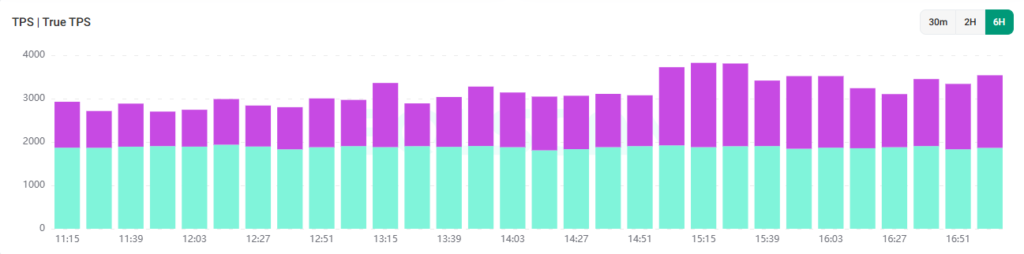
In a network that processes between 3,000 and 4,000 transactions per second, this increase in weight per transaction has a direct impact on the capacity of the network, which represents a latent risk and another focus of study for this ecosystem (and all cryptoasset networks).
In that sense, as reported by CriptoNoticias, tests with post-quantum signatures on a Solana test network showed that heavier schemes could reduce network performance by up to 90%, according to Alex Pruden, CEO of Project Eleven, a company that collaborates with Solana in these tests.
On the other hand, according to report of the Solana Foundation, the independent convergence of Anza and Firedancer in Falcon does not imply a final decision.
While the organization points out that “Quantum computing is still years away”also indicated that it will continue to evaluate Falcon and its alternatives before committing. At the same time, he proposed a three-step roadmap: continue investigating, adopt a post-quantum scheme for new wallets if the threat becomes concrete, and migrate existing wallets. There are no defined deadlines or thresholds for any of those steps.
Both companies built and released initial implementations publicly available on GitHub (Anza and Firedancer).
Other post-quantum proposals for Solana
In January of this year, developer Dean Little published the Winternitz Vaults, vaults that generate new keys in each transaction using cryptography resistant to quantum attacks.
Unlike a complete network migration, these vaults aim to protect only to individual wallets that choose to use them. The Google Quantum AI report, which alerted the community after reducing the quantum resources needed to break Bitcoin by up to 20 times, highlighted that development as one of the few quantum-resistant primitives deployed and in use in a relevant cryptoasset network.
The convergence of Anza and Firedancer in Falcon adds another piece to that path, in which two ecosystem teams aligned criteria on the same solution without prior coordination, which would reduce political friction to activate a migration when the network considers it necessary.