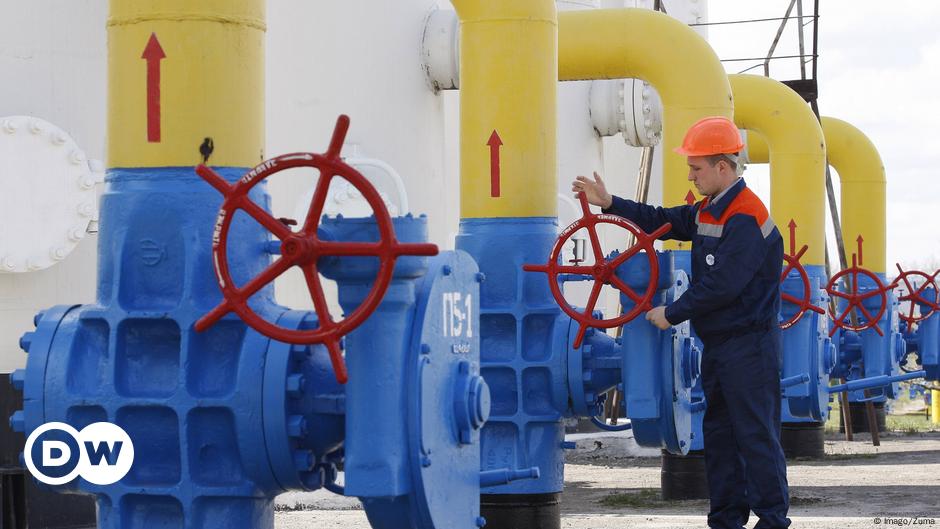
Currently, Russian gas is still flowing through Ukraine’s pipeline network to the European Union (EU), generating revenue for Kremlin leader Vladimir Putin and financing his war against Ukraine. Russia has claimed that without Russian gas the bloc will not be able to meet its energy needs.
By contrast, for Ukraine, the gas transit deal has always been meant first and foremost to fill Putin’s war chest, even if Russia receives some of the revenue from its exports through Ukraine in the form of transit fees to Kiev. Remains.
Now, as the year 2024 ends, Ukraine will not renew the gas transit agreement with Russia, as President Volodymyr Zelensky announced in Brussels on December 19. Ukraine will no longer allow Moscow to “earn additional billions” by continuing its aggression against the country.
Russian President Putin also confirmed the contract’s expiration, telling reporters in a televised briefing on December 26 that a new contract was “impossible to conclude in 3–4 days.”
Putin strongly blamed Ukraine for refusing to extend the agreement.
The agreement’s expiration, however, raises questions about gas supplies to landlocked eastern EU countries, which cannot import liquefied natural gas (LNG) by sea. Austria, Hungary and Slovakia are still dependent on Russian gas via Ukraine, which is why their governments are eager to continue purchasing Russian gas.
Russian gas: mutually beneficial even during the Cold War
Before Ukraine was created, Russia was the world’s largest natural exporter and Europe was Moscow’s most important market. European governments prioritized access to cheap energy over concerns about doing business with Putin.
The mutually beneficial relationship began more than 50 years ago, when the former Soviet Union needed money and equipment to develop its Siberian gas fields. At the time, the western part of then-divided Germany sought cheap energy for its growing economy, and signed so-called pipe-for-gas agreements with Moscow, under which West German manufacturers paid thousands of dollars to transport Russian gas. Kilometers of pipe supplied. For Western Europe.
This energy relationship persists, as European importers are often locked into long-term contracts that are difficult to get out of.
According to Brussels-based think tank BruegelEU fossil fuel imports from Russia stood at around $1 billion (€958 million) per month at the end of 2023, down from $16 billion per month at the beginning of 2022. In 2023, Russia is projected to account for 15% of total EU gas imports. Behind Norway (30%) and the US (19%), but ahead of North African countries (14%). Most of this Russian gas flows through pipelines through Ukraine and Turkey.
Major consumers include Austria, Slovakia and Hungary. Additionally, countries such as Spain, France, Belgium and the Netherlands still import Russian LNG by tanker, some of which is blended with other gas sources in Europe’s pipeline network. As a result, despite Russian efforts to release gas, it may even reach Germany.
Turbulence in the gas market has led to price increases
Following Russia’s invasion of Ukraine in 2022, gas prices rose dramatically – sometimes by more than 20 times – causing some European factories to cut production and many small businesses to close. Prices have since fallen but remain above pre-crisis levels, making energy-intensive industries, especially in Germany, less competitive.
European consumers are also suffering from high energy prices, prompting many to reduce consumption amid a severe cost-of-living crisis. The extra expense is a significant burden: around 11% of EU citizens struggled to adequately heat their homes in 2023, According to the EU Commission,
According to an EU Commission analysis reported by Bloomberg in mid-December, the expiration of the Ukraine-Russia agreement is already factored into European gas market forecasts.
EU not keen to keep gas route open
The EU is confident in its ability to ensure alternative supplies.
“With more than 500 billion cubic meters of LNG produced each year globally, about 14 billion cubic meters of Russian gas transited through Ukraine is expected to replace the EU’s natural gas emissions,” Bloomberg says, citing the Commission document. “There should be little impact on gas prices.” Not public yet. “It can be assumed that the expiration of the transit agreement has been factored into winter gas prices.”
The EU has long argued that member states still importing Russian gas via the Ukraine route – notably Austria and Slovakia – can manage without these deliveries. Therefore, the EU Commission said it would not get involved in negotiations to keep the route open.
According to the Commission, member states are able to reduce their gas consumption by 18% from August 2022 compared to the five-year average. Furthermore, the United States is expected to build new LNG capacities over the next two years, and these supplies could help the EU cope with potential disruptions.
The EU Commission said, “The most realistic scenario is that no Russian gas will now flow through Ukraine.” He said the bloc was “well prepared” for this outcome.
Growing occasionally in Eastern Europe
Despite EU assurances, Hungary and Slovakia remain concerned about their gas supplies and ongoing close ties with Russia. For example, Hungarian Prime Minister Viktor Orban is looking for ways to maintain gas deliveries through Ukraine, even though the country’s current imports are largely dependent on the TurkStream pipeline.
Orbán has introduced unconventional ideas, such as buying Russian gas before entering Ukraine. “We are now trying this trick … of what would happen if the gas entering Ukraine’s territory would not be Russian but would already be owned by buyers,” Orban said at a briefing. Reuters news agency. “So the gas entering Ukraine will no longer be Russian gas but Hungarian gas.”
Slovakia has taken a more confrontational stance, threatening retaliation against Ukraine. Prime Minister Robert Fico suggested stopping emergency power supplies to Ukraine after January 1 if no deal was reached. “If necessary, we will stop the shipment of electricity that Ukraine needs during the outage,” Fico said in a Facebook video.
In response to the threat, Ukrainian President Volodymyr Zelensky accused FICO of acting under Russian orders, saying on social media platform X that it appeared Putin had instructed him to “open a second energy front against Ukraine”. .
FICO remains one of the EU’s strongest opponents of military aid to Ukraine. During a surprise visit to Moscow in December, Fico claimed Putin confirmed Russia’s willingness to continue supplying gas to Slovakia.
This article was originally written in German.